After dominating Pacific Northwest service baseball throughout the 1942 season, the Fort Lewis Warriors faced their archrivals, the Naval Air Station Pasco “Flyers,” in a best-of-three-games series. The Warriors were guided to a 38-6 record by Private Morrie Arnovich, a six-year National League veteran with Philadelphia, Cincinnati, and New York, who was an all-star leftfielder and World Series champion with the Reds. With a stacked roster that included players from the professional, semi-pro, and collegiate ranks, the Warriors captured the Washington State Semi-Pro Championship for 1942.
“The Pasco Naval Flyers clinched the mythical service baseball championship of the Northwest when they trounced the Fort Lewis Warriors, 8-0, for their second victory in a scheduled three-game series here Sunday,”[1] bringing the Pacific Northwest Service League’s season to a close. The highly successful Warriors drew large crowds throughout the region as they competed against service, college, and semi-professional teams as well as professional ball clubs. While their dominance over the competition was certainly a draw, fans filled ballpark seats and standing room to watch manager Arnovich’s star right-handed hurler, John Ford Smith, baffle opposing batsmen.
Fielding a competitive baseball team was not a new concept in 1942 as the game had been played between unit teams on the post since Camp Lewis was established as war raged in Europe in 1917. One of the Fort Lewis command teams, the 41st Division nine, advanced to the National Semi-Pro Congress tournament in Wichita, Kansas, joining a team from Fort Riley representing the Army in pursuit of a national championship.[2] In September 1941, work commenced on an athletic field, largely funded by the Works Progress Administration, that would host baseball and football games and seat more than 10,000 spectators.[3] Build-up of the United States armed forces began following President Franklin D. Roosevelt’s signing of the Selective Training and Service Act on September 16, 1940. The first major leaguer to be drafted was Morrie Arnovich’s 1940 Philadelphia Phillies teammate, pitcher Hugh Mulcahy, with many professional and semi-pro players also filling the ranks. American men, including several professional ballplayers, began enlisting following the December 7, 1941, attack at Pearl Harbor.
With the approaching spring, a former Pacific Coast Leaguer, Herman Reich, was a recent arrival to Fort Lewis, having spent the 1940 and 1941 seasons with the Portland Beavers. No stranger to the region, Reich’s 1939 campaign was with the class “B” Western International League’s Tacoma Tigers. In early March, the Tacoma press received word that Reich had been cleared to play on a local professional or semi-pro club on his free Sundays[4] as no plans had yet been formalized for a Fort Lewis post team.
As New York Giants spring training was underway in Miami, Florida, Giants left fielder Morrie Arnovich awaited the impending call from the Army. Arnovich was inducted into the U.S. Army on March 5, 1942, at Fort Sheridan in Illinois.[5] Following training, the former big leaguer was assigned to Fort Lewis, Washington. Local left-handed pitching phenom and Boston Red Sox property Cy Greenlaw entered the Army Air Forces and landed at Fort Lewis that spring.[6]
Fort Lewis’ population of troops continued to increase as late winter transitioned to spring. Herm Reich had been given permission by the post commander to form a Fort Lewis baseball club, but the lack of equipment was a roadblock.[7] In dire need of recreation equipment for the team and for the fort’s soldiers, specifically for baseball, Tacoma philanthropist and former Washington State senator John S. Baker established a Bat and Ball Fund, “to provide diamond equipment for our boys in service.”[8] Following Baker’s initial donation, the Tacoma Tigers placed collection containers at their home field, Athletic Park, for fans to voluntarily donate in support of the fund.[9]
Despite the efforts of Baker and Cliff Olson, another Tacoma businessman, combined with publicity by way of Tacoma News Tribune sports columnist, Dan Walton, the Bat and Ball Fund saw meager contributions as calls to the public for financial help continued.[10] Despite being given the go-ahead to assemble a team, it was not until the end of May under the direction of Private Morrie Arnovich that the Fort Lewis Warriors began to take shape. Selected by Great Lakes Naval Training Station’s Lieutenant Gordon “Mickey” Cochrane as one of several ballplayers serving in the armed forces to be on the Service All-Star team that would face the winner of the major league All-Star Game, Arnovich began preparing his club for their first competition of the season against the Tacoma Tigers on June 6 and the Tacoma Shipbuilders the following day.
Great Lakes Training Station – Here are stars whose names appear on the roster pf the Service All-Stars at Great Lakes Training Station. Left to right: Emmett Mueller, Philadelphia-infielder; Morrie Arnovich, N.Y. Giants-outfielder; Mickey Harris, Boston Red Sox-pitcher; John Sturm, Yankees-infielder; John Grodzicki, St. Louis Cardinals-Pitcher; Cecil Travis, Washington-outfielder; Ken Silvestri, Yankees-catcher; Pat Mullin, Detroit-outfielder; Lieutenant George Earnshaw, coach; Fred Hutchinson, Detroit-pitcher; Vincent Smith, Pittsburgh-catcher; Bob Feller, Cleveland-pitcher; Sam Chapman, Athletics-infielder (Chevrons and Diamonds Collection).
After downing the Tigers, 8-1, and shutting out the Shipbuilders, 6-0,[11] the Warriors obliterated their post neighbors, the McChord Field Bombers, 12-3, on June 15 with Herm Reich hitting a home run in the victory.[12] The Fort Lewis Warriors, despite having several games under their belt, were still a team under construction as more ballplayers entered the service. Among the Pacific Northwest’s service league teams, the Warriors were emerging as one of the contenders under Arnovich’s guidance. To the north, 35 miles up Pacific Highway in Seattle, the front-running Naval Air Station’s “Flyers” at Sand Point, riding a 19-game winning streak by late June, was the military team to beat.[13]
Since his arrival at Fort Lewis, new Warriors manager Arnovich had evaluated the team and scoured the Army post for available talent to assemble a formidable ball club.
The Warriors pitching rotation in addition to Greenlaw featured another Boston Red Sox prospect, right-hander Charley Norton, along with Bill Sewell, a football star from Washington State College in Pullman. Rounding out Arnovich’s stable of arms was John Ford Smith, an all-around stellar athlete who hailed from Phoenix, Arizona. Smith, described as a “giant right-hander,”[14] last hurled for the Kansas City Monarchs during the 1941 season following seven semi-pro seasons on two Phoenix-area clubs.
Given charge over the Warriors by Fort Lewis’ commander, Colonel Ralph Glass, Private Arnovich took a bold step in adding Smith to the ball club. Considering that the major and minor leagues were five seasons away from Jackie Robinson stepping onto the Roosevelt Field diamond in New Jersey for the opening day game for the Montreal Royals, not to mention that it was not until July 1948 when future president Harry S. Truman would sign Executive Order 9981[15] to bring about the end of segregation within the armed forces, an integrated Fort Lewis Warriors baseball team was certainly newsworthy.
What would become of Arnovich’s bold decision to integrate the Warriors coupled with Smith agreeing to join an all-white Army baseball team? Would the troops on the post be receptive and support the team? How would the opponents respond to facing an integrated baseball team? Only time would tell.
Who was Ford Smith?
Thirty-eight years after Ford Smith passed away, that question was still being posed. “He was a trailblazer. An athlete. A civil rights activist, yet 67 years after he stepped away from baseball, the full story of John Ford Smith’s life remains untold.”[16] Born January 9, 1919,[17] to Charles and Cora (née McKinzie) Smith in Phoenix, five years after Arizona was admitted to the union, John, who was called by his middle name, was the youngest eight children, five girls and three boys.
Charles, originally from Maryland, settled in Arizona after his discharge from the U.S. Army. A veteran of the Spanish American War, he was a member of the U.S. 9th Cavalry,[18] serving as a blacksmith at Fort Duchesne, Utah, where he and Cora were married in 1896.[19] when his regiment was sent to Cuba for the war. According to the 1910 federal census, Mr. Smith continued his trade after he was discharged, working as a blacksmith at the U.S. Indian School in nearby Osborn when Ford was born.
Ford excelled in athletics while attending Phoenix Union Colored High School, playing multiple positions including halfback, quarterback and receiver for the football team and pitching and playing in the outfield for the baseball team. A foreshadowing or mere coincidence for Ford, the Phoenix Union teams were known as the “Monarchs.”[20]
During the 1930s, Smith played for a Phoenix area semi-professional baseball team, the Phoenix Bronchos, from 1933 through 1939,[21] followed by a stint with the highly successful Western Compress and Warehouse Company team in 1940.[22] Posting a 30-3 won-lost record, the “Arizona Compress” nine captured the Arizona state semi-pro championship, advancing to national championships in Wichita, Kansas.[23] Not only did Smith play on the Compress club, but also he, like many of his teammates, was employed by the company.[24]
He spent part of 1941 with the Kansas City Monarchs, joining future Hall of Famers Buck O’Neil, Willard Brown and Satchel Paige and all-stars Ted “Double Duty” Radcliffe and Ted Strong on the legendary team. The 22-year-old rookie appeared in seven games for the Monarchs, hitting .385 in 13 plate appearances. He pitched in four games and posted a 3-0 won-lost record with a 1.69 ERA, fanning 14 batters and walking five, then returned to Phoenix after the season.
Following President Franklin Roosevelt’s enacting of the peacetime draft on September 16, 1940, and the required registration for all fighting age American men a month later, on October 16 Smith awaited the inevitable call to join the armed forces ranks with other ballplayers including Hank Greenberg and Hugh Mulcahy, for his mandatory year of peacetime service. “The Compresses’ man-of-all-diamond work, Ford Smith, will probably get the champs’ starting slab assignment, with the veteran Tom Gee working behind the plate. It’ll be sort of a farewell gesture on Smith’s part,” the Arizona Republic wrote in April 1941, ”since he’s reported to be heading for a career with Uncle Sam’s army.”[25]
Wartime Service
For the United States, peace came to an abrupt and deadly halt with the Japanese attack at Pearl Harbor on December 7. The call from his draft board came soon afterwards and Ford Smith reported to Fort Bliss in El Paso, Texas, where he underwent his induction physical on January 31, 1942, and was sworn into the Army the following day, February 1.[26]
The Army that Ford was inducted into was not welcoming and not a service where he could “be all that he could be,” as segregation was very much the standard for all service branches, unchanged from the previous century when his father served as a Buffalo Soldier. Unlike today’s military, Black soldiers were placed into units that were separate from white troops. With his logistics experience at the Western Compress Company, Private Smith was trained in the Army’s Quartermaster Corps before being assigned to Fort Lewis.
Breaking Barriers
By late June, the Naval Station Seattle “Flyers,” who had a head start on the 1942 season, were riding a 19-game winning streak and were already being dubbed the best service team in the Pacific Northwest region. With a stacked roster predominated by former professional players from the Pacific Coast and the Western International Leagues, the Flyers were the team to beat. Private Arnovich had just put the finishing touches on his roster, adding Ford Smith to his pitching staff. Despite having only a handful of games under their belts, the Warriors, at least on paper, appeared to be up to the Navy’s challenge. Arnovich drew players from units throughout the post, many of them with prior professional baseball experience or with exceptional athletic abilities.
The pitching staff consisted of former Western International Leaguer hurlers Greenlaw (Vancouver) and Joe Albanese (Tacoma) along with Charlie Norton (Eastern Shore League) and Billy Sewell, the former Pacific Coast Conference quarterback/halfback who led the nation in passing yards in 1940.[27][28] Leading the contingent, Ford Smith, a man among boys, stood 6-foot-1 and topped 220 pounds.
| Player | Position | Former |
|---|---|---|
| Joe Albanese | P | Tacoma (WINT) |
| Morrie Arnovich | MGR/OF | Giants |
| Bill Beard | C | Seattle (PCL) |
| Harv Clutter | IF | Stockton (CALL) |
| John DeGrazio | IF | Sheboygan (WISL) |
| Bill Diehl | C | University of Iowa Football |
| Kenneth Alexander “Al” Eull | RF/CF | Amateur |
| Cy Greenlaw | P | Vancouver (WINT) |
| Billy Kirk | Mascot | |
| Val M. Kirk | Athletic Officer | |
| Ruben Litzenburger | C | Amateur |
| Joe McNamee | C | Spokane (WINT) |
| Lewis Moses | Trainer | |
| Ray Nordell | OF | Albuquerque (AZTX) |
| Charlie Norton | P | Centerville (ESHL) |
| Wynn Joseph Pinterell | IF | Lincoln (Nebraska State League) |
| Herm Reich | 1B/Capt. | Portland (PCL) |
| Billy Scheske | IF | Fond du Lac (WISL) |
| Billy Sewell | OF/P | Washington State College (WSU) |
| Hank Shuback | ||
| Al Shultz | OF | WISSL |
| Ford Smith | P | Kansas City Monarchs |
| John Stepich | Coach | Amateur |
| Don Wymer | P | Cal League |
The Tacoma News Tribune’s Ed Honeywell wrote, “Arnovich has a four-man pitching staff which he thinks will provide nothing but headaches for the Flyers (sic).” Honeywell described Ford as “a giant colored right hander who last season pitched for the Kansas City Monarchs, [the] famous Negro club.”[29]
Hosting the visiting Naval Air Station for the first meeting of the two teams on June 22, Arnovich sent Charlie Norton to the mound. For the first three innings, the former Centreville Red Sox hurler held the “Sand Pointers” scoreless. The tide turned in the fourth frame as the Flyers hung six runs on the Warriors. Ford Smith took over for Norton and stemmed the bleeding. In the bottom of the frame, Warriors batters chalked up a run and appeared to stay in the fight, trailing by five, 6-1. The score remained unchanged until the top of the eighth as the Flyers broke through against Smith. NAS Seattle touched Norton and Smith for 11 runs on 14 hits and five bases on balls. Each pitcher struck out six Flyers batters. The 11-1 victory extended the Navy’s win streak to 21 games and capped Fort Lewis’s at nine.[30] The Fort Lewis loss all but proved the claims that the Navy was rightfully positioned atop the regional service league, though the Warriors would have more opportunities to unseat the contenders.
Ford’s first start atop the hill was against the cross-base rivals, the McChord Field “Flyers,” who had had a six-game winning streak earlier in the month. McChord played host for the June 27, contest at their home diamond, American Lake Field, at the U.S. veterans hospital,[31] as Smith outdueled McChord’s Brosman and both men completed all 11 innings. With Arnovich pulled away by the Navy’s Lieutenant Mickey Cochrane for the Service All-Stars game in Cleveland, the former Monarch prevailed in a 5-4 Warriors win, surrendering 8 hits and helping his own cause with a two-run bomb.[32]
Following a July 6 2-1 loss to the regional semi-pro Seattle-Tacoma Shipyards “Destroyers,”[33] Smith spelled Greenlaw in another Northwest League semi-pro contest against the Everett Pilchucks on July 12, getting a 7-6 victory. With the score knotted at 6-6, the Warriors drove in the eventual winning run with a sacrifice fly in the bottom of the eighth. Smith held Pilchuck in the ninth to secure the victory.[34]
With each passing game, both the Warriors and Ford Smith grew increasingly formidable. On July 19, facing Universal Printers , who were leading Seattle’s City League and had recently shut down the seemingly unstoppable Naval Air Station squad (ending their 25-game streak), the Warriors laid waste to the opposition’s pitching by plating 19 runs on 18 hits. Smith held the Printers to two runs on five hits as Warriors batters set the tone of the game in the second frame with 11 runs.[35]
Smith’s reputation continued to build, and local sports figures began to draw noteworthy comparisons. “John Heinrick, Stadium high coach, saw Ford Smith, the big colored pitcher of the Fort Lewis Warriors, work the other day and rates him the equal of the Satchel Paige we saw here a year ago. Smith limited the Universal Printers of Seattle to five scattered hits Sunday as the Warriors walloped them, 19 to 2.” The News Tribune’s Dan Wallach wrote in his column. “The Universals are the team that stopped the Sand Pointers’ 25-game win string. Smith formerly pitched for the Kansas City Monarchs.”[36] Heinrick, who, following his 15-year tenure at Tacoma, Washington’s Stadium High School, went on to become the most successful coach in the history of the University of Puget Sound, was a solid athletic evaluator and likely saw Paige pitch. Heinrick posted 88-46-11 career football record, winning or sharing five Evergreen Conference titles in 17 years. He also coached the university’s basketball from 1945-59, winning 187 games and advancing to the National Association of Intercollegiate Athletics (NAIA) Tournament in Kansas City twice. Coach Heinrick is a member of the Helms Athletic Foundation’s Coaches Hall of Fame and the NAIA Hall of Fame.[37]
Weeks after a one-run victory over the Pilchucks, Smith dominated them with a six-hit, 8-0 shutout on July 26.[38]
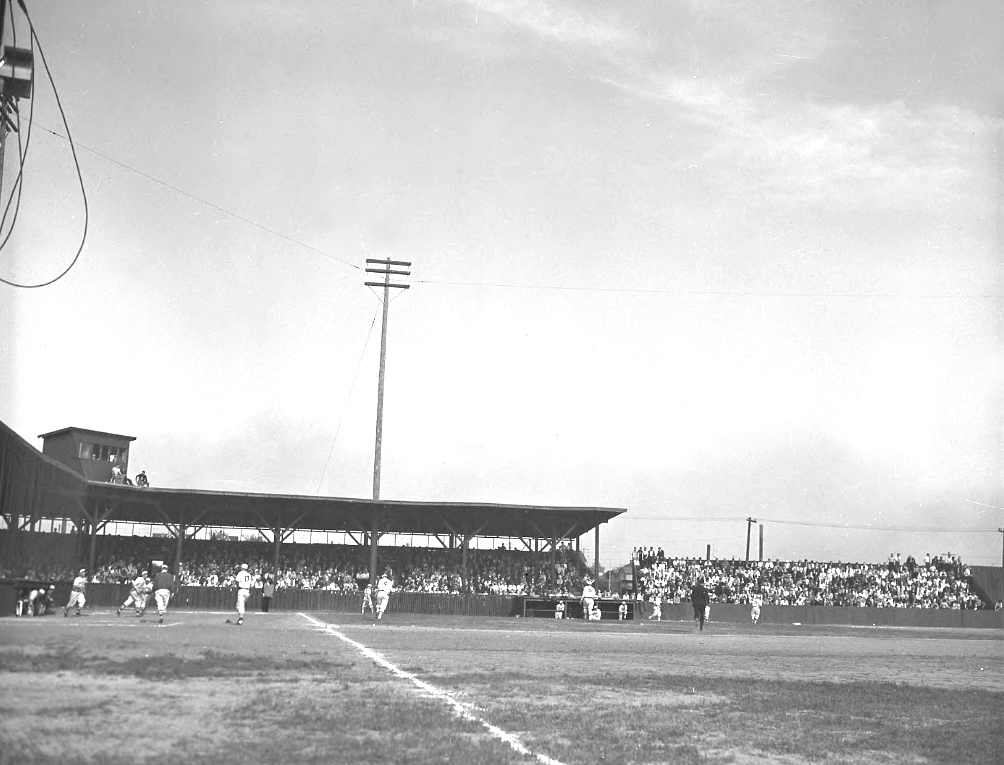
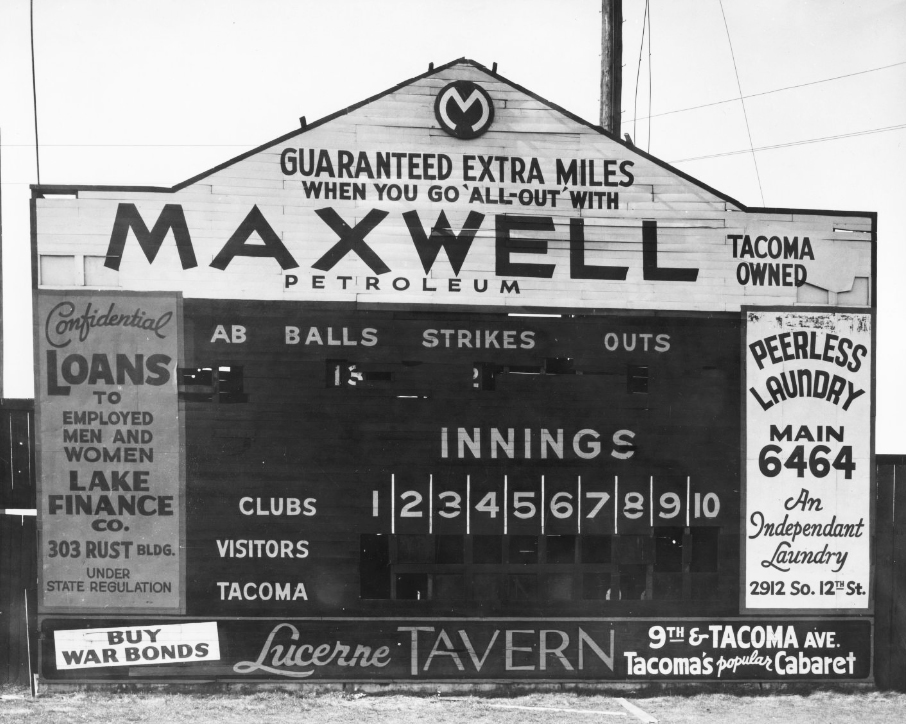
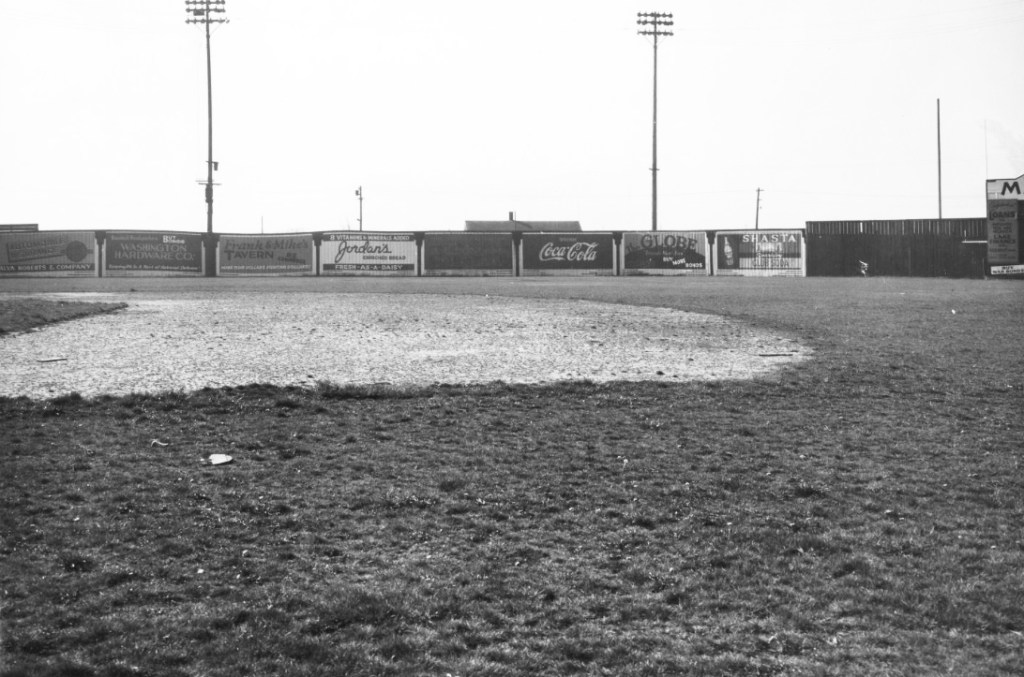
With the country fighting a war on multiple fronts, armed forces ranks continued to swell, with inductees and athletics continued to be important for both domestic physical training and combat theater recreation and morale building. The August 3 game between the host Tacoma Tigers and the Warriors was set to raise funds for “much needed baseballs, bats, footballs, boxing gloves, basketballs and hundreds of other items that are not furnished by the Quartermaster Corps.”[39] Local newspapers publicized the game and the Warriors star pitcher, “big Sergt. John Ford Smith, star Negro Leaguer from the Kansas City Monarchs,” citing his season’s success, having “pitched three shutout games this season.”[40]
It was the second time for the Warriors to face the Tigers, who controlled second place in the Western International League standings behind the Vancouver Capilanos. The former Monarchs hurler held Tacoma to a lone run on five hits as the Warriors hit safely 13 times in a 4-1 victory at Athletic Park, proving to be too much for Tiger batters.[41]
Before Smith took the mound, his team staked him to a one-run lead in the top of the first inning. Tacoma’s first hit off Smith came in the fourth inning and they scored their only run in the sixth by way of an error to knot the game at 1-1. Ford held Tacoma scoreless for the next eight innings, surrendering four safeties. In the top of the 14th, Warriors batters broke the tie, plating four runs on four hits to put Fort Lewis ahead for good. “The big hero of the game was Smith, who went the distance on the mound for the Soldiers and lived up to all advance notices,” The News Tribune wrote in its recap. “He has blazing speed which he used to set up the hitters, the easier to strike them out with his curve.”[42] Smith fanned 16 Tigers against four walks and allowed no runs.
The fund-raising effort was deemed a success as more than 4,563 of the available 5,000[43] tickets were sold, garnering $1,766.90 for the Fort Lewis Athletic Fund.[44]
Facing Fort Lawton on August 16 with Greenlaw on the hill, the Warriors downed their Seattle-based branch rivals in a 12-3 rout as a league championship confrontation between Fort Lewis and the Navy Flyers was an inevitability.[45]
Trailing Sacramento and Los Angeles in a tight race in the Pacific Coast League standings,[46] the Seattle Rainiers were preparing to host their Pacific Northwest rivals from Portland. Ahead of their series, both teams were hosted on August 17 by the Northwest Service League front runners, with Seattle facing the Navy Flyers at their new home in Pasco, Washington, and Portland meeting Fort Lewis at the Army base. While the Navy’s Edo Vanni scored the winning run in the bottom of the 13th inning to down Seattle, 4-3, it was a different story for the Warriors against the Coast League’s last-place Beavers.[47]
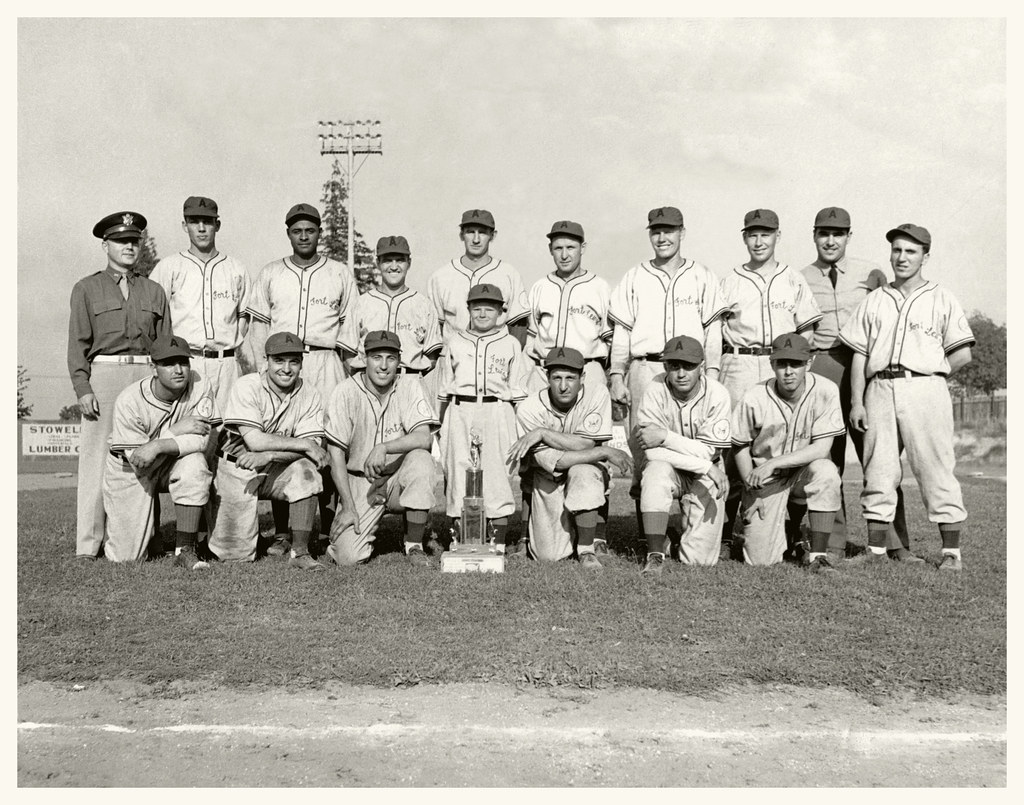
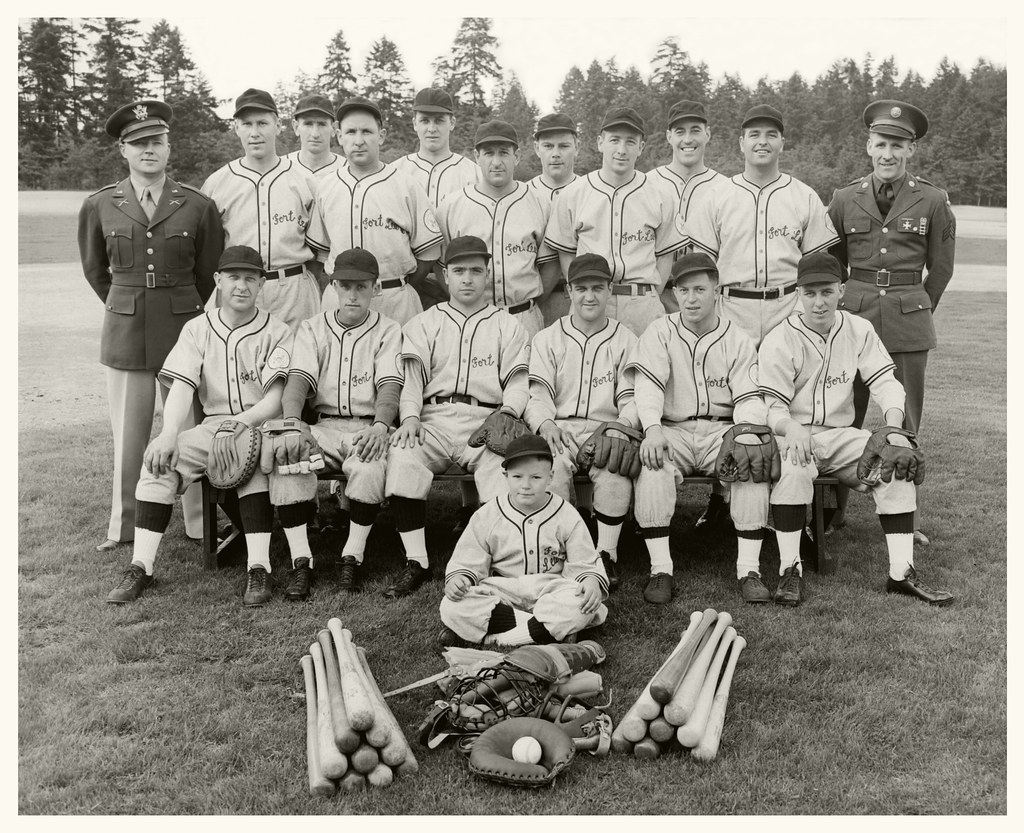
Back row: Lieutenant Val M. Kirk, post athletic officer; Corp. Don Wymer, P; SSGT Ford Smith; PFC Al Schultz, OF; Pvt. Cy Greenlaw, P; Sgt. Wyn Pinterell, IF; PFC Harv Clutter, IF; Corp. Ray Nordell, OF; Pvt. Lewis Moses, trainer; Pvt. John Grazio, IF.
Front: Joe Albanese, P; Sgt. Ruben Litzenburger, C; Corp. Herm Reich, 1B/Capt; Billy Kirk, mascot; Pvt. Morrie Arnovich, Mgr.; Sgt. John Stepich, coach/Secty.; PFC Billy Scheske, IF.
Smith started the exhibition contest for Fort Lewis, surrendering one Beaver one run through three innings. With the score knotted at a run apiece, Portland went ahead in the bottom of the fifth inning and maintained a 2-1 lead until the sixth when the Warriors plated four. Smith was spelled by Cy Greenlaw in the eighth inning as Portland mounted a rally to come from behind in their 8-5 victory. Portland outhit Fort Lewis 12-10,[48] marking their second victory of the season against the Fort Lewis aggregate. Despite their loss, the game amounted to another victory for the base, with more than 3,500 in attendance contributing about $1,000 to the Fort Lewis Athletic Fund.[49]
When Fort Lewis was declared champion of the “mythical state service” league by the Tacoma News Tribune following their Washington State Semi-Pro Championship, the Navy’s Flyers took issue, considering their season-long accomplishments including a victory over the Army club in the only matchup of the season.[50] The Flyers’ impressive record included victories over the Seattle Rainiers, Tacoma Tigers, Spokane Indians and the Warriors. [51]
In light of the Flyers’ protestations in response to the News Tribune’s state service league championship coronation, Fort Lewis’ Arnovich responded that the Warriors made no claims while pointing to the fact that the Flyers opted out of the aforementioned semi-pro tournament as well as backing out of a scheduled rematch with the Army. Arnovich seemed to pour gasoline on the flames of the growing feud as he reinforced the Tribune’s claim, citing the Warriors’ equally impressive season record.
The area military leadership planned for a three-game Pacific Northwest baseball championship series in September. Each team was set to host one game with a third and deciding game, if necessary, at Sicks Stadium in Seattle. The first game was planned for Sunday, September 6, at Tacoma’s Athletic Park with the following game a week later, to be played on the 13th at Spokane’s Ferris Field.[52]
On Sunday, August 24, the Warriors were hosted by the Seattle-Tacoma Shipbuilding Corporation’s “Destroyers,” with Greenlaw on the mound. Fort Lewis outhit the Sea-Tacs, 12-11, in a 8-3 victory, with each club committing a pair of miscues.[53] While Greenlaw was taking his turn in the rotation, Arnovich farmed Ford Smith out for a non-Warriors start to maintain the pitcher’s rhythm. Ford hurled for the post’s Negro Quartermasters in an abbreviated game against the Negro Medics for seven innings. Smith contributed a solo homerun to tie the game at 4-4 as the game was called due to time limitations.[54]
During the week leading up to the Pacific Northwest Service League championship, Arnovich took the Warriors south for two games at the Western International League Salem Senators’ home, George E. Waters Park. On Saturday, September 5, the Warriors faced a roster of Oregon State League semi-pro All-Stars. The head Warrior reluctantly pitched Ford Smith in the contest, just days after surgery on his non-throwing wrist. Smith had been limited to throwing batting practice[55] ahead of the Oregon games but recovered enough to play on Saturday.[56]
The big righthander went the distance against the Oregon All-Stars, surrendering four hits in a 2-0 shutout, though his pitching was uncharacteristically wild at times. Arnovich went deep in the top of the ninth with a solo shot over the right field fence to extend the slim Warriors lead. The Oregonians opened the bottom of the frame with two consecutive hits, but their rally fell flat as Smith set the following three batters down in order. [57]
The following day, Greenlaw left the Portland Air Base baffled as he fanned 15 Bombers batters during his four-hit shutout. Limiting Portland to a quartet of singles, he issued an equal number of free passes over nine innings in an 8-0 rout.[58]
As the Warriors prepared for their championship matchup against the Flyers, United States forces were engaged with the Axis powers on multiple fronts. Preparations were being made for Operation Torch and the invasion of North Africa. In the Pacific, the Solomons campaign was entering its second month, with the naval forces reeling following heavy losses at the hands of the Japanese. The First Marine Division was making headway on Guadalcanal, Tulagi and Florida Islands despite the diminished support capabilities due to the Imperial Navy’s stronghold.
Near Fort Lewis, the Federal Government was proceeding with President Franklin Roosevelt’s Executive Order 9066. In late August, more than 500 Japanese Americans were moved each day from “Camp Harmony” at the Western Washington Fairgrounds until nearly 3,000 of the 7,000 people at the assembly area were transferred to the relocation center at Eden in Southern Idaho.[59]
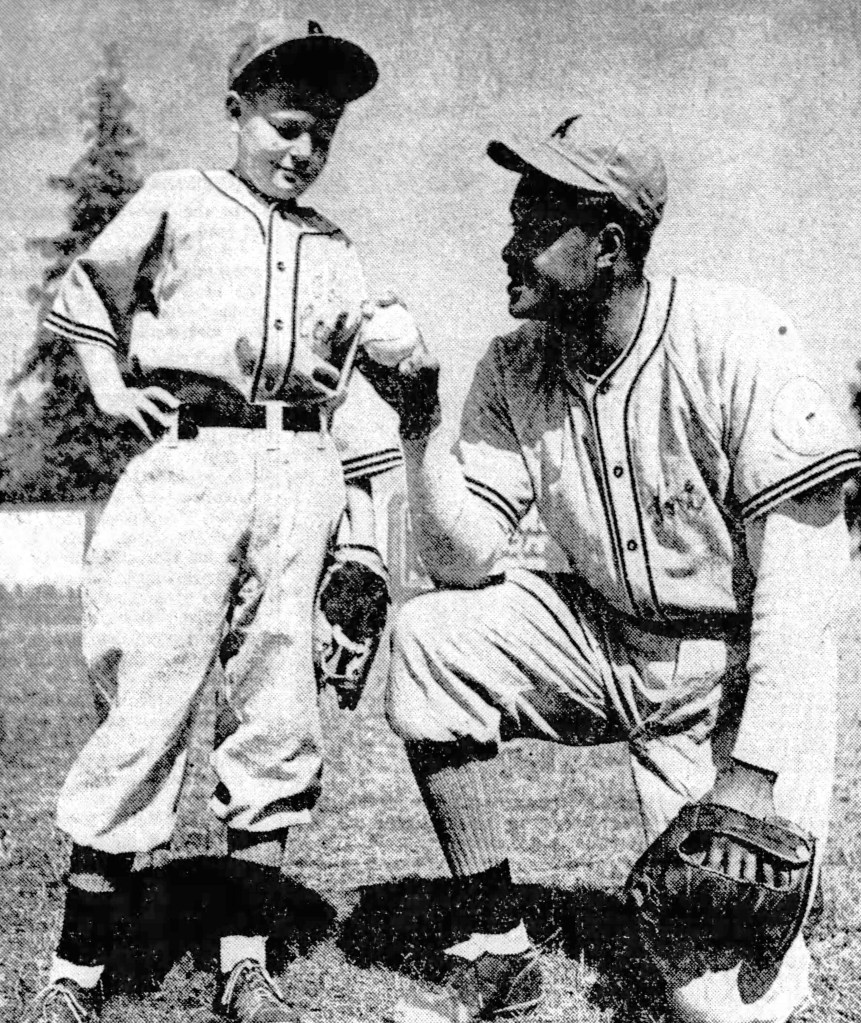
Three days before the opening game of the championship, manager Arnovich was still undecided as to who would take the mound. Cy Greenlaw had been outstanding in the final weeks of the season, winning 11 of his 13 games. Ford Smith was his top hurler, having notched 14 victories against a pair of losses, one of which was to the Flyers. Arnovich had to consider Smith’s post-surgical health and how effective he could be swinging a bat. Surprisingly, Smith was not the only slugging pitcher as Greenlaw batted .357 against Ford’s .290 season average.[60]
“The Satchel Paige of the West” was Arnovich’s choice to face off against the Navy. Flyers manager Edo Vanni tapped recent Navy inductee and former Hollywood Stars hurler Johnny Bittner to take the hill in opposition. Smith’s “blinding speed and surgeon-like control,” Arnovich told the News Tribune, combined with his excellent condition displayed against the Oregon All-Stars the previous weekend, led to his decision to start the former Negro Leaguer.[61] Despite giving up a run in the top of the first inning, Smith backed Arnovich’s boasts by holding the Navy scoreless over the following five innings. Warriors batters chased Bittner from the hill with six hits and three runs in the first two innings. After six innings, the Warriors led, 6-1, and Smith allowed only three Flyers hits. Fatigue may have begun to set in for Fort Lewis as the Flyers broke through, plating their second run of the game on defensive miscues. Navy hurler Harold “Hunk” Anderson, who took over for Bittner, stymied the Army batters, allowing just three hits through the seventh frame.[62]
When Arnovich sent Greenlaw to take over on the mound, the wheels had completely fallen off the cart for Smith. He was unable to get an out in the top of the eighth, and the Navy plated five runs to take a 7-6 lead. Greenlaw stopped the bleeding in time for the Warriors to regain the lead in the bottom of the of the frame, with Fort Lewis scoring a pair of runs. Three outs away from taking a one-game lead in the series, Greenlaw walked the lead-off batter before getting consecutive outs. After walking the next two Flyers to load the bases, Arnovich had seen enough and sent former Boise Pilots reliever Darrell Fields in to get the last out. The Navy’s Steve Ananicz, formerly of the Canadian Provincial League’s Granby Red Socks, doubled to clear the bases. Not done scoring, the Navy’s Henry Martinez, former Portland Beaver, stroked a triple to put the Navy ahead by three.[63]
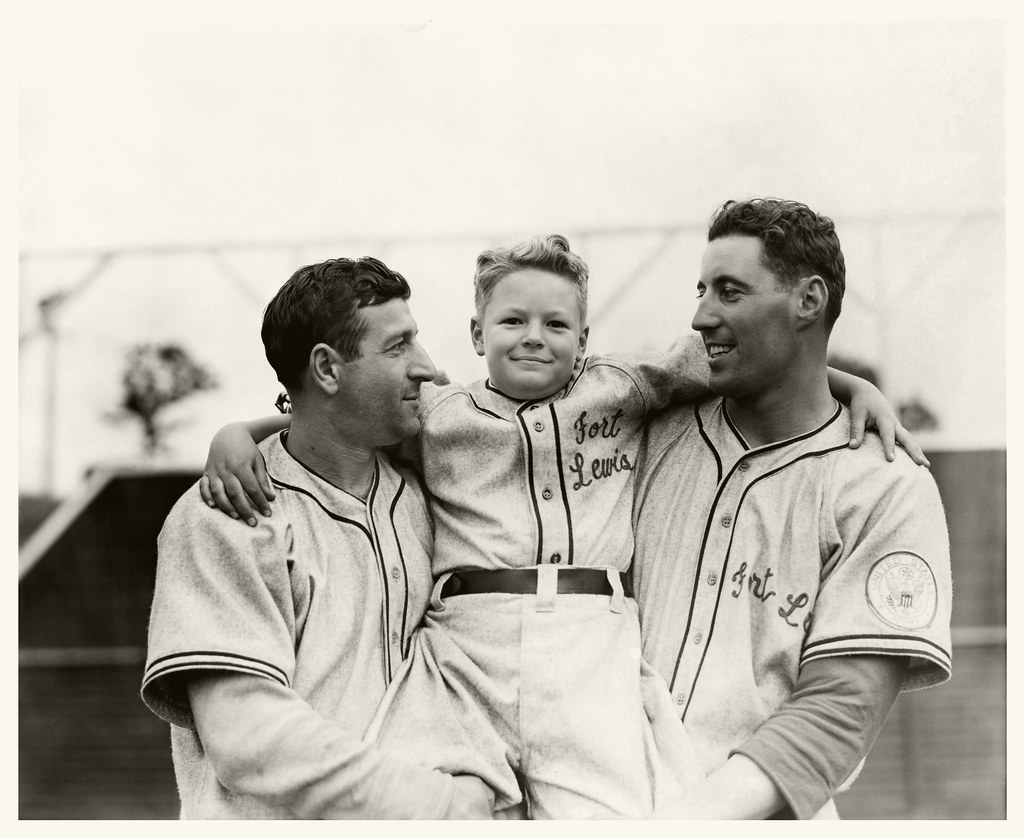
With the Warriors own 11-8 but not out of the game, back-up catcher Ruben Litzenberger, pinch hitting for Fields, led off the inning with a single. Shortstop Billy Scheske, formerly of the Class “D” Wisconsin League Fond du Lac Panthers, worked Navy reliever and former Tacoma Tiger Rube Sandstrom for a walk. With no outs in the bottom of the ninth and two on base, Warriors first baseman Herm Reich strode to the plate with his .309 season batting average, having already accounted for three runs on four hits in the game. Sandstrom coaxed Reich to hit into a double play, leaving Litzenberger on third with two outs. Left fielder “Red” Lassiter lifted a fly for the final out.[64]
The game’s benefits were the athletic funds for the troops serving at Fort Lewis and Naval Air Station Pasco. After the state and federal taxes were deducted from the gross receipts, $2,804.91 was split evenly between the two bases.[65]
The 3,455 fans at Tacoma’s Athletic Park were met with disappointment in the loss as the rivalry was just as much a Tacoma versus Seattle contest as it was Army versus Navy. The Flyers began the season at the Naval Air Station at Seattle’s Sand Point. Morrie Arnovich had his Warriors back to work in preparation for their must-win second game in Spokane.[66] Four of Arnovich’s players, Billy Scheske, Red Lassiter, Billy Sewell, and Ray Nordell, were unable to travel due to Army duties. With the championship on the line, Morrie had a serious decision to make as to which of his pitchers to send to the rubber in the upcoming game.[67]
Cy Greenlaw, the lefty who was responsible for one of the Flyers’ runs in the top of the ninth inning in game one, was Arnovich’s choice for starting in Spokane. Ford Smith ranked among the Warriors’ top batters, leading Arnovich to keep the big righthanded pitcher in the lineup in left field. Despite being shelled in the first game, Bittner got the nod for the Flyers.
Ferris Field was packed with the largest paid attendance of the season, with approximately 5,000 in the stands for the September 13 game. From the first frame, Bittner redeemed himself, limiting the Warriors to just seven hits as he went the distance for the Flyers. Of the ten Fort Lewis men to face Bittner, only four reached safely. Former Rainiers catcher Bill Beard was 3 for 4 while Arnovich managed a pair of singles in four appearances. Second baseman Harv Clutter and Ford Smith each accounted for a single.[68]
Bittner pitched a gem, walking just two Warriors while striking out eight. Conversely, Greenlaw’s performance was abysmal, starting in the bottom of the third when he allowed a pair of runs. Flyers batters poured on the offense with another tally in the fifth, three in the sixth and two more in the seventh to put the Navy on top of Fort Lewis, 8-0. The Flyers clinched the Pacific Northwest Service League crown with outstanding pitching and hitting while capitalizing on four Warrior defensive miscues.[69]
A week after the loss, the Fort Lewis Warriors faced the post league champion Fort Lewis Medics in an exhibition matchup at the base. To level the playing field for the Medics, at least from the mound, Arnovich started Fields on the rubber. After two frames, first baseman Herm Reich spelled Fields, who was shelled by Medics batters. Reich took over and retired the side with three consecutive strikeouts. Warriors’ batters exploded with a 10-run sixth inning and never looked back. Playing first base, Ford Smith, who was five for six,[70] belted two bombs in the game as the Warriors downed the Medics, 26-7, with Eull, Litzenberg and Stepich pitching the balance of the game. Arnovich, outfielder Al Schultz and Reich also accounted for Warrior bombs.[71]
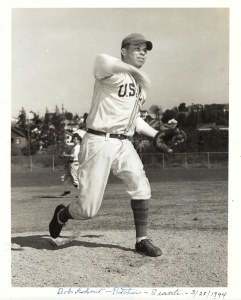
The Warriors had one last contest to close out Fort Lewis baseball for 1942. Hosting the semi-pro Tacoma city champion Tillicum Chiefs, Arnovich sent Greenlaw to the hill and Smith to first base. Fresh from his California League play with Santa Barbara, Tacoma native Bob Kohout[72] took the mound for the Chiefs. Out of the gate, Tillicum took a one-run lead in the first inning and Kohout held the Warriors scoreless until the bottom of the fourth, when Fort Lewis went ahead on Ford Smith’s two-run blast. In the fifth, Fort Lewis took a short-lived 3-1 lead until the top of the sixth, when the Chiefs squared the score, 3-3. Both pitchers remained in the knotted game into the tenth inning. With two baserunners aboard on walks and two outs in the bottom half of the tied game, Herman Reich stroked a single to drive in the winning run and place an exclamation mark on the season.[73]
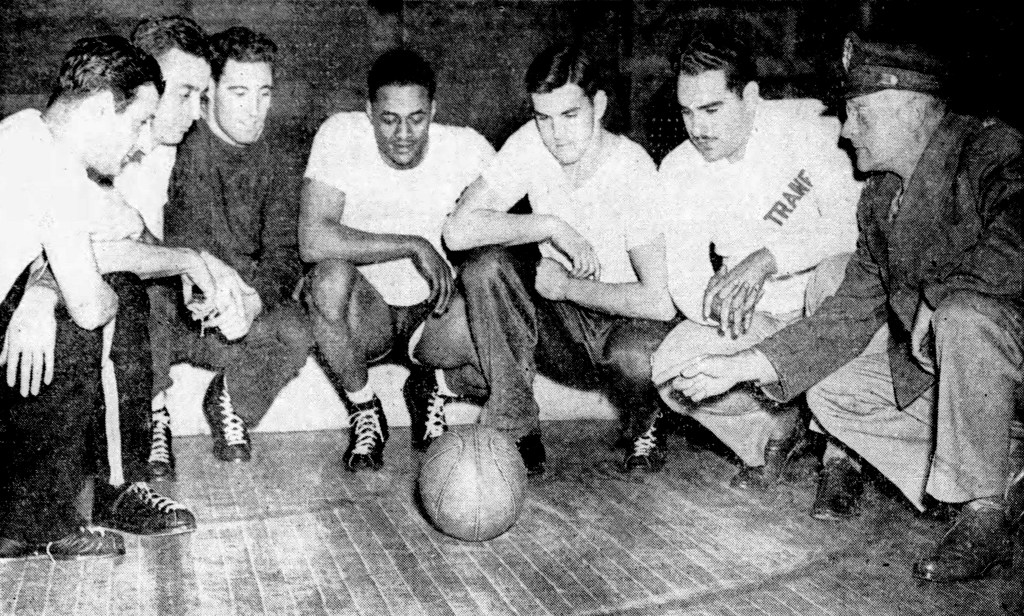
Staff Sergeant Ford Smith ended the season with a 16-2 won-lost record to lead Warriors pitchers, with Private Cy Greenlaw right behind him with a record of 15-2. With fewer at-bats, Smith’s .350 batting average did not factor among the team leaders.
Gridder and Cager
With the post football league already underway, Smith, who had played in the backfield of Phoenix (Arizona) Junior College in 1936,[74] was an obvious candidate for a spot on the Fort Lewis Warriors or another post gridiron club. After a tryout with the Fort Lewis Negro football club, the Brown Bombers[75], Smith changed directions to pursue the Warriors of the hardwood, joining Reich, Beard, and Arnovich on the Warriors basketball team. His athletic ability and the fact that he had had “a few nibbles from the Harlem Globetrotters” before the war, made basketball an obvious choice.
In a January 25, 1943, basketball game against Pacific Lutheran University (PLU), Fort Lewis trailed the Lutes, 33-31, with less than a minute remaining on the clock when Frank Ferris scored and sent the game to overtime. At the end of extra time, Fort Lewis prevailed, 38-37. Ford Smith played sparingly, scoring one field goal for two points.[76] Sometime after the game, Staff Sergeant Smith transferred to Fort Lee, Virginia, to attend Officer Candidate Quartermaster Corps School.
Commissioned to Lead
After successfully completing the officer candidate program, Staff Sergeant Ford Smith was honorably discharged from the U.S. Army on April 1, 1943.[77] He was inducted into the Army Air Forces the following day, April 2, and commissioned as a second lieutenant.[78]
While at home in Phoenix for a furlough, Lt. Smith organized a colored all-star team made up of former Arizona Compress players to challenge the Phoenix semi-pro International Thunderbirds ballclub in a war bond fund-raising game,[79] though no results of the contest are available.
Lieutenant Smith deployed to the European Theater, departing the United States on April 3, 1943, transiting the Atlantic and arriving in England on April 10, less than two months before D-Day. Smith served in England as a motor transportation officer, supervising and instructing maintenance on the Army’s 2-1/2-ton trucks, overseeing vehicle convoys and serving as a quartermaster corps officer in support of the European aerial campaigns.[80] “My dad was in the military; he finished as a lieutenant. He spent most of his time during World War II in England,” Smith’s daughter, Jackie Garner, told writer Abby Sharpe. “And he led those folks that had to drive those bombs to the airfields. And they had to drive with no lights, and in the fog a lot of times at night, because you didn’t want them (the enemy) knowing that they’re moving things.”[81]
Diamond Integration in London
Following the surrender of the Third Reich forces, more than 100,000 of the troops stationed in Europe formed unit teams and leagues from the Mediterranean to the United Kingdom.[82] Baseball began to take a foothold in the UK with the arrival of troops in 1943 and was gaining momentum in popularity by the war’s end. On June 17, 1945, American troops played a game at Chelsea Football Field, Stamford Bridge.[83]
| Rank | Player | Position | Former |
|---|---|---|---|
| Sgt. | Paul Campbell | 1B | Red Sox |
| Corp. | Danny Carnevale | SS | Scranton (EL) |
| Pfc. | Pete D’ Ambrosio | 3B | Huntington (MTNS) |
| Thomas Daddino | OF | Pocomoke City (ESHL) | |
| Louis Edwards | C | ||
| Garrison | 2B | ||
| T/5 | Tobias Grabel | OF | Mid-Atlantic League |
| Donald Harkness | C | ||
| Harry Hendershot | OF | Tarboro (COPL) | |
| Louis Kelley | PF | ||
| Capt. | Ted Kleinhans | P | Syracuse (IL) |
| Sgt. | Bill Lobe | C | Zanesville (MATL) |
| Henry Loman | 2B | Lynchburg (PIED) | |
| Pvt. | Fred Osborn | P | |
| T/Sgt. | Charles Podalak | OF | Union City (KITL) |
| Skiffington | P | ||
| 1st Lt. | Ford Smith[84] | P | Kansas City Monarchs |
| Lt | Joseph T. Stumm | Mgr. | |
| Sgt. | William Wright | OF | PONY League |
The Greys roster, at least on paper, appeared to have an advantage, with several players with major league or upper-level minor league experience compared to the Whites. When the game was played, the outcome was not a surprise, though the score was close. Kleinhans started for the Greys in front of 10,000 fans, [85] allowing three runs on four hits. Fred Osborn pitched the sixth frame, allowing two more runs. Ford Smith took the hill and pitched hitless baseball for the last three innings while striking out six White batters. In the bottom of the ninth, former Red Sox first baseman Paul Campbell drove a ball over the fence with a runner aboard to end the contest. Smith was voted the game’s most valuable player in the 7-5 victory.[86] As the MVP, Smith was awarded a souvenir baseball autographed by all the players.[87]
Referencing the integration of English soccer teams, a June 1945 article published in the Chicago Defender touched upon segregation in professional baseball in the United States. “British citizens, who made up one-third of the crowd, were unable to understand, after seeing Lieut. Smith’s brilliant pitching,” the article stated, “why Negroes were not allowed to play in major league white baseball back in the states.” Though not widely integrated at the time, the Chicago Defender story stated, “There are a number of Negroes playing on British soccer teams.”[88]
| Rank | Player | Position | Former |
|---|---|---|---|
| John Chopick | P | ||
| Ted Dixon | OF | Daytona Beach (FLOR) | |
| Richard Georgia | IF | ||
| Fran Hecker | P | Dothan (ALSL) | |
| Maurice Hurley | P | ||
| Ralph Ifft | P | Butler (PASA) | |
| Stan Kaczynski | 1B/OF | ||
| Sgt. | Charles “Mike” Mileusnich | Mgr. | |
| Armen Milton | C | ||
| Walter Palcher | 2B | ||
| Pete Pierce | 3B | ||
| Sgt. | Eddie Sieber | C | |
| Bernard Smith | SS | Amateur | |
| Gene Thompson | OF | San Bernardino (CALL) | |
| Wolf | P | ||
| George Yarde | OF | ||
| Eddie Zydowski | C |
The following month, Lieutenant Smith departed England, bound for the United States on July 28, arriving August 7. After one year, four months and four days of foreign service, Smith was homeward bound.
At home in Phoenix and on furlough from his Army duties, Phoenix Thunderbirds manager Otto Wolf tapped Smith to make his return to the semi-pro game temporarily, at least. Ten days after the second atomic bomb was dropped on the city of Nagasaki, Smith was on the mound for the Thunderbirds. In a game on August 19, Lt. Smith shut down the Glendale Grays, 8-1, while contributing to his cause with a pair of runs.[89] Facing the Grays again on September 9, Smith struck out 12 while allowing six hits in a 4-2 victory.[90]
First Lieutenant Smith returned to duty with “G” Squadron, 118th Army Air Forces Bomb Unit at Goodman Field, Kentucky, where he served until December 22, when he was transferred to the Army Air Forces Separation Base at Lowry Field in Denver. On January 7, 1946, Smith detached from Lowry Field on terminal leave and was officially discharged on March 14, 1946, having completed four years of service. His military decorations included the European–African–Middle Eastern Campaign Medal, American Campaign Medal, World War II Victory Medal, and the Unit Meritorious Citation Badge.[91]
The Kansas City Monarchs were preparing for their spring exhibition season at the end of March with games in Texas. Just two weeks after separating from the Army, Ford Smith informed the Monarchs that he would join them in time for the March 31 game in Corpus Christi.[92]
A Pioneer in the Armed Forces and Baseball
Smith’s Army career, his service baseball play in particular, is largely forgotten. Playing with the Fort Lewis team in front of thousands of multiracial cheering fans despite the existing segregation of the armed forces had to have had an impact on regional military leadership as well as on his comrades and teammates. Three years after his time at Lewis, he once again integrated a service team, playing in front of fellow GIs and being voted the game’s most valuable player, further breaking down the obvious racial barriers.
Less than five months after Ford Smith’s achievements garnered national headlines, another Kansas City Monarchs player and fellow Army officer signed a contract with the Brooklyn Dodgers. The presiding commissioner of baseball, Albert B. “Happy” Chandler, former senator from Kentucky; a southerner, did nothing to stand in the way of Dodgers general manager Branch Rickey’s signing of Robinson on November 1, 1945. In December 1942, Chandler, acting in his capacity as the chairman of the Senate military affairs sub-committee,[93] was in the midst of an investigation of military establishments, visiting some of them, including Fort Lewis.[94] However, his visit included a meeting unrelated to his inspection of the post.
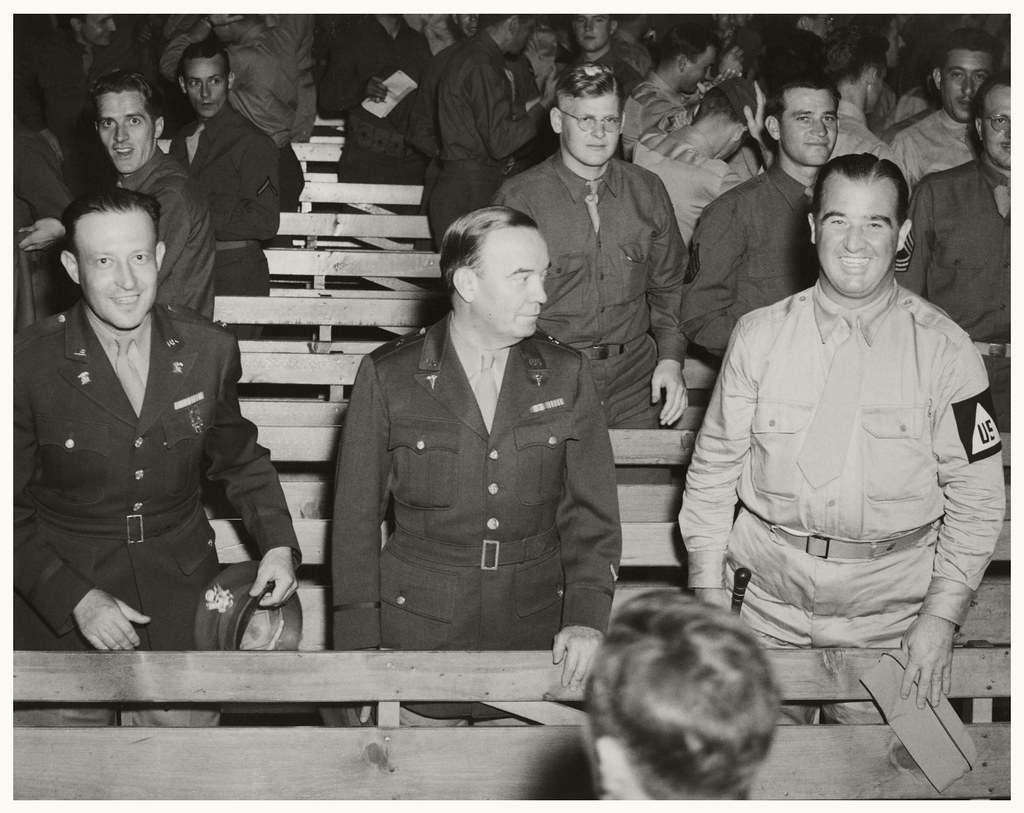
Senator Chandler specifically sought time with the manager of the Fort Lewis Warriors. “Pvt. Morris Arnovich, former National League outfielder, and Senator Albert B. (Happy) Chandler of Kentucky recently renewed an old friendship at Fort Lewis, Wash. upon completion of conferences at the fort. Senator Chandler’s first request of the post commander, Col. Ralph R. Glass, was to see Arnovich, described as “one of my favorite ball players.” They spent an hour reminiscing.”[95]
Arnovich, predominantly a utility player following his lone All-Star season in 1939, did not have the cachet of other major leaguers serving in the armed forces; however, he did attract national attention by featuring Ford Smith on his team. The substance of the hour-long meeting of the two men is unknown, though the topic of fielding an integrated team in the segregated armed forces may have surfaced, prompting Senator Chandler to inquire about the reception by fellow servicemen and the area fans. Of course, this is pure speculation.
Upon Chandler’s departure from Fort Lewis en route to other military installations, he told the Warriors’ chief, “Morrie, in visiting Army posts in the United States, I have said hello to a great many star baseball players, who, like yourself, have joined Uncle Sam’s forces in this great fight for democracy. It’s a wonderful feeling to know that America’s athletes are giving their all to this cause.”[96]
Noted Negro Leagues historian and author Phil Dixon, in reference to Ford Smith, told writer Abby Sharpe in 2021, “You go online, you know, it says he was here, he was here, he was here. But you don’t know how he got there.” Dixon continued, “So, a lot of his life is a mystery.”[97]
While it is true that in contrast to other Negro League players of his stature, very little has been written about Ford Smith. He served during the war with honor and distinction and played for his country, for the betterment of his comrades, and the game itself, perhaps laying countless key stones in paving the road for the integration of the armed forces and baseball.
[1] “Clinch Series,” The Olympian, September 14, 1942: p.2.
[2] “41st Nine Certified for Play,” The Tacoma Times, August 13, 1941: p.12.
[3] “Work Begins on Fort Lewis Field,” The Tacoma Times, September 16, 1941: p.15.
[4] Elliott Metcalf, “Herm Reich Would Play Sundays…” The Tacoma Times, March 5, 1942: p.10.
[5] “Arnovich Into The Army,” The Spokesman-Review (Spokane, Washington), March 6, 1942: p.16.
[6] Bill Dunford, “The Evening Line,” The Province (Vancouver, British Columbia), May 07, 1942: p.26.
[7] Dan Walton, “Sports Log,” The News Tribune, April 25, 1942: p.16.
[8] Dan Walton, “Sports Log.”
[9] Dan Walton, “Sports Log.”
[10] “Game Monday Night Last Chance to Aid Reich’s Outfit – Bat and Ball Fund,” The News Tribune, April 28, 1942: p.12.
[11] “Fort Team Wins Pair,” The Olympian (Olympia, Washington), June 8, 1942: p.6.
[12] “Warriors Blast Bombers,” The Olympian, June 15, 1942: p.6.
[13] Ed Honeywell, “Fort Lewis Ready for Sand Point Club,” The News Tribune, June 20, 1942: p.16.
[14] Ed Honeywell, “Fort Lewis Ready for Sand Point Club.”
[15] “Executive Order 9981, Desegregating the Military, (https://www.nps.gov/articles/000/executive-order-9981.htm)” National Park Service, accessed April 8, 2024.
[16] Abby Sharp/Cronkite News, ‘It’s about time’: Remembering Ford Smith, the lone Arizonan to play in the Negro Leagues, (https://www.tucsonweekly.com/TheRange/archives/2021/07/02/its-about-time-remembering-ford-smith-the-lone-arizonan-to-play-in-the-negro-leagues_)” Tucson Weekly, July 2, 2021 (accessed January 19, 2024).
[17] Original Certificate of Birth, Arizona State Board of Health (Ancestry.com). The original record documents Smith’s date of birth as January 5, 1919, four days earlier than is noted on other official documents.
[18] “Early Arizona Soldier Is Dead,” Arizona Republic, December 22, 1947: p.11.
[19] Details For Marriage ID#194924 (https://abish.byui.edu/specialCollections/westernStates/westernStatesRecordDetail.cfm?recordID=194924), BYU Idaho Special Collections & Family History, accessed April 9, 2024.
[20] “Phoenix Monarchs Beat Cards, 22-0,” Arizona Daily Star, November 13, 1934; p. 6.
[21] “Semi-Pro Loop Talked,” Arizona Republic, April 8, 1937: p.15.
[22] “Ex-Broncos Reorganized,” Arizona Republic, March 1, 1940: p.38.
[23] “Phoenix Colored Team Arrives With Impressive Past Record,” The Wichita Beacon, August 14, 1940: p.8.
[24] “Phoenix Colored Team Arrives With Impressive Past Record.”
[25] “Birds, Compress Clash in Opener,” Arizona Republic, April 20, 1941: p.33.
[26] Enlisted Record of John Ford Smith.
[27] Gail Fowler, “Billy Sewell Flings Passes for New Conference Record,” Spokane Chronicle, December 6, 1940: p. 13.
[28] Another pitcher is listed among the Warriors 1942 staff, Don Wymer, formerly of the California League, though research has yet to identify who he is. “Arnovich Leads Fort Lewis to Title,” The Sporting News, August 27, 1942: p.6.
[29] Ed Honeywell, “Fort Lewis Ready For Sand Point Ball Club,” The News Tribune, June 19, 1942: p.16.
[30] “Sand Pointers Thump Out Win Over Warriors,” The News Tribune, June 23, 1942: p.13.
[31] “Take Shelter, Boys,” The News Tribune, June 3, 1942: p.15.
[32] “Fort Lewis Wins,” The News Tribune, June 28, 1942: p.11.
[33] “Sea-Tac Nine Trims Warriors in Thriller,” The Seattle Star, July 6, 1942: p.11.
[34] “Fort Lewis Warriors Take 7-6 Win Over Everett,” The Daily Herald (Everett, WA), July 13, 1942: p.8.
[35] “Warriors Win From Printers in Ball Clash,” The News Tribune, July 21, 1942: p.12.
[36] Dan Walton, “Sports Log,” The News Tribune, July 22, 1942; p.12
[37] “John Heinrick,” The University of Puget Sound Athletic Hall of Fame (https://loggerathletics.com/sports/2021/5/25/information-halloffame.aspx), accessed April 22, 2024.
[38] “Ford Smith Hurls Fort Lewis to Win Over Everett,” The Seattle Star, July 27, 1942: p.11.
[39] “Fort Lewis on March! Soldiers Tacoma Bound,” The News Tribune, July 31, 1942: p.18.
[40] Ibid.
[41] Associated Press, “W.I. Teams Beaten by Flyers, Army,” The Bellingham Herald, August 4, 1942: p.6.
[42] “Ft. Lewis Night Big Success,” The News Tribune, August 5, 1942: p.10.
[42] Ibid.
[43] “’Play Ball; Resounds Friday,” The News Tribune, April 29, 1937: p.1.
[44] “Fort Athletic Fund Takes on Weight,” The Tacoma Times, August 12, 1942: p.10.
[45] “Fort Lewis Takes Title,” The News Tribune, August 18, 1942: p.10.
[46] Associated Press, “Navy Flyers Defeat Suds in Long Game,” Bremerton Daily News (Bremerton, WA), August 18, 1942: p.7.
[47] Ibid.
[48] Ibid.
[49] “Beavers Defeat Fort Lewis, 8-5,” Kitsap Sun (Bremerton, WA), August 18: p.5.
[50] Dan Walton, “Sports-Log,” The News Tribune, August 26, 1942: p.12.
[51] Ibid.
[52] “N’West Service Title on Block,” The Columbian (Vancouver, WA), August 24, 1942: p.5.
[53] “Warriors in Ball Victory,” The Tacoma Times, August 25, 1942: p.10.
[54] “Warriors To Meet Flyers,” The News Tribune, August 25, 1942: p.12.
[55] “Warriors Play Oregon Teams This Weekend,” The News Tribune, August 31, 1942: p.9.
[56] “Fort Lewis Nine Beats All-Star Squad 2 to 0,” Albany Democrat-Herald (Oregon), August 31, 1942: p.6.
[57] Ibid.
[58] “Warriors Win Game After Top-Notch Show,” The Capital Journal (Salem, Oregon), August 31, 1942: p.6.
[59] Staff correspondent, “500 More Japanese Off for New Home,” The News Tribune, August 31, 1942: p.9.
[60] Dave James, “Arnovich Gets In Shape,” The News Tribune, September 3, 1942: p.18.
[61] “Warriors Set For Flyers,” The News Tribune, September 7, 1942: p.10.
[62] Dan Walton, “Fort Lewis Bows to Flyers,” The News Tribune, September 8, 1942: p.14.
[63] Ibid.
[64] Ibid.
[65] Elliot Metcalf, “On The Lam…!,” The Tacoma Times, September 12, 1942: p.13.
[66] “Warriors Back At Work For Spokane Tilt,” The News Tribune, September 9, 1942: p.12.
[67] “Patching Warriors,” The News Tribune, September 11, 1942: p.18.
[68] “Warriors Lose to Flyers,” The News Tribune, September 15, 1942: p.11.
[69] Ibid.
[70] Smith to Play in Ball Game,” The Tacoma Times, September 26, 1942: p.14.
[71] “Seven Homers Hit During Army Battle,” The News Tribune, September 22, 1942: p.11.
[72] Robert Kohout enlisted into the Coast Guard April 1943, and was assigned to the Seattle base where he served throughout the war and played baseball along with fellow Tacoman and major leaguer, Marv Rickert.
[73] “Herman Reich Hot at Plate,” The Tacoma Times, September 29, 1942: p.10.
[74] “Ford Plays Football, Too,” The News Tribune, August 29, 1942: p.20.
[75] Dan Walton, “Sports: Scraping the Kettle,” The News Tribune, October 22, 1942: p.14.
[76] “Fort Lewis Nips Lutes,” The News Tribune, January 26, 1943: p.12.
[77] Military Record and Report of Separation Certificate of Service, Smith John F., 38071414.
[78] Army of the United States Certificate of Service, John F. Smith, 01 590 192.
[79] “Birds, Colored Nine Tangle Here Tonight,” Arizona Republic, September 22, 1943: p. 12.
[80] John F. Smith Separation Qualification Record, page 11.
[81] Abby Sharp/Cronkite News, ‘It’s about time’: Remembering Ford Smith, the lone Arizonan to play in the Negro Leagues, (https://www.tucsonweekly.com/TheRange/archives/2021/07/02/its-about-time-remembering-ford-smith-the-lone-arizonan-to-play-in-the-negro-leagues_)” Tucson Weekly, July 2, 2021 (accessed January 19, 2024).
[82] Though baseball was commonly played by troops in England throughout 1944 and leading up to the German surrender, no record has been uncovered revealing an organized league play that Smith participated in.
[83] Tony Cordaro, “Red Sox Chattels in Sunday Pro Lineup,” The Stars And Stripes, June 7, 1945: p.3.
[84] It is unknown why Ford Smith is listed as “Lt. Don S. Smith, prominent Negro pitcher of the Kansas City Monarchs” in this and other newspaper articles. Tony Cordaro, “Red Sox Chattels in Sunday Pro Lineup,” The Stars And Stripes, June 7, 1945: p.3.
[85] Joe Donovan, “Roundup,” The Brooklyn Daily Eagle, June 17, 1945: p. 12.
[86] “K.C. Monarch Stars In Army London Tilt,” The Des Moines Register, June 18, 1945: p.9.
[87] “Tucsonian Winner in Army Contest,” Tucson Citizen, June 18, 1945: p.10.
[88] “Negro Army Pitcher Beats Former Major League Stars,” The Chicago Defender (National edition), June 30, 1945: p.7.
[89] “Birds, Grays Will Battle In Stadium Contest Today,” Arizona Republic, August 26, 1945: p.21.
[90] “Birds Defeat Glendale, 4-2,” Arizona Republic, September 10, 1945: p.10
[91] Military Record and Report of Separation Certificate of Service, John Ford Smith.
[92] Jimmie N. Jones, “Baseball’s Top Nines Will Play Spring Training Opener Sunday,” The St. Louis Argus, March 29, 1946: p.16.
[93] “Will Inspect Camps,” Spokane Chronicle, December 17, 1942: p.18.
[94] “Sen. Chandler Commends Fort Lewis,” The News Tribune, December 239, 1942: p.4.
[95] “Salute From Sen. Chandler,” The Sporting News, January 14, 1943: p.11.
[96] Ibid.
[97] Abby Sharp/Cronkite News, ‘It’s about time’: Remembering Ford Smith, the lone Arizonan to play in the Negro Leagues, (https://www.tucsonweekly.com/TheRange/archives/2021/07/02/its-about-time-remembering-ford-smith-the-lone-arizonan-to-play-in-the-negro-leagues)” Tucson Weekly, July 2, 2021 (accessed January 19, 2024).

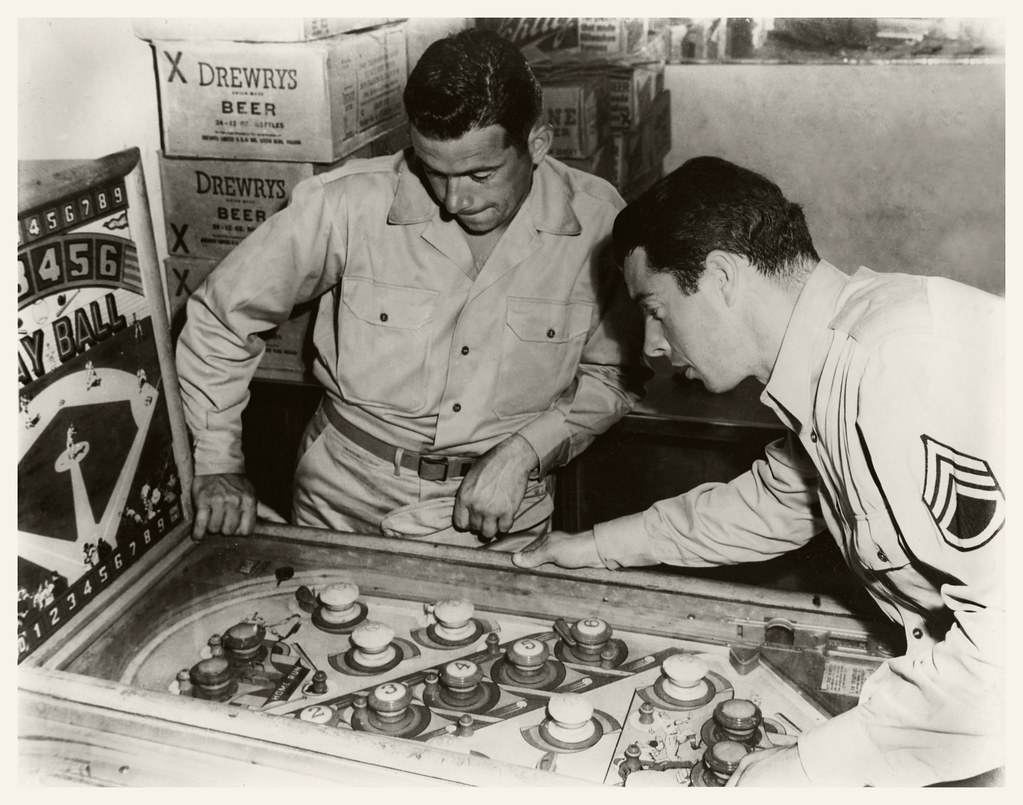
 Chevrons and Diamonds
Leave a reply to Harrington “Kit” Crissey Cancel reply