I created this site as a vehicle for me to write about and discuss the military baseball artifacts that I have or am adding to my collection. Rather than to be simplistic in describing the items and sharing photographs of each piece, I prefer to research and capture the history (when possible) in order to provide context surrounding the items as a means to educate readers. I find that I often return to my articles and incorporate their elements or entirety for use in subsequent articles or as a means to authenticate artifacts that I am interested in purchasing. Another activity that I enjoy participating in is to document those artifacts that I have discovered either too late or was incapable of purchasing due to being outbid, a missed opportunity, too many unanswered questions, cost-prohibitive or simply unavailable for purchase. Losing out on acquiring somethings doesn’t necessarily translate to letting these pieces pass into oblivion simply because they are not part of my collection.
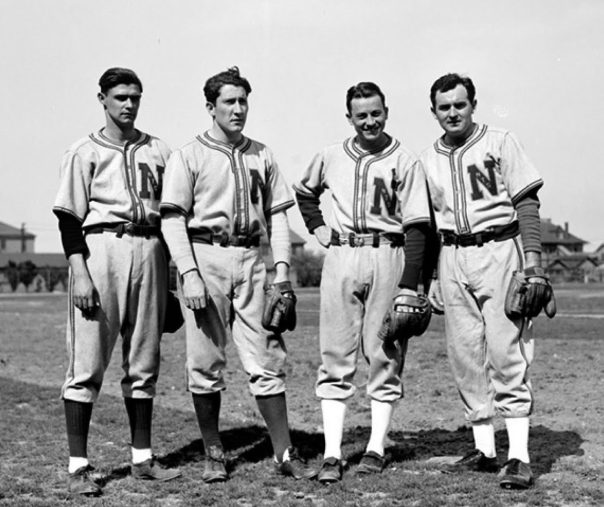
Left to right: Walter Masterson, Fred Hutchinson, Charlie Wagner, Tom Early (source: Hampton Roads Naval Museum).
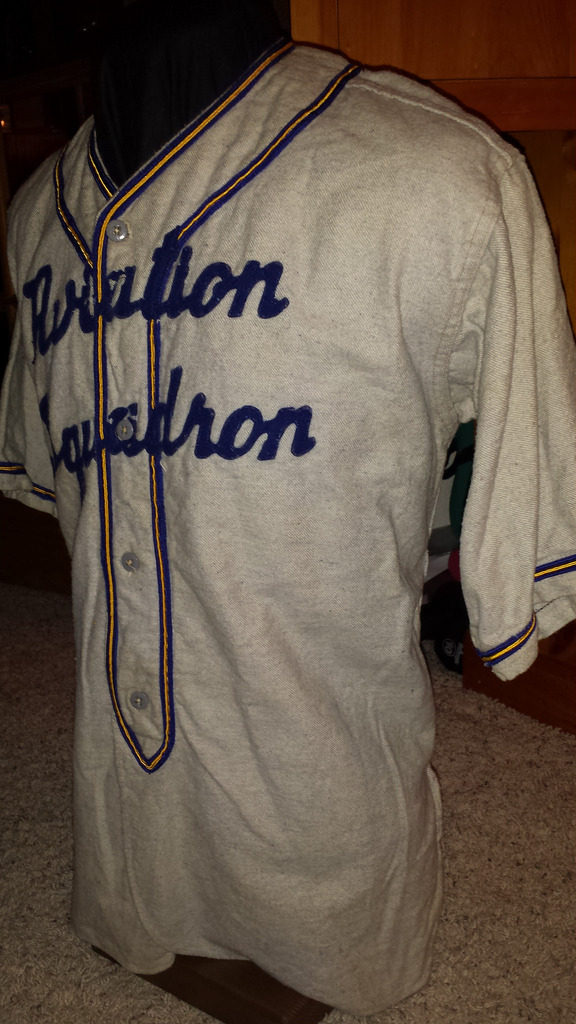
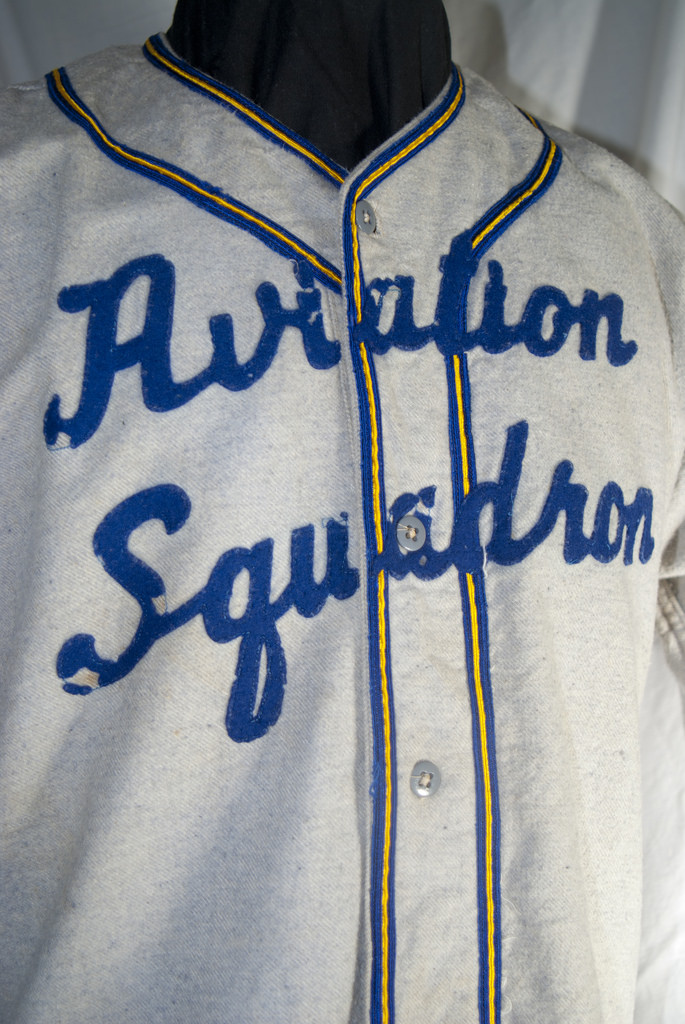
I have a soft spot for vintage jerseys and I am constantly on the prowl for anything that would help to make my collection more diverse with uniform pieces from all service teams such as Navy and Army Air Forces teams. In my collection, I now have three different World War II jerseys (two of which include the trousers) from Marine Corps ball teams. This past summer, I was able to locate ball caps that seem to accompany two of those Marines jerseys. In addition to the USMC items, I have two uniforms (jerseys and trousers) from WWII Army teams: one from the 399th Infantry Regiment and the other, a colorful, tropical-weight red-on-blue (cotton duck) uniform from the Fifth Army headquarters ball team (which reminds me that I still need to write an article about this uniform group). Two years ago, I was able to find another uniform set (jersey and trousers) that I am almost certain was from a Navy ball team, due to the blue and gold colors of the soutache and that the plackard reads in flannel script, “Aviation Squadron” adorning the jersey.
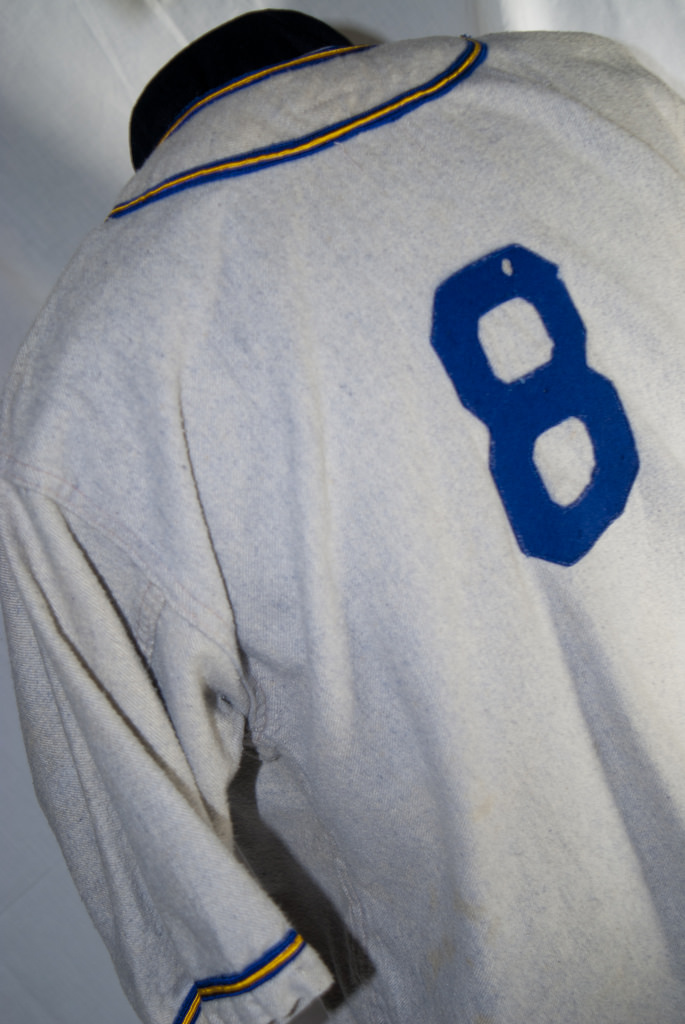
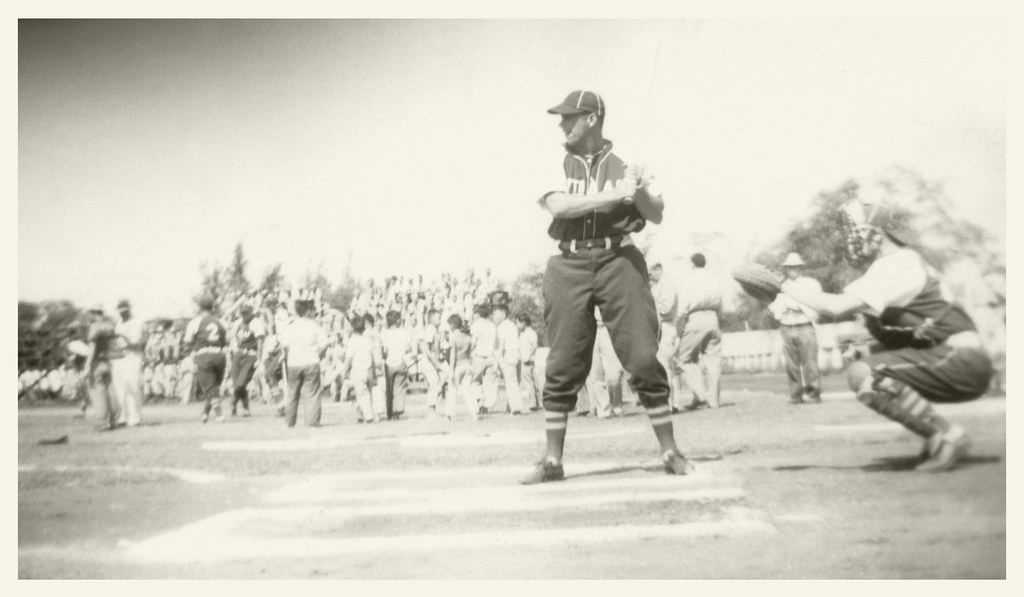
In my pursuit of military baseball uniforms, I have been working to document the ones that got away (or simply were not available for purchase) in order to create a record for comparative analysis in support of research or to assist in authentication of other uniforms. Unlike professional baseball, the major leagues in particular, there are very few surviving examples of uniform artifacts from the 1940s and earlier. By creating an archive, I am hoping that not only will I have a resource available for my own efforts but will also help others in understanding more about what our armed forces players wore on the field during their service.
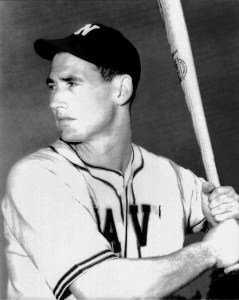
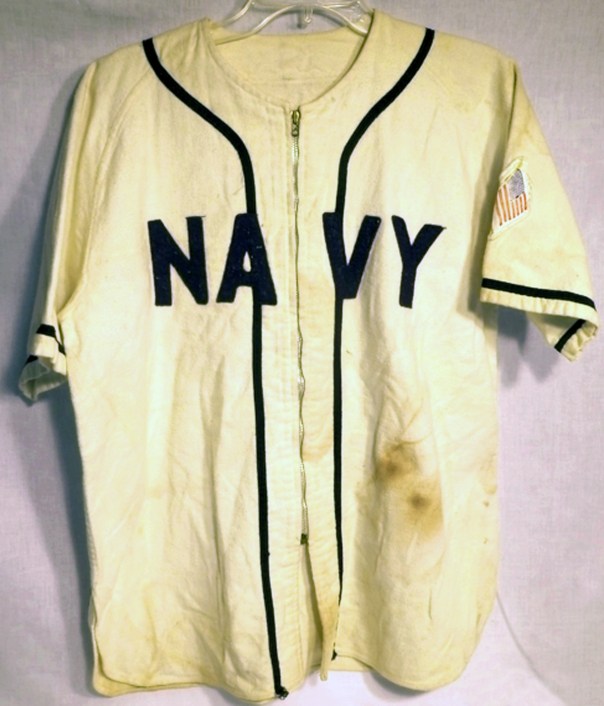
A few weeks ago, I was contacted by an author who was seeking information on what became of the baseball uniforms that were used by the naval aviation cadets who were attending U.S. Navy Pre-Flight School (The V-5 Program) at Chapel Hill. The cadet baseball team (the Cloudbusters) at the V-5 school included some professional ballplayers (such as two Boston Red Sox greats, Johnny Pesky and Ted Williams, Boston Braves’ Johnny Sain to name a few). In addition to the baseball team, Chapel Hill also fielded a cadet football team whose coaching roster included college legends Jim Crowley, Frank Kimbrough, Bear Bryant, Johnny Vaught and even a future president, Gerald Ford. The uniforms worn by the Cloudbusters baseball team were trimmed with a double soutache surrounding the collar and the placket that matched what was worn on the cuffs of the sleeves. Across the front in block lettering was N A V Y reminiscent of baseball uniforms worn by the Naval Academy ball teams at that time. In my response to the person who contacted me, I told her that I had not seen anything resembling the Cloudbusters uniforms nor did I have any knowledge of what became of them after the War. I can imagine that a team with a roster filled with professional ballplayers that they would have multiple uniforms (a few sets each for both away and home use), similar to what the Norfolk Naval Station Bluejackets ball team had.
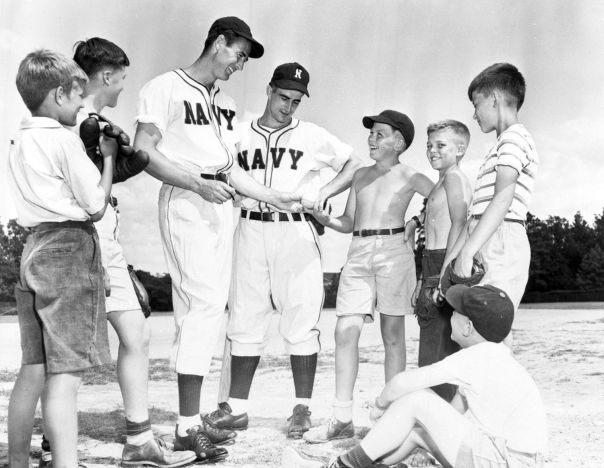
See Norfolk’s Virginian-Pilot video series regarding the Norfolk Naval Training Station Bluejackets baseball team featuring an interview with former major leaguer, Eddie Robinson:
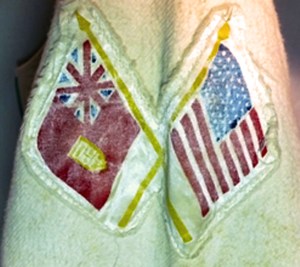
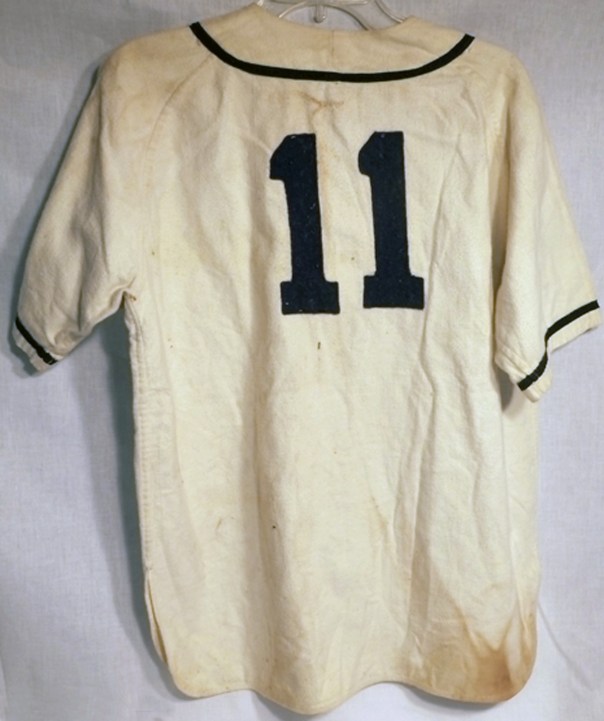
While looking through my photo archives for images of artifacts in support of another article that I was writing, I discovered images of a Navy baseball jersey that had been for sale at some point by a small, regional business that specializes in vintage sports equipment. I saved the image of the jersey for future reference due to the unique patch on the left sleeve. The patch bears two crossed flags – one is the U.S. flag and the other, a red flag with the British Union Jack in the left corner and an indistinguishable symbol in the red field. The jersey has a singular blue soutache trim and possesses the same block-lettering (as seen on the Cloudbusters jerseys – which have no sleeve patches). In searching through extensive volumes of historical Navy baseball photographs, no image has surfaced showing this uniform in use, keeping it a mystery for the time-being.
I am hopeful that I can continue to gather a useful archive of uniform artifacts in order to provide a sufficient military baseball uniform research resource. Aside from articles such as this, I think that I will organize the uniform images into a proper archive that will be organized and searchable. By capturing and cataloging the artifacts that do not make it into my collection, I can still maintain a “collection” of artifacts that will be helpful to me and other collectors and researchers.


 Chevrons and Diamonds
Leave a reply to Chris Cancel reply