The “backstop,” “field general,” “receiver,” or “battery-mate” to the pitcher, the catcher is the only baseball defensive player who can see the entire diamond from their position. Aside from the protective gear, affectionately known as the “tools of ignorance,” the catcher’s unique fielding leather is designed to provide a measure of insulation from the impact of the pitches thrown from the mound, 66 feet, six-inches away. Until the advent of the hinge that allows the catcher to close the mitt around the ball, two hands were required with each pitch to ensure the ball is firmly planted before being thrown back to the pitcher.

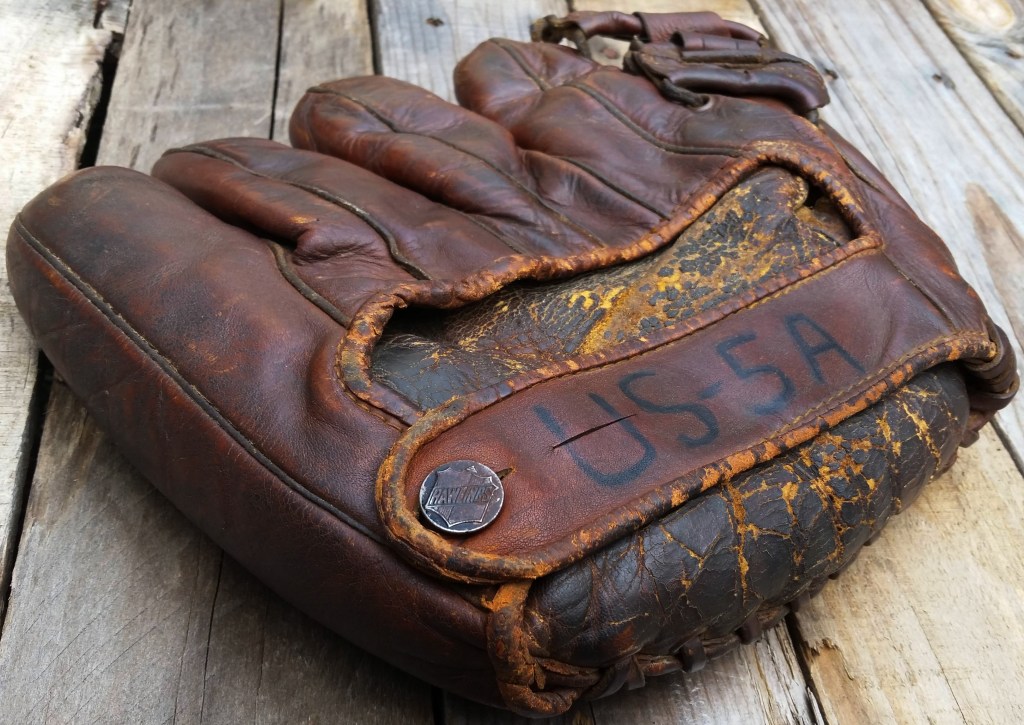
These pre-1950s mitts are bulky and board-stiff requiring player behind the plate to be the most skilled and who can take the pounding of errant pitches, batters’ backswings, baserunner collisions and the occasional impact with the walls surrounding the backstop.
Catcher’s mitts seem to draw the most attention of our public exhibits due to their size and interesting designs and shapes.

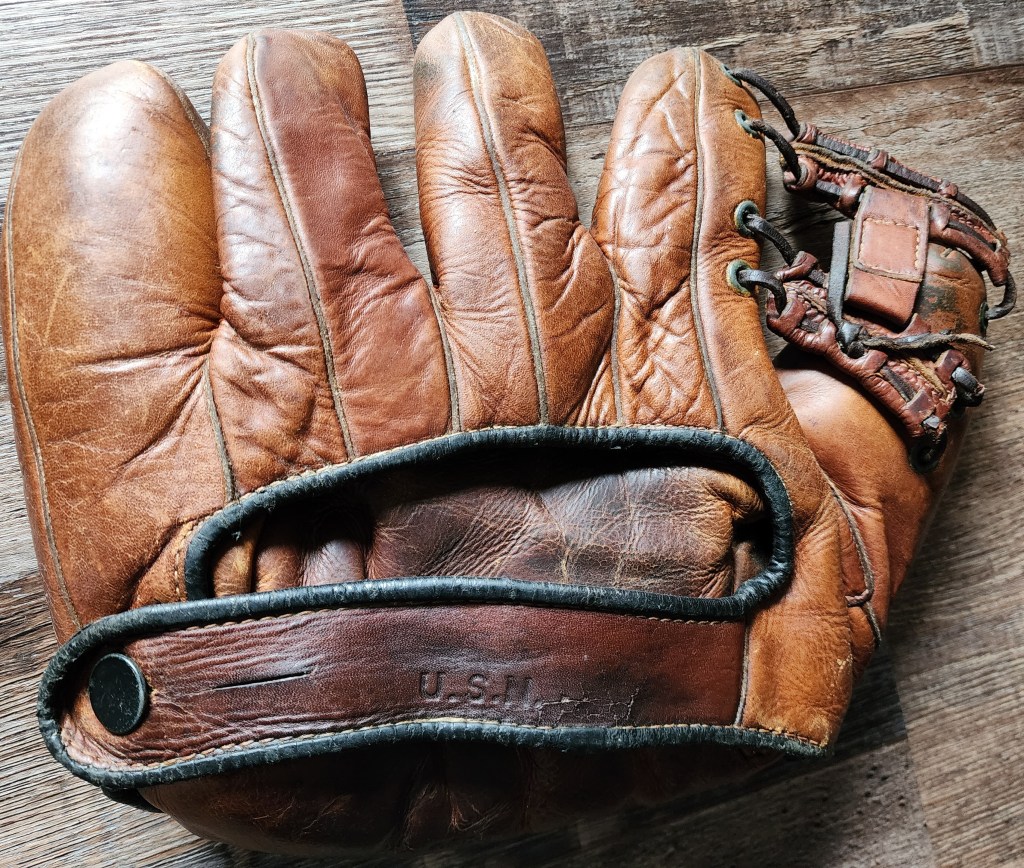
Later Elmer Riddell service gloves made for the armed forces were stamped with specific branch two-letter models: “UA” for Army and “UN” for Navy. Both featured stitched heels (Chevrons and Diamonds Collection).
| Date | Mfr. | Model | Military Stamp | Hand | Other Stamps |
| 1944 | Denkert | 395 | U.S.A. | Right | |
| 1944 | Denkert | 395 | U.S. | Right | |
| 1945 | DuBow | Genuine Calfskin | U.S.N. | Right | |
| 1945 | DuBow | Professional | U.S. | Right | 12-1945 |
| 1943 | George A. Reach | “COL” | U.S. | Right | |
| 1943 | GoldSmith | “DW” Elmer Riddell | U.S. Army | Right | |
| 1943 | GoldSmith | “DW” Elmer Riddell | U.S. Army | Right | |
| 1943 | GoldSmith | “DW” Elmer Riddell | U.S.N. | Right | |
| 1945 | GoldSmith | “UA” Elmer Riddell | (see below) | Right | |
| 1945 | GoldSmith | “UN” Elmer Riddell | (see below) | Left | |
| 1944 | Hutch | “56” Ival Goody Goodman | U.S. | Right | |
| 1942 | Rawlings | Bill Doak “H” | None | Right | |
| 1943 | Rawlings | Bill Doak “H” | U.S.N. | Right | |
| 1945 | Rawlings | Bill Doak “H” | Special Services U.S. Army | Right | |
| 1943 | Wilson | 615X | Special Services U.S. Army | Right | |
| 1944 | Wilson | 617X | U.S.N. | Right | |
| 1944 | Wilson | 617X | U.S. | Left | |
| 1945 | Yale | F95SB | U.S. | Right | “May 1945” |
| 1949 | Uknown | Bob Doerr Autograph | U.S. | Right | July -49 |

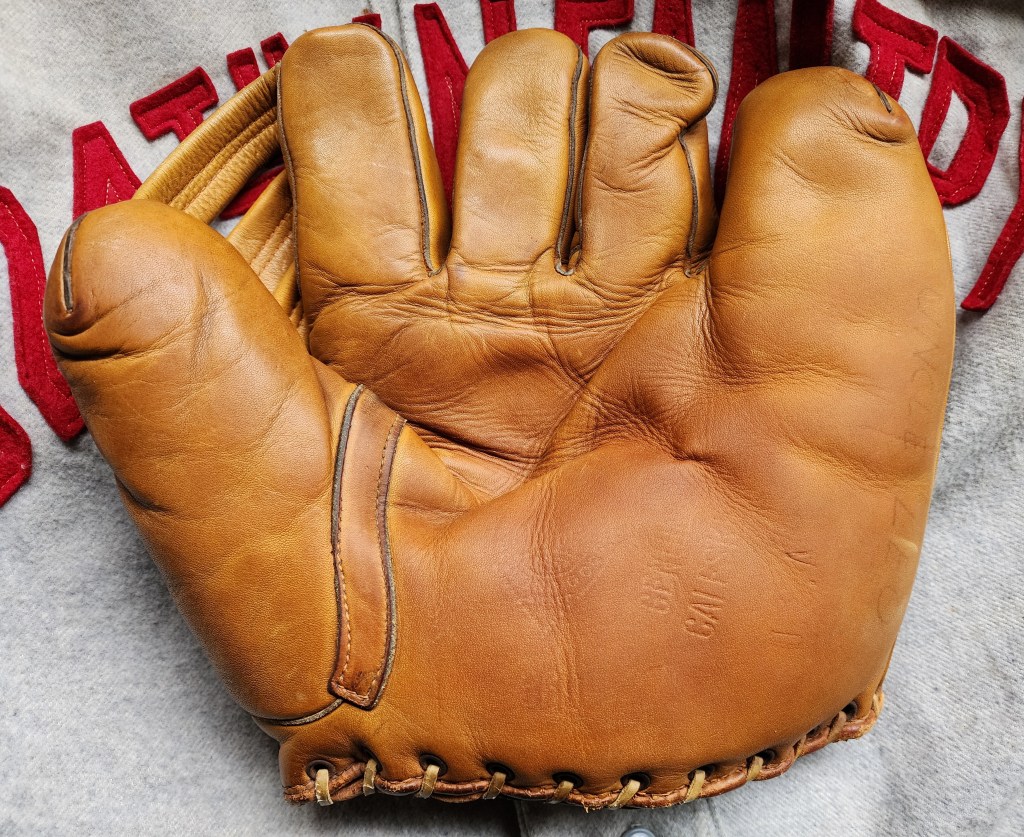
See WWII-to Postwar fielding leather:
Gloves and Mitts Home:
- Military Fielding Leather
- Interwar (1919-1941)
- World War II and Post-War (1942-1949)
- Korean War-1959
- 1960s – Vietnam War
 Chevrons and Diamonds