Situated nearly 100 miles south of Oklahoma City, Ardmore Army Air Field (AAF) opened in 1942 initially as a glider training facility for pilots and crew, under the command of the Third Air Force. With the arrival of the 394th Bombardment Group’s 584th, 585th, 586th and 587th squadrons in July 1943, Ardmore’s mission transitioned to a B-26 Marauder crew training base. The following month, the Second Air Force took over command of Ardmore AAF the following month and ushered in the arrival of the 20th Bomber Command. Ardmore became training base for B-17 Flying Fortress crews in addition to those of the B-26.
With the Army air field in transition through most of 1943, competitive baseball was not organized at Ardmore until the 1944 season. Other service teams had been competing in Oklahoma well before Ardmore fielded its first club. Naval Training Base Norman’s “Skyjackets” began in 1942 and teams at Fort Sill and Enid Army Air Field’s teams took to their respective diamonds in 1943. Unlike the Skyjackets and the “Enidairs” and their rosters replete with former major and minor leaguers, the Ardmore AAF “Bombers” consisted predominantly of former amateur athletes.
In 1935, the Cincinnati Reds debuted uniforms made with satin material at Crosley Field for night games. The rationale for using the shiny material would be more visible under the new ballpark lighting. Satin uniforms would be used sporadically into the late 1940s by the Dodgers and Braves along with the Montreal Royals. Ballpark lighting was predominantly unheard of at domestic ballparks on military installations prompting one to question why a service club would need uniforms made from the unusual material.
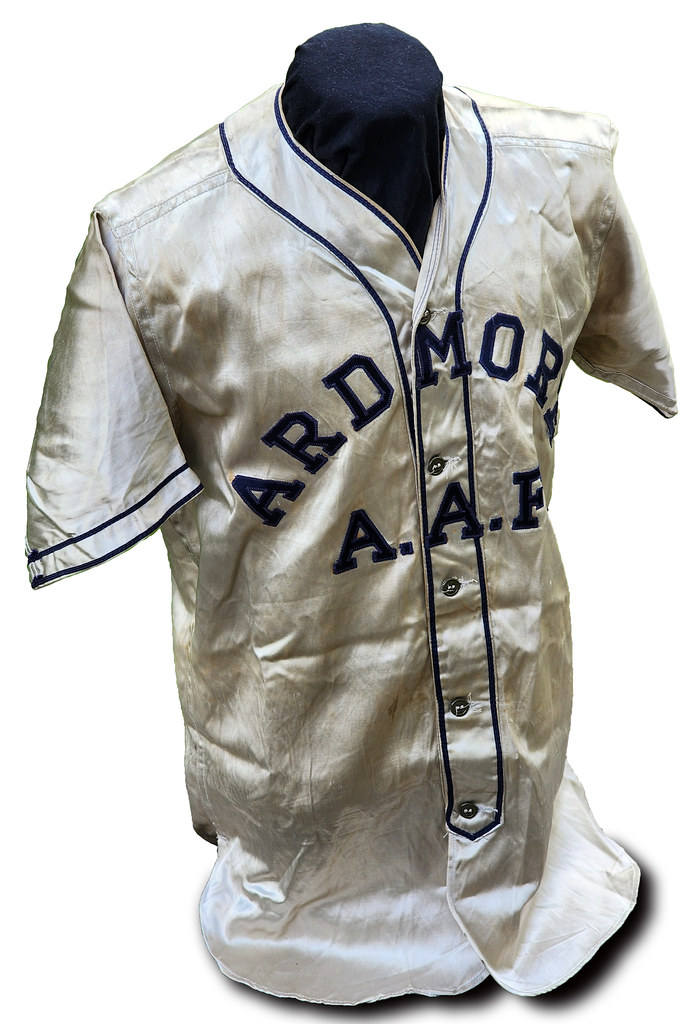
When the opportunity to acquire a satin service uniform arose, there was no hesitation in discussions to add the Ardmore AAF piece to our collection. Having missed on an opportunity several years earlier to land a complete, Spalding-made satin uniform from the World War II Camp Hunter Liggett baseball team, our negotiations began in earnest.
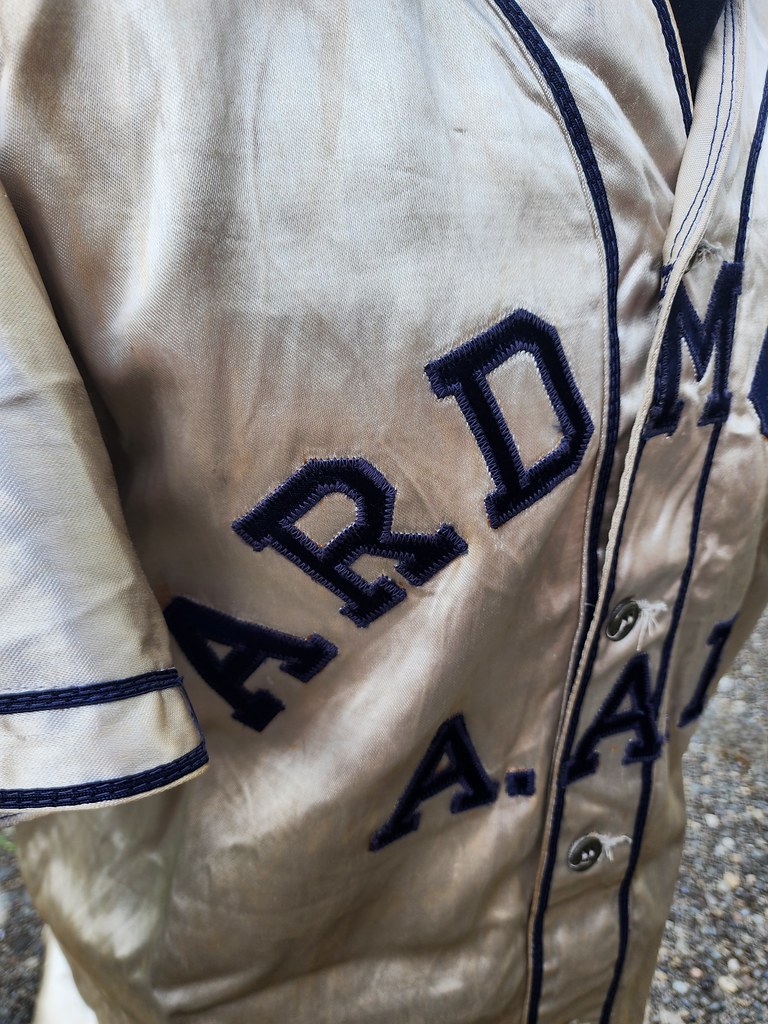
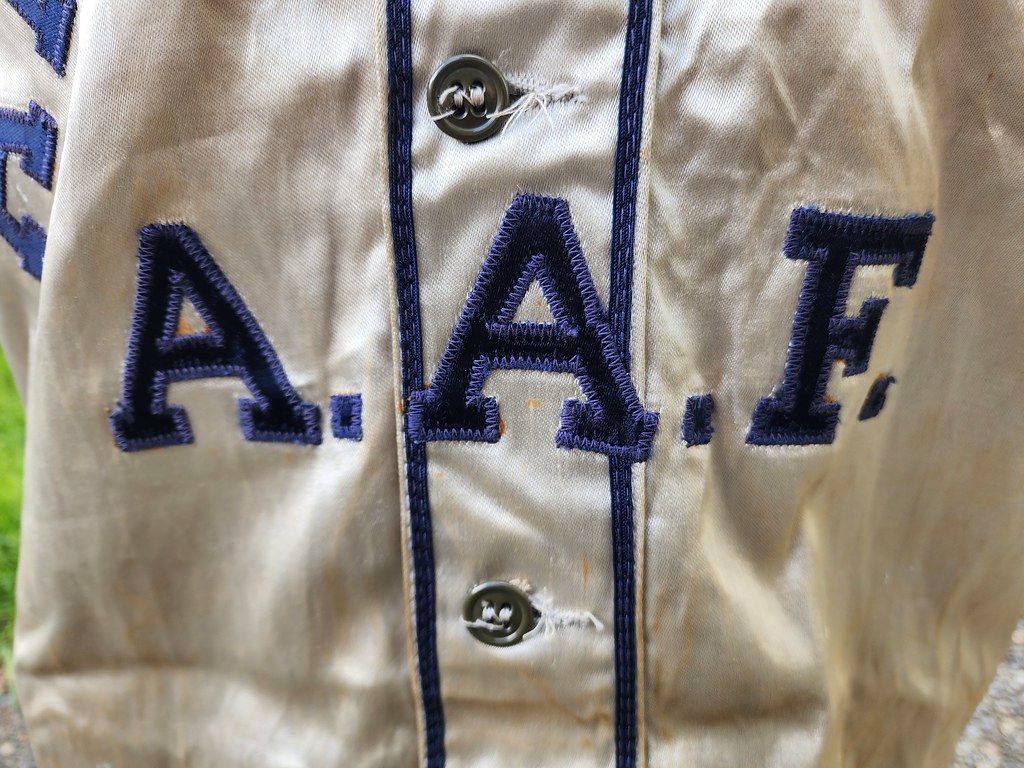
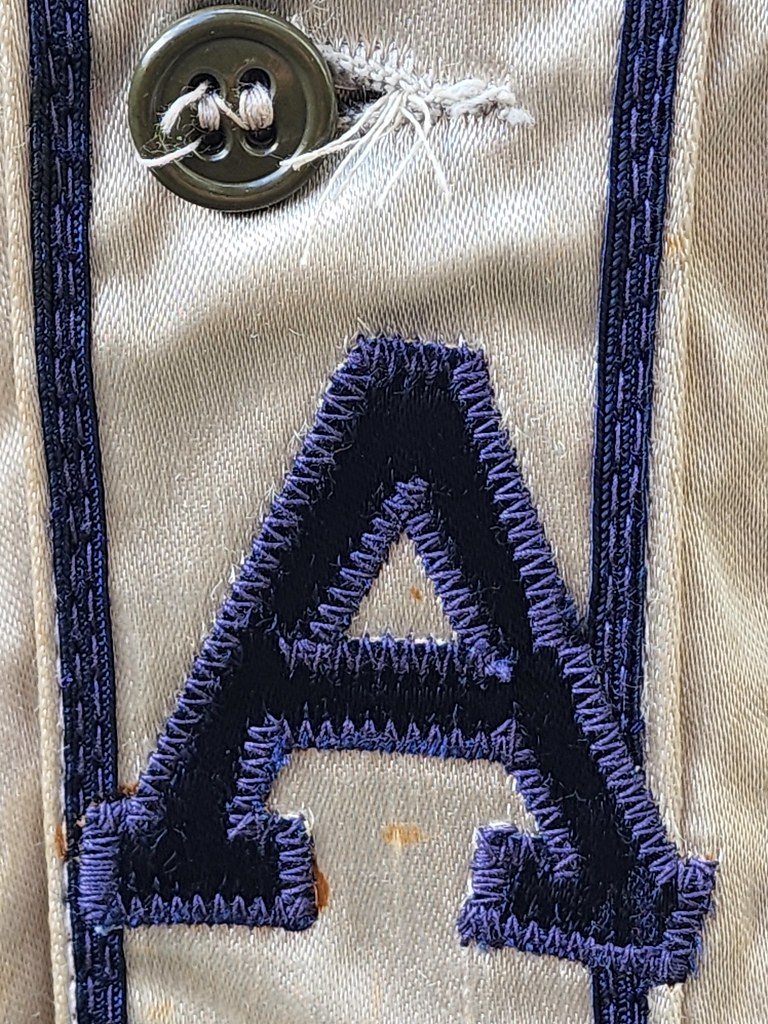
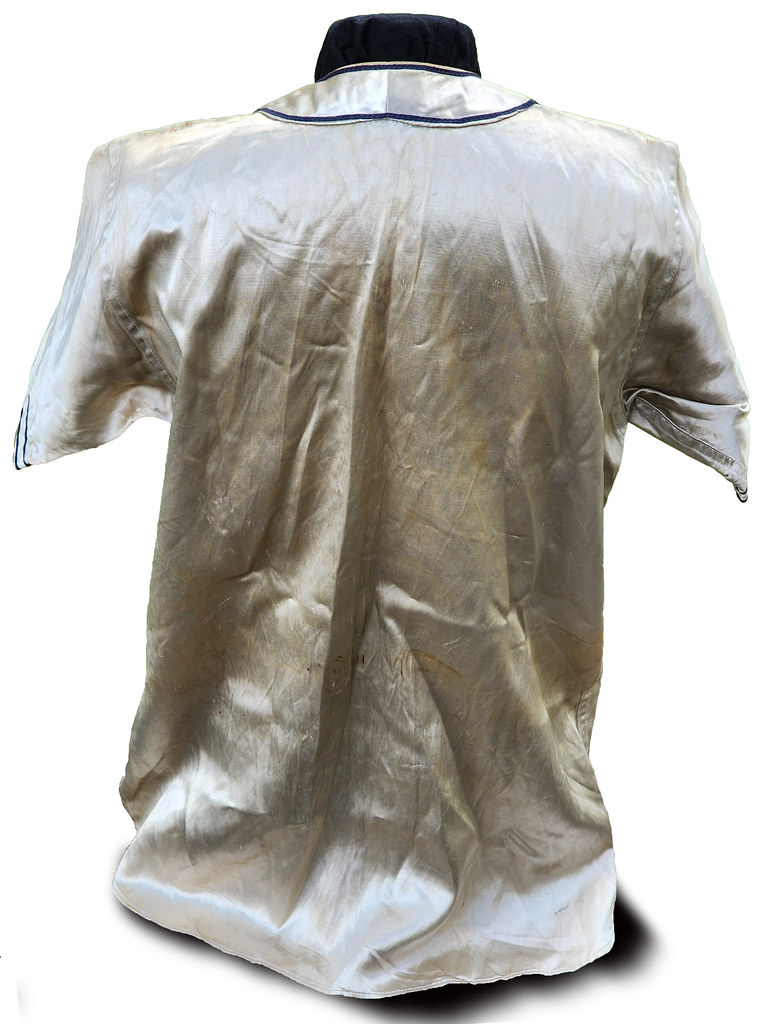
The size-38 satin Ardmore AAF jersey features navy rayon lettering applied with a zigzag stitch across the chest. “A R D M O R E” is arched with the “M” centered on the button placket below the top, green plastic button. Placed in a horizontal line, “A A F” is stitched beneath the air field’s name with the second “A” centered on the placket between the second and third buttons.
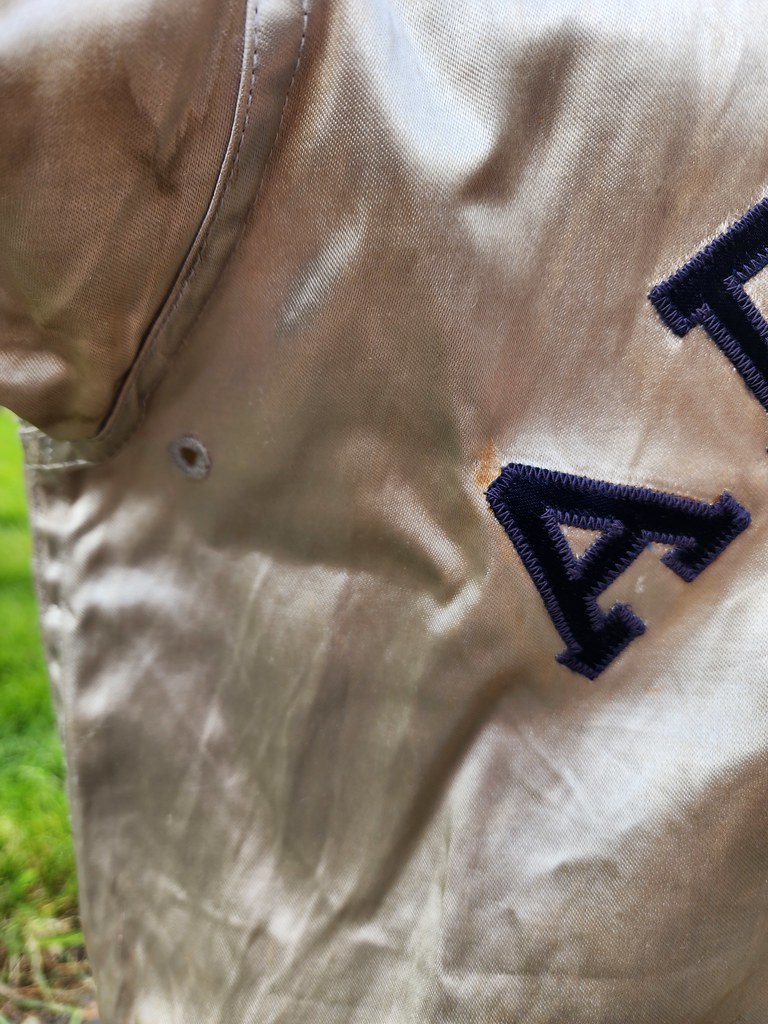
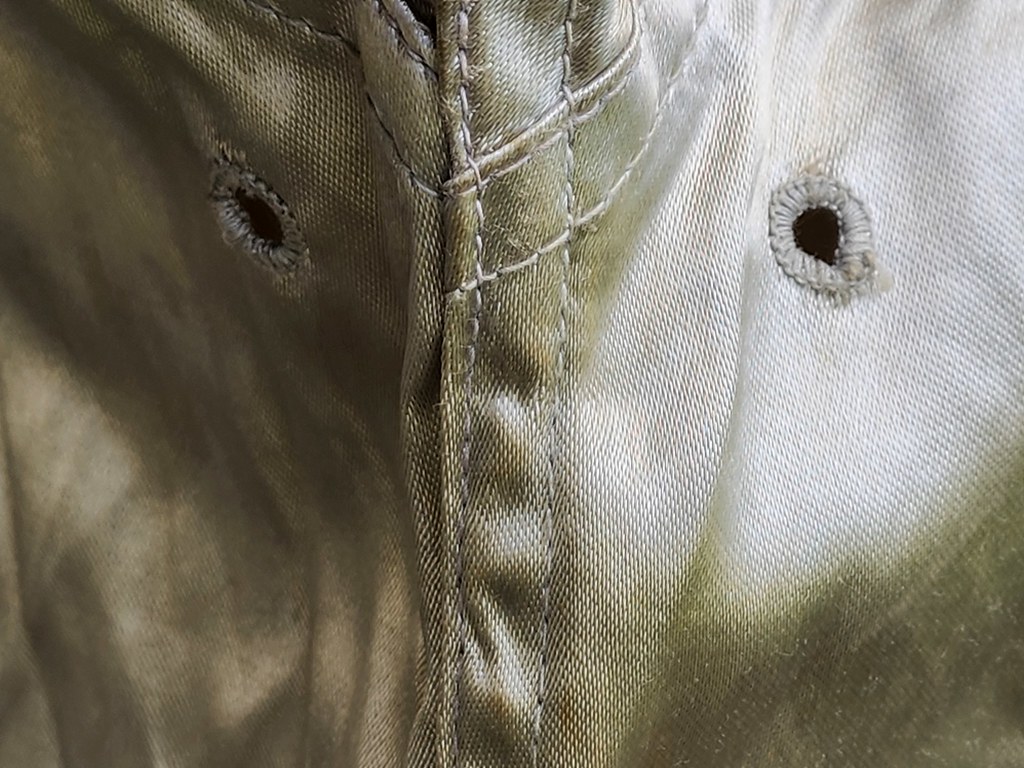
The jersey is trimmed in a navy rayon soutache that is doubled over the placket extending upward and around the collar with the sleeves similarly adorned. The tails are lengthy and are rounded. Similar to other wartime jerseys, the eight-inch sleeves are in-set and feature vents in the armpits.
Uniform Features:
- Buttons: The buttons are green-colored plastic, concave, four-hole which are uncommon for most of the military uniforms.
- Material: The base material is cream-colored, satin-flannel (a home uniform).
- Soutache: A double line of thin blue rayon material that encircles the collar and down the placket. The double line soutache is on the sleeve cuffs, at the edge and approximately 2-inches from the edge.
- Lettering: Blue rayon block letters spelling out the team name. Zig-zag stitching holds the lettering in place.
- Numerals: None
- Sleeves: Approximately nine-inches in length, set-in.
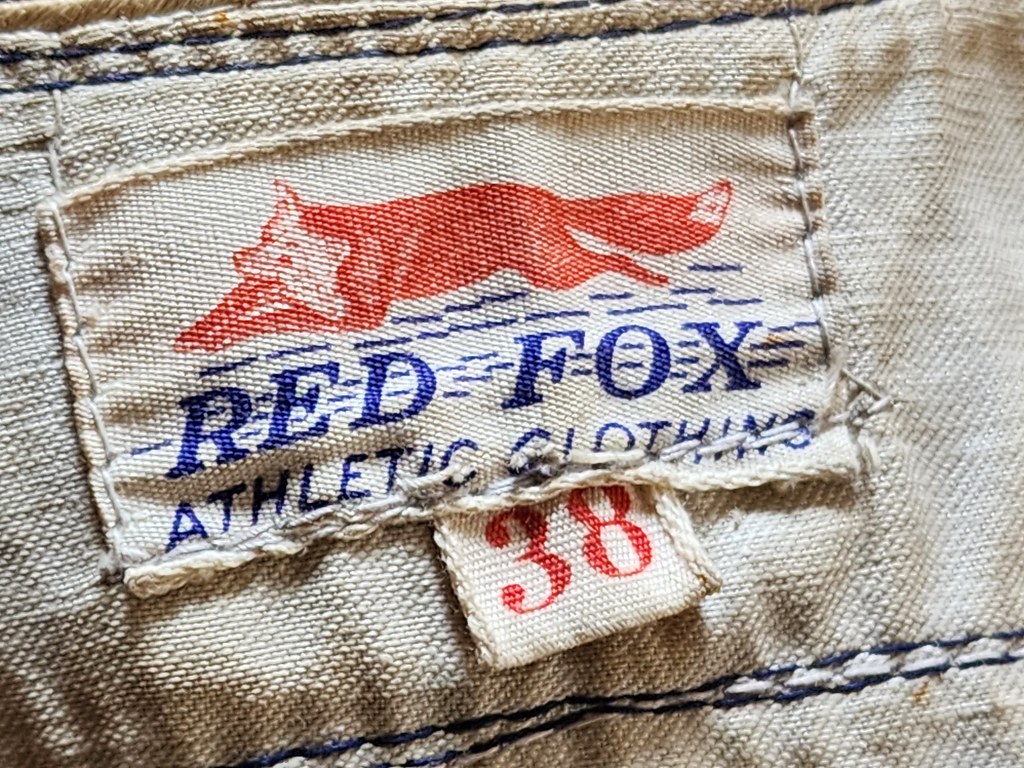
- Tags: “Red Fox Athletic Clothing” silk-screened manufacturer’s tag sewn inside and below the back of the collar. The tag also includes the garment’s size (“38”).
*This uniform group is presently a part of VetCollector’s collection.

Return to Archive of U.S. Army Air Corps/Forces/USAF Uniforms and Jerseys
 Chevrons and Diamonds