A note to our readers: This is the fourth of a four-part story. We will include links to each segment for easy navigation.
Part 1: The Bomber Brownie: Walt Judnich
Part 2: 7th Army Air Force Bombing Command
Part 3: Hawaiian October: Judnich’s First World Series
1945 Honolulu League
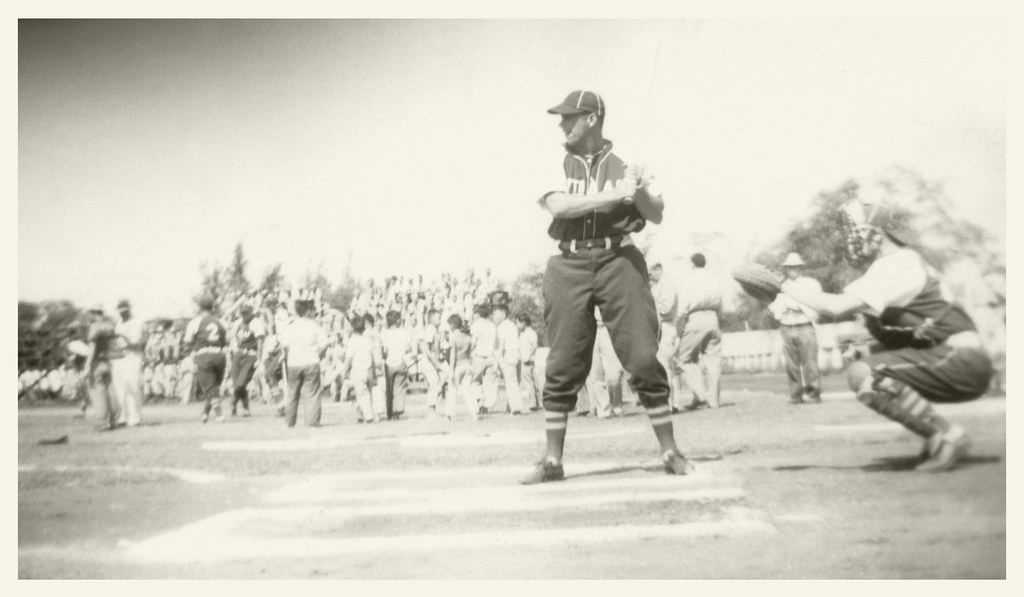
After several tuneup games, the Bellows Field Flyers’ first game was played at Honolulu Stadium against the Honolulu Air Defense (HAD) nine. The Flyers sent Louis Hagan, a pitcher with no pre-war professional or semi-pro experience, to the hill for their season opener. While surrendering one run on six hits through five innings, the wheels came off the cart in the sixth, and he was lifted in favor of another pre-war amateur, right-hander Eugene Elliott, who finished the game. However, the headlines in the Honolulu newspapers heralded the return of Walt Judnich’s war-clubbing prowess as he stroked a two-run bomb in his first at-bat in the top of the first frame.[1] Bob Dillinger singled ahead of Walt, setting up the opportunity. Walt’s blast to the tenth row of section eight marked the first home run of 1945 at the “Termite Palace.” However, HAD pitchers kept Judnich off the basepaths for the remainder of the game.[2] While the ensuing speculation by Hawaiian sportswriters suggested that Judnich’s homer indicated he was on the verge of repeating his 1944 performance, they may have been better suited paying closer attention to his last three at-bats of the game.
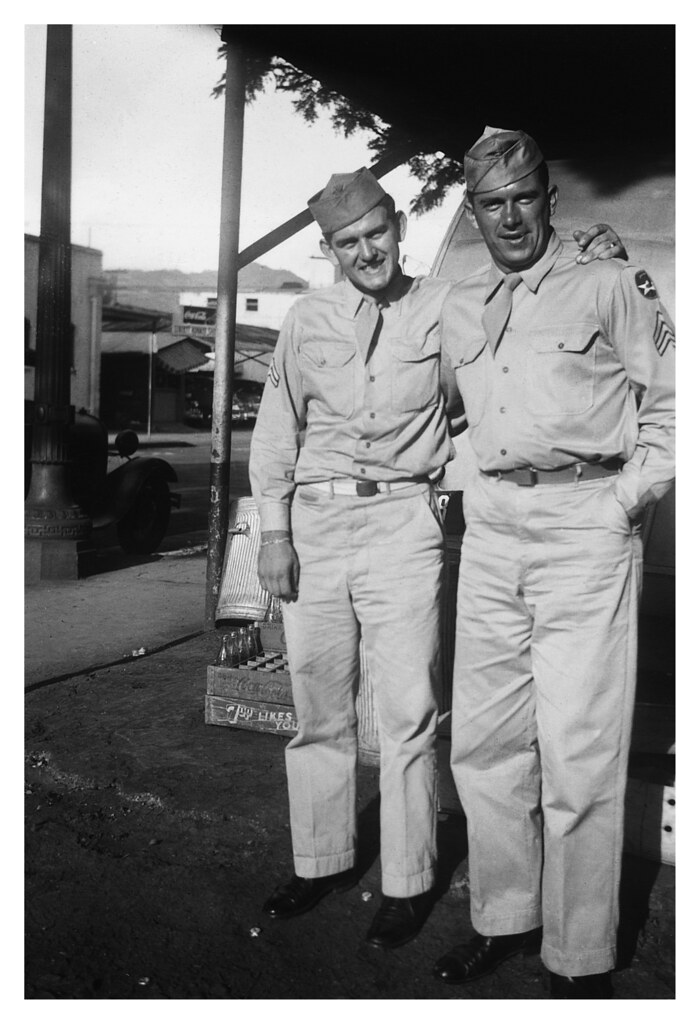
1945 Honolulu Leage Teams:
- Bellows Field
- Eagles
- Engineers
- Fort Shafter
- Hickam Field
- Honolulu Air Defense (HAD)
- Kaimuki
- Waikiki
- Wheeler Field
Civilian teams are listed in italics.
A month into the season, Judnich was struggling at the plate. Batting in the cleanup spot in the order with no protection behind him, pitchers were able to work around him, taking his bat away. Judnich was clearly in a batting slump. The Honolulu Advertiser weighed in, “Smart pitching has kept Walt Judnich from blasting loose with his home run drives, but he should continue to spark the Flyers’ offensive from the clean-up spot.”[3] The operative word in their assertion, “should,” was fueled by a combination of hope and disappointment. In a February 16 tilt with the Engineers, after cracking a pair of triples, Judnich walked three times including a pair of intentional free passes.[4] Despite reaching base in all five at-bats for the Flyers, Bellows lost, 7-5, falling to 3-3 and two games behind first place Fort Shafter.
Bellows Field Flyers – Season Opening Roster
| Rank | Player | Position | Former |
|---|---|---|---|
| Galen Bashore | IF | Amateur | |
| Roy Beckett | OF | Amateur | |
| Alfonso “Al” Ceriello | IF | Amateur | |
| Lt. Col. | Joseph D. “Joe” Clarke | Coach | Semi-Pro |
| Otis L. “Red” Coates | CF | Birmingham (SA) | |
| Charles “Mike” Crinkovic | IF | Semi-Pro | |
| Pfc. | Bob Dillinger | 3B | Toledo (AA) |
| Dowd | P | ||
| Eugene Elliot | P | Amateur | |
| Walter Gorczca | C | Federalsburg (ESHL) | |
| Louis Hagan | P | Amateur | |
| Sgt. | Albert J. Hanley | 3B | Indiana University |
| Ray Jablonski | SS | Amateur | |
| Sgt. | Walter “Wally” Judnich | OF/1B | Browns |
| Edwin Lakofka | P | ||
| Corp. | Wilfred “Bill” Leonard | C | Oakland (PCL) |
| Harold “Lefty” Liell | OF | Amateur | |
| Al Lien | P | San Francisco (PCL) | |
| Mason | Equip. Mgr. | ||
| Lt. | W.W. Pence | Coach | |
| Albert Romero | C | ||
| Salomon | CF | ||
| Theodore Sanders | Trainer | ||
| Billy Sarsone | Mascot | ||
| Sgt. | William “Bill” Schmidt | P/MGR | Sacramento (PCL) |
| Herman Schulte | IF | Oakland (PCL) | |
| Sgt. | Skatsky Sweikaukas | 2B |
While Bellows was leading the league in team fielding average, the team’s batting average was an abysmal .238. Judnich was not the factor he was anticipated to be. Walt’s .269 average placed him in the bottom half of the league standings. His six RBIs were well behind the leaders as Hickam’s Ferris Fain was on top with 14. Notwithstanding his lack of home runs, Judnich’s six triples had him tied as a league leader.[5] As Judnich’s batting woes kept him in the middle of the pack, Bellows as a team followed suit in the standings. The Flyers’ 7-4 record had them in fourth place behind Wheeler (9-1), Shafter (9-2), and Hickam (7-3).[6]
Over the course of the first four games of the second half, Judnich showed some signs of life at the plate. In a win over Hickam on March 8, he stroked a double and walked three times. On the 11th, Bellows downed the Waikikis, 9-3, with Judnich going three-for-four, driving in three runs. The next day, Bellows blew out the Kaimukis, 10-2; however, Judnich went hitless in five plate appearances. Two steps forward and one step back.
The end of March was approaching, and Bellows bounced between third and fourth place throughout the month. Judnich showed some signs of life early in the month before falling back into a slump. Walt’s average fell ten points from the midway point to .259. The Bellows team average improved to .261.[7] Then Judnich’s bat showed signs of warming once more. The Star-Bulletin predicted a big game for Bellows against the Engineers. “The Fliers are favored to win because of greater hitting power. Big Walt Judnich has shown a flash of the power he is capable of delivering,” the paper stated. “In the last two games Walt has banged out five hits, including a homer and a double.”[8]
The Star-Bulletin’s prediction panned out as Judnich and Bob Dillinger led an assault on the Engineers. Walt was three-for-five with a pair of singles, and a home run. He scored three runs and drove in five of Bellows’ 20 runs. Dillinger was three-for-four at the plate, scoring four runs and driving in five of his own in the 20-4 rout.[9]
With five games remaining on the Honolulu Loop’s docket for the weekend of March 30-31, the last weekend of the season, Bellows was set to face Waikiki but was firmly in fourth place. Their last game would not factor in the standings for either club. Heavy rain postponed the game until April 1st. Already a lock for postseason play, Bellows was not about to be fooled by Waikiki, bashing out 11 runs on 14 hits. Judnich had a single and a walk, scoring a pair of runs with an RBI in the shutout.[10]
With the book closed on Honolulu League play, Judnich’s late-season surge pushed his average up to .337, well out of the top ten. [11] His four home runs during the season were a disappointment to fans and his teammates.[12]
Cronin Championship Series
As Americans followed news of the war’s progress, Saturday’s headlines in the Honolulu Star-Bulletin reinforced the growing optimism that the end was in sight. His generals failing him, Hitler took personal command of his army during its gravest hour.[13] Marianas-based B-29 Superfortresses were striking the Japanese homeland [14] and Japan’s massive 45,000-ton battleship Yamato was sunk by Admiral Marc Mitscher’s task force aircraft. Following the successful attack, Mitscher stated, “I believe the Japanese fleet and Japanese air force are decidedly on the wane.”[15]
The April 8, Sunday morning Honolulu Advertiser published the Honolulu League’s final standings. Wheeler Field captured the top spot with a 23-3 won-lost record while Bellows finished with a 19-7 record in third place behind second place Hickam (21-5). Fort Shafter captured the fourth spot with their 18-8 record. The top four moved on to a double round robin championship tournament set to commence on April 11 with Wheeler facing fourth place Shafter. A conglomeration of civilian all-stars pulled from other clubs in the league filled the fifth slot in the Series.[16]
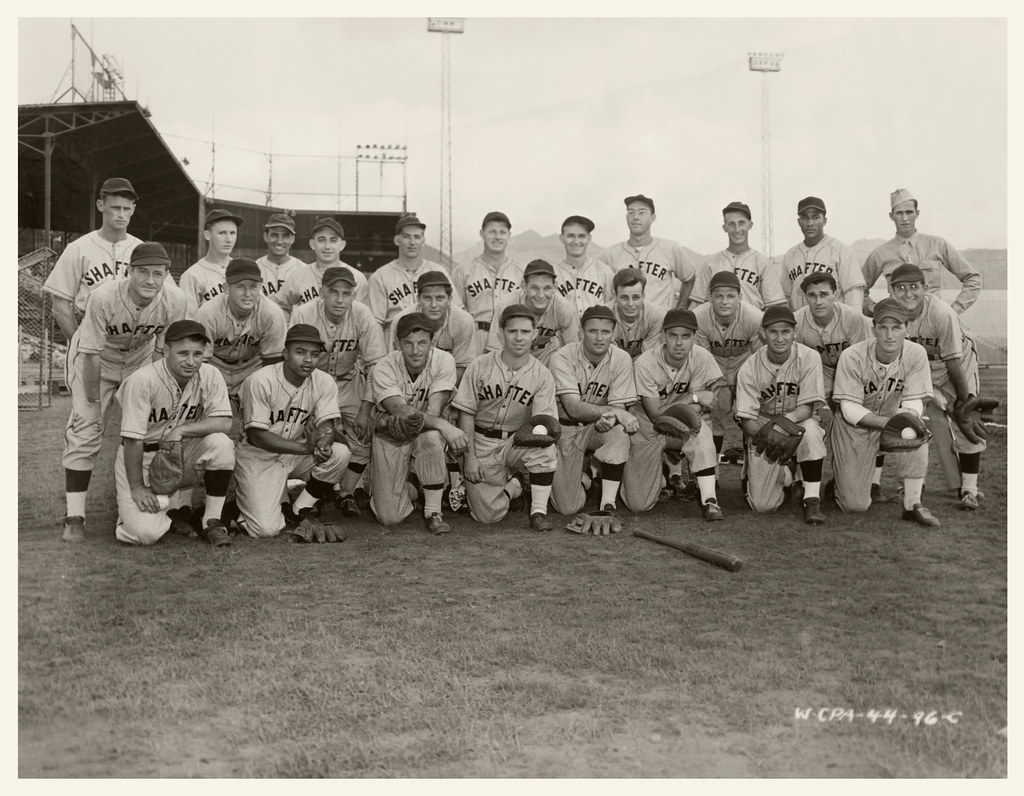
In the Cronin Series opener, Shafter dominated Wheeler, handing them their fourth loss of the season. Just as the Cronin was getting started, word reached across the Pacific from the mainland with news of President Roosevelt’s sudden and unexpected death from a brain hemorrhage. Out of respect and to allow for grieving, sports on the Hawaiian Islands came to a halt, including the championship series.[17]
Play resumed days later on April 18, and Bellows faced Hickam in the first Series game for each club. The short break from play proved to be a balm for Judnich’s batting. He ripped three hits in five plate appearances as the Flyers defeated the Bombers, 5-2.[18] Two days later in a tilt against the Wheeler Wingmen, Walt accounted for six of Bellows’ seven runs, crushing three home runs and breaking the Honolulu Stadium record for bombs in a single game. The slugger’s six runs batted in came by way of a three-run homer, two solo round trippers and a base-loaded walk, but it was all for naught as Wheeler downed the Flyers, 10-7.[19]
With continued fighting in both theaters, the war was nearing its end but was still far from won. Adolph Hitler was reduced to hiding out in a Berlin bunker, where he celebrated his 56th birthday, and preparations were being made to evacuate him and his staff to Obersalzberg. Fighting in the Pacific saw naval air forces conducting fighter sweeps over the Japanese island of Kyushu as the slog known as the Battle of Okinawa was in full swing. Soldiers were still pouring onto the Hawaiian Islands in preparation for the certain invasion of the Japanese home islands.
Still more ballplayers serving in uniform were arriving on Oahu. The Army Air Forces had several players land on Oahu’s shore. They were divided among the branch’s three Honolulu League ball teams. Bellows Field’s eight reinforcements were led by former major leaguers Johnny Sturm, “Chubby” Dean. “Tex” Hughson and Max West.[20]
Bellows Flyers Late Season Additions:
| Rank | Player | Position | Former |
|---|---|---|---|
| Corp. | Bob “Bobby” Adams | 2B | Syracuse (IL) |
| Ed Chandler | P | Pocatello (PION) | |
| Sgt. | John “Pinky” Cowley | P | Amateur |
| Al “Chubby” Dean | P | Indians | |
| Tex Hughson | P | Red Sox | |
| *Edwin “Ed” Kowalski | P | Appleton (WISL) | |
| Burl Storie | C | Tallahassee (GAFL) | |
| Sgt. | Johnny Sturm | 1B | Yankees |
| Lt. | *Joseph Waddle | OFC | |
| Corp. | Max West | OF | Braves |
The new additions were not the only shot in Bellows’ arm. Already on an offensive tear, Judnich took his batting to a new level. After his three-home-run game on April 20, he went deep against Hickam, sparking the Flyers to a 4-2 win. On Monday the 23rd, he launched another bomb against the All-Stars, going two-for-three with four RBIs, a run scored, and a pair of walks.[21] His feat against the All-Stars gave him long balls in four successive contests from Friday through Monday, setting another Honolulu Stadium record.[22]
Judnich’s Cronin Series batting tear was reminiscent of his 1944 season, prompting local sportswriters to celebrate. “Walt (the Great) Judnich has found his batting eye,” the Honolulu Star-Bulletin proclaimed. In his 18 at-bats entering the final week of the series, Walt had 11 hits including six home runs, one of them a grand slam, driving in 16 runs while scoring eight of his own. His .611 batting average positioned him forty points above second-place Frank “Wizard” Williams, formerly of the Homestead Grays. Indeed, he flipped the script on “the wiseacres,” the Star-Bulletin said, “who had him billed to the trash heap.”[23]
The accolades and laurels poured in for the Bellows slugger. Judnich and his Bellows teammate Dillinger were selected for the Honolulu League’s 1945 Official All-Star Team by the sportswriters at the Honolulu Star-Bulletin, one of the league’s sponsors. The 12 players selected were presented with sterling silver medals on April 29 at Honolulu Stadium.[24]
The recognition did not stop with the all-star selection. With Judnich setting two additional Hawaii baseball records at Honolulu Stadium, aside from five consecutive at-bats with a home run in 1944, he was awarded the Williams Equipment Company’s award for the fifth time, dating back to the 1944 season. He was the first player in Hawaii baseball history to surpass four awards.[25]
Hickam stood atop the Cronin Series standings with a 6-2 record and Fort Shafter was one game out of first place. Shafter and Bellows faced each other in their last Series game that saw the Flyers take a 6-0 lead after three innings of play as the skies opened up with torrential rains. The game was called and initially scheduled for a May 8 resumption. However, league officials met on May 2, carrying a concession from Shafter officials resulting in the declaration of Hickam Field as Cronin Series champs.[26] Regardless of Judnich’s incredible batting, errorless defense, and the bolstered roster, Bellows was unable to make up ground and finished in fourth place with a 3-4 record.[27] Closing the book on the series totals, Judnich led batters by 54 points with a .519 average and tallied 20 RBIs and 11 runs. He also topped the league with seven bombs and a double, all without the benefit of numbers from the cancelled final game.[28]
Hawaii League
The month of May marked the beginning of the next season of Oahu professional baseball with the Hawaii League. The five civilian clubs entering the fray included the Athletics, Braves, Hawaiis, Tigers, and Wanderers; however, the strongest competition was expected come from the three powerhouse Army Air Forces Pacific Ocean Area (AAFPOA) teams: Bellows, Hickam, and Wheeler.[29]
Ahead of league play, the Flyers faced NAS Kaneohe Bay, the Coast Guard Lions, and the Fleet Marine Forces on May 5-7, winning the first two and getting beat in the last. Judnich did not miss a beat as he slashed two home runs, scored six and drove in four. In their Honolulu League season opener against Wheeler on May 9, Walt was 2-3 with a long ball and two runs batted in. Judnich was a force to be reckoned with for Bellows during the Flyers’ eight consecutive wins including six Hawaii tilts and two non-league games spanning May 9-31. The slugger continued his hitting prowess through mid-June despite Bellows dropping five consecutive contests.
In early June, talks were underway between the AAFPOA and the Fourteenth Naval District brass to create the Hawaiian version of major league baseball’s All-Star Game.[30] The service branches planned to combine their players and then divide them into their respective pre-war American and National League affiliations. Scheduled for June 24 at Furlong Field, the game was set to afford up to 28,000 service personnel a chance to see the top baseball talent in a traditional All-Star game free of charge. Former New York Yankee backstop Lieutenant Bill Dickey was tentatively set to manage the American Leaguers while former Cubs and Dodgers great Billy Herman was tabbed as the National League skipper.[31]
By June 15, Captain Birdie Tebbetts, former Detroit Tigers catcher, was chosen to manage the American Leaguers and given the challenging task of choosing the roster from the talent-rich pool of sailors, marines, soldiers, and airmen on the island. Seeking big bats for his offense, there was little doubt that Walt Judnich was at the top of his list.[32] A week before the game was set to be played, Lt. Col. Edgar B. Stansbury, chief of AAFPOA Special Services, announced, “It is with regret that the AAFPOA baseball championship is halted and particularly the cancellation of the All-Star game, but this action is mandated,” the colonel stated.[33] Along with the All-Star cancellation, the AAFPOA announced the June 17 game between the Flyers and Bombers would be the final for Bellows and Hickam.[34] “Military requirements make it necessary,” the AAFPOA Special Services officer stated, “to transfer some time in the near future a large number of personnel to the forward area. Both tennis and baseball players now assigned to the AAFPOA command shall be included in the transfer.”[35]
Judnich’s Hawaii Baseball Accolades
- Hawaii League All-Star Selection, 1944 (7th AAF Fliers)
- CPA League All-Star Selection, 1944 (7th AAF Fliers)
- Honolulu League All-Star Selection, 1945 (Bellows Field Fliers)
- Record five-time Williams Equipment Company Player of the Week recipient
- Hawaii baseball record – five home runs in a single game
- Honolulu Stadium record – three home runs in a single game
- Honolulu Stadium record – four consecutive games with a home run
Western Pacific
For Judnich and the men he had been serving with since he was inducted, the days in the Hawaiian Islands were ending. The AAF baseball players on Bellows, Hickam and Wheeler were notified that they were going to be sent to a forward area and assigned regular military duties as they had been performing on Oahu. In addition to those duties, the men would be providing entertainment for the service personnel on “some distant Pacific islands,” according to the AAF headquarters.[36]
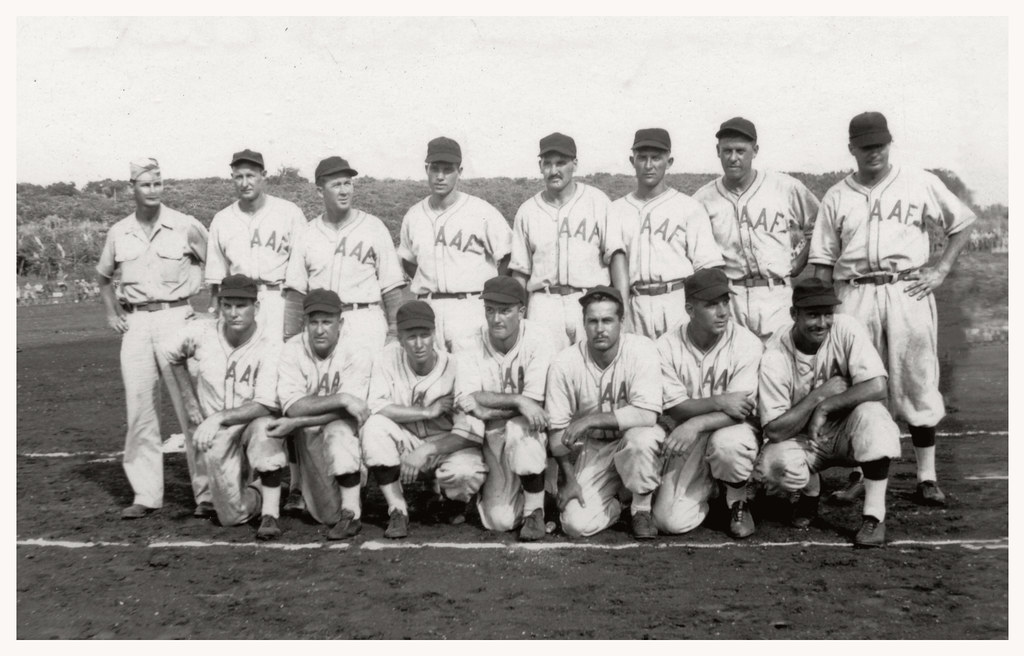
Back row, left to right: Major Billy Hitchcock, George Gill, Birdie Tebbetts, Vic Wertz, Art Lilly, Ed Kowalski, Joe Marty, Pete Layden.
Front: Don Lang, Enos Slaughter, Chuck Stevens, Howie Pollet, Roy Pitter, Burton, Joe Gordon.
Perhaps prompted by the overwhelming success of the Navy’s early spring Pacific Tour of 28 baseball stars that visited and played games for the servicemen stationed on islands including Johnson Atoll; Majuro and Kwajalein in the Marshall Islands; Anguar and Ulithi in the Carolines; and finally, to Guam, Saipan and Tinian in the Marianas,[37] Army officials organized their own baseball tour of the Western Pacific.
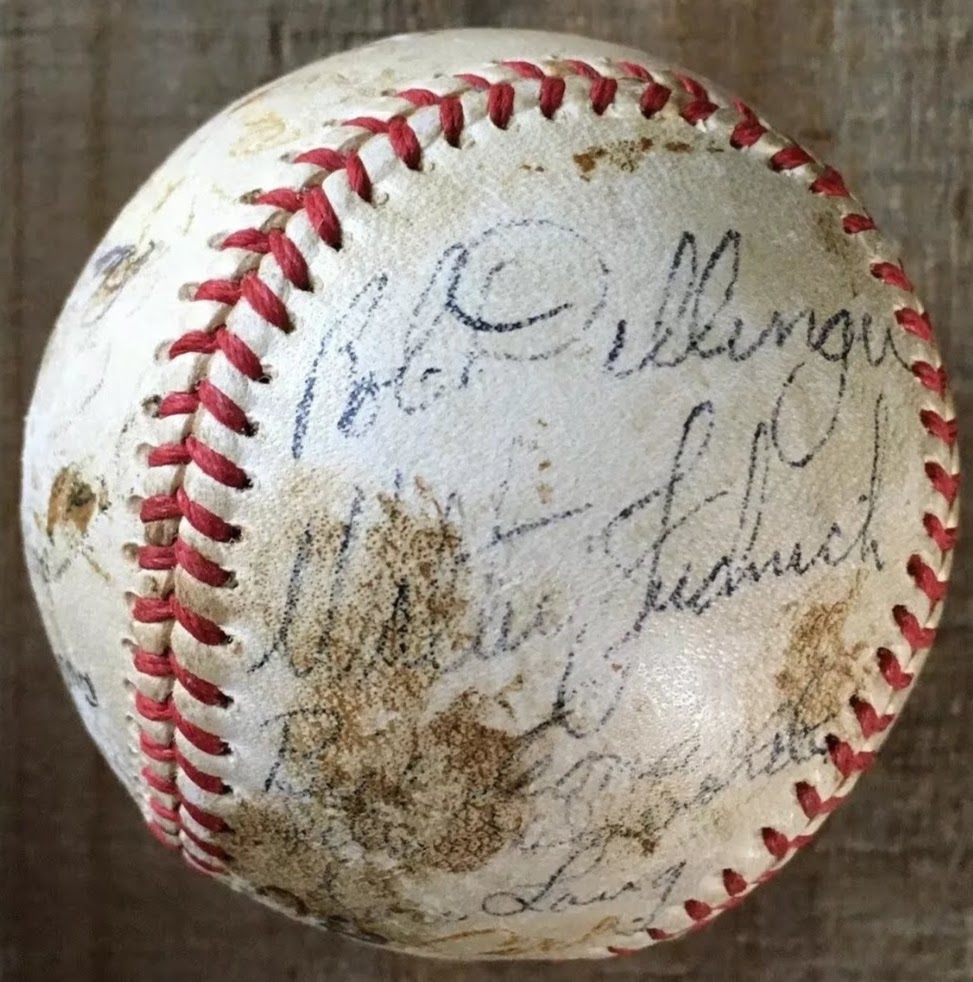
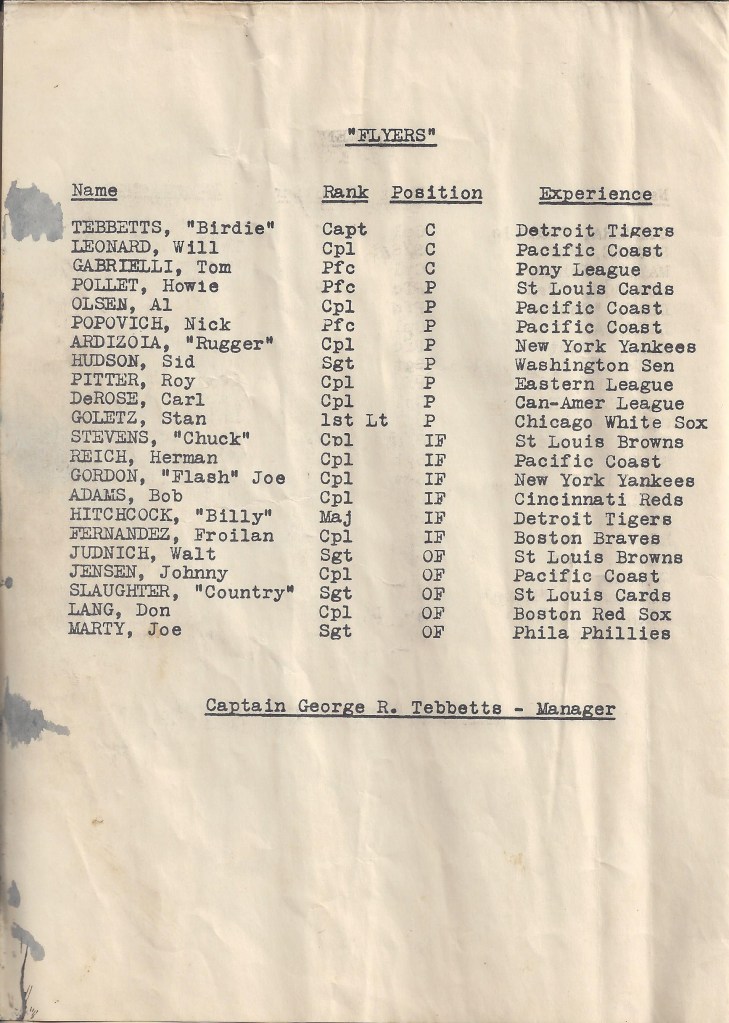
Not only was the Hawaii League season done for the three clubs, but the men departed Oahu, bound for the Western Pacific. Captain Billy Hitchcock, former Detroit Tigers infielder turned AAFPOA athletic officer, arrived on Guam as part of the advance party preparing for the arrival of the players. Hitchcock, working on the division of the contingent of ballplayers, had already determined that there would be three separate teams. Though they had yet to reach Guam, Hitchcock named Birdie Tebbetts and Mike McCormick as managers of two of the three clubs.[38]
Named the Saipan-Tinian-Guam (S.T.G.) League (also referred to as the 20th Air Force Servicemen’s League), the circuit consisted of three teams: the 58th Bombardment Wing “Wingmen;” the 73rd Bombardment Wing “Bombers” and the 313th Bombardment Wing “Flyers,” each club representing one of the 20th Air Force’s units.[39] Walt Judnich was assigned to the Flyers, with Brooklyn’s Lew Riggs managing and playing third base. Fellow Bellows teammates Bobby Adams, Ed Chandler, Bill Leonard, Burl Storie, Johnny Sturm, and Max West joined Walt on the Flyers.
313th Bombardment Wing “Flyers”
| Rank | Player | Position | Former |
|---|---|---|---|
| Corp. | Bob “Bobby” Adams | 2B | Syracuse (IL) |
| Rinaldo “Rugger” Ardizoia | P | Kansas City (AA) | |
| Eddie Chandler | P | Pocatello | |
| Bill Daisle | P | ||
| Corp. | Carl DeRose | P | Amsterdam |
| Stanley Goletz | P | White Sox | |
| Corp. | Johnny “Swede” Jensen | LF | San Diego (PCL) |
| Sgt. | Walter “Wally” Judnich | RF | Browns |
| Corp. | Wilfred “Bill” Leonard | CF | Oakland (PCL) |
| Don Loeser | P | ||
| Al Olsen | P | San Diego | |
| Roman Piskor | C | ||
| Corp. | Herm Reich | 1B | Portland (PCL) |
| Corp. | Lewis S. Riggs | 3B/Mgr. | Dodgers |
| Burl Storie | CF | Tallahassee (GAFL) | |
| Sgt. | Johnny Sturm | 1B | Yankees |
| Corp. | Max West | CF | Braves |
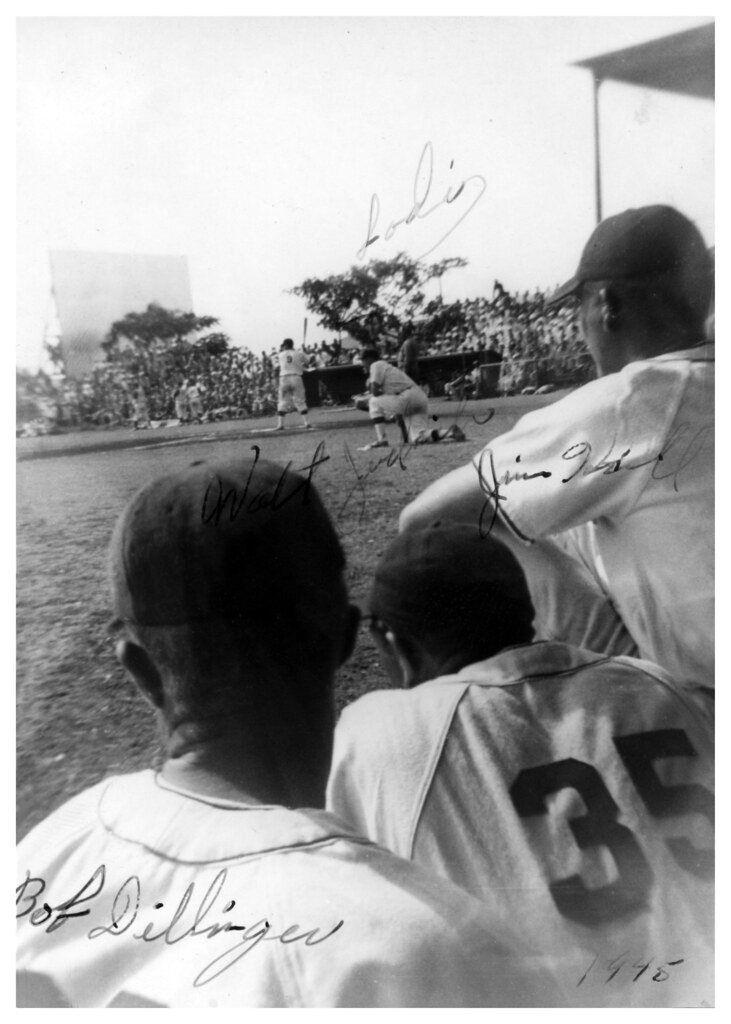
By day, the duties of the ballplayers ranged from organizing physical fitness exercises and athletic leagues to providing pre- and post-flight ground support for bombing missions. After the day’s work, the afternoon entertainment commenced with 20th Air Force league play. Scheduled for days of round-robin play on the islands of Guam, Saipan and Tinian, the men played before crowds of GIs numbering up to 12,000. Many soldiers wrote home about seeing the games, returning to their quarters with autographed balls and photos and celebrating the respite from the daily grind of the war. “Big-time baseball has accomplished more for the morale of the solders than all of the leg shows thus far presented,” Oakland, California’s George “Dusty” Rhodes wrote in a letter sent from the Pacific.[40]
Unlike the groomed grass and raked infield dirt of Hawaiian diamonds, grandstand seating, ice cold beverages and hotdogs, the venues in the Marianas were cut into the coral and volcanic rock with playing surfaces barely leveled with heavy equipment and lacking amenities for players and spectators alike. Still, thousands ringed the diamonds, sitting on empty bomb crates and two-and-a-half ton trucks or standing to watch the players.
Seven games into the round-robin season that commenced on July 27, the 313th was in second place behind the “Bombers” of the 73rd Wing. Led by Lieutenant Colonel “Buster” Mills, the 73rd was on a 7-0 streak while the “Flyers” managed a pair of wins, doubling the 58th’s win total.[41]
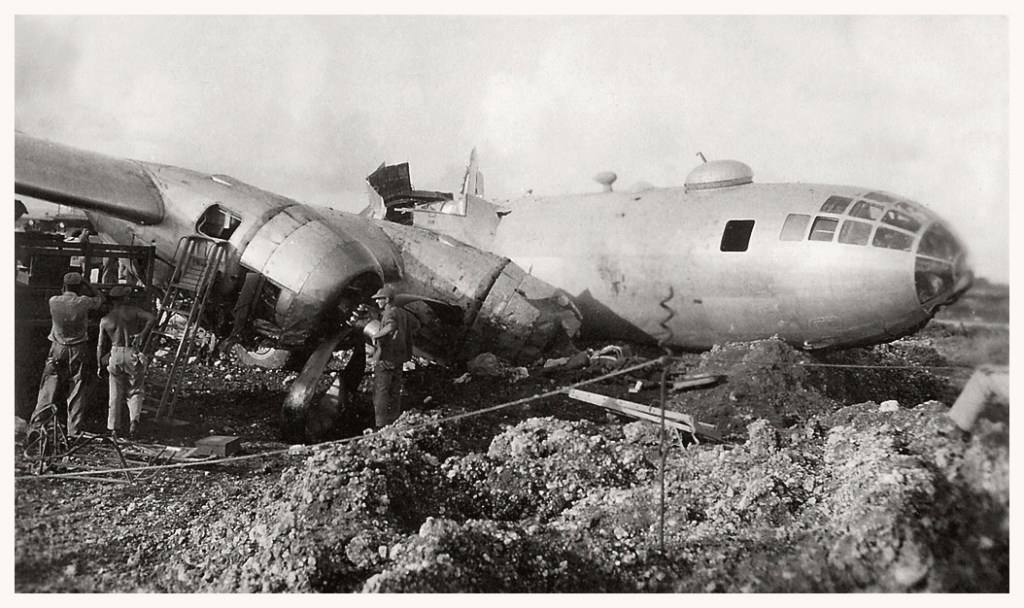
Throughout the summer of 1945, the B-29 Superfortress long-range bombers of the 20th Air Force carried incessant sorties on enemy targets over the Japanese mainland. Crews on Guam, Saipan and Tinian worked round the clock, performing repairs and refueling and arming B-29 aircraft in preparation for each mission. When missions were completed, ground support personnel were tasked with the ghastly tasks of removing the wounded and dead and cleaning the carnage to start the process once again. Often, heavily damaged bombers were forced to ditch into the sea near the islands or crash upon landing. The daily grind exacted an incredibly physical and emotional toll upon the men and respite was a scarce commodity. Speaking about his time playing ball and performing his duties in the Marianas, Judnich’s 313th teammate, Max West said, “We had a job to do as flight/grounds crewmen. I saw some horrific crashes…and we on the ground crew would have to go in, and in all honesty, mop up the human carnage.”[42]
“In order to boost morale, we entertained troops while the B-29s were on their way to bomb Japan,” said Rugger Ardizoia, “and the soldiers’ morale improved by being able to talk to and see some of their favorite players.”[43]
Back home in St. Louis, Judnich’s former employer took note of his Hawaiian diamond achievements as the reality of the end of the Pacific War was drawing near following the second atomic bomb detonation over the Japanese city of Nagasaki on August 9. Browns general manager William O. DeWitt was asked if he favored bringing Judnich back to the ball club to help with the final month-and-a-half stretch of the season. The reigning American League champion Browns were 7.5 games out of first place with more than 50 games remaining on the schedule. “Would we!” DeWitt exclaimed in response to the press inquiring about Bob Dillinger and Walt’s return to the roster. “Tell you what, we’re willing to pay their expenses by plane from Honolulu if we can get them right now.”[44]
Six days after the Nagasaki bombing, Japan agreed to the Allies’ terms of unconditional surrender, bringing the war to its end. The long and delicate effort to liberate more than 30,000 Americans from Japanese prisoner of war camps in Japan and in the Pacific Theater was underway almost immediately. Twentieth Air Force bombers commenced aerial drops consisting of rations, first aid, clothing, periodicals and other supplies over POW camps. Soon, liberated POWs were removed to Saipan, Tinian, and Guam for medical attention before they could make the journey back to the States.
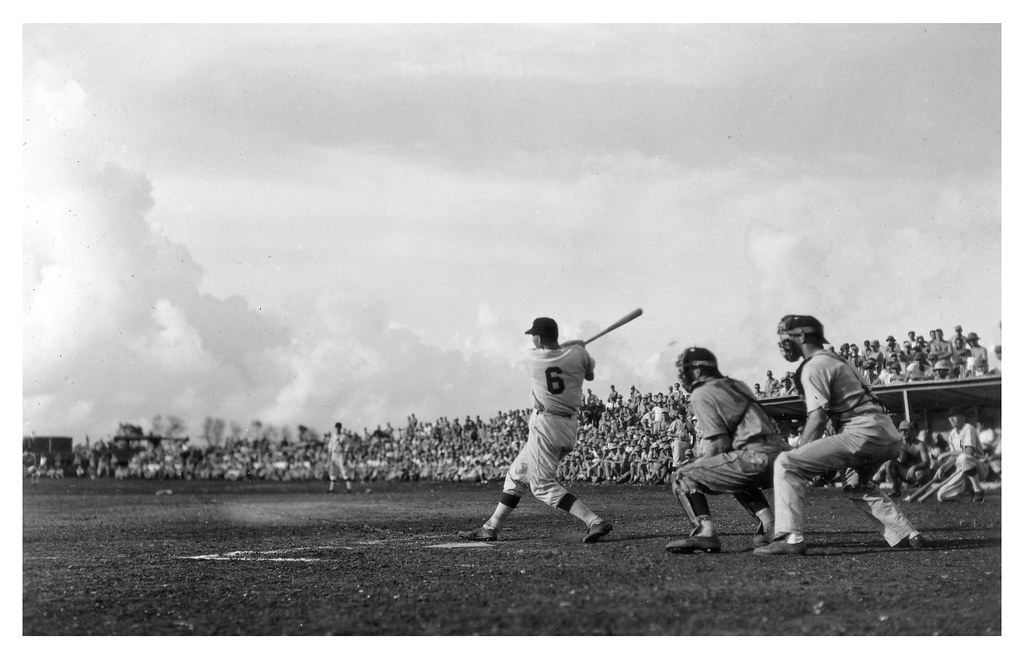
“Allied prisoner of war repatriates, convalescing sailors, soldiers and marines watched the Bombers squeeze past the Wingmen, 2 to 1, today in the final game of the Pacific island series, sponsored by the USASTAF special service for the entertainment of forward area servicemen.” The game served as an elixir for all, as reported in the Honolulu Star-Bulletin. “Sixteen major leaguers and eight minor leaguers participated in baseball’s welcome back to the ex-prisoners of the [Japanese].” [45] The story reported that Judnich, a member of the 313th Wing Flyers, walked, advanced to second on a passed ball and scored on a Bill Hitchcock single in the seventh inning, tallying the first run of the game against the Wingmen (58th Bomb Wing).[46][47]
As troops with enough points were beginning to be sent back to the states, baseball continued. The three clubs were divided into their respective American and National League pre-war affiliations for an August 26 All-Star game on Tinian. Despite being outhit 14-8 by the National Leaguers, the A.L. garnered the 3-2 victory. While Judnich went without a hit in the contest, his second inning at-bat advanced Joe Gordon, aboard at second on a two-bagger, to third before Al Lang drove the run in for the winner’s first tally.[48]
In September, the ballplaying airmen were on Guam for another A.L versus N.L. All-Star game following the conclusion of league play. The tables were turned as the National Leaguers downed their rivals, 7-2. After scoring four in the bottom of the first to take a 4-2 lead following solo bombs from Buster Mills and Joe Gordon in the A.L.’s opening of the frame. Ferris Fain, aboard after a single, reached second safely on a steal after the catcher’s throw got by Hitchcock covering second. Fain stretched for third as Judnich picked up the ball and attempted to gun him down. The ball sailed out of reach, allowing Ferris to score on Walt’s errant throw.[49]
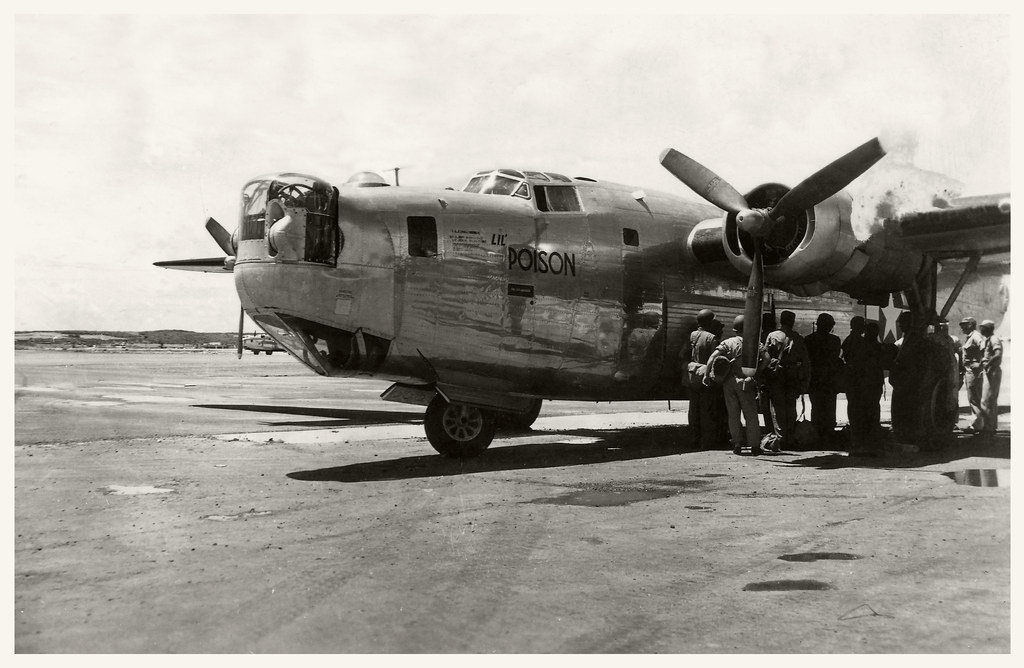
By mid-October, 20th Air Force League baseball play in the Marianas was put to bed for good and attention was turned to determining when GIs would leave the islands and be homeward bound. General Carl Spaatz, commander of the U.S. Strategic Air Forces in the Pacific, estimated that well over two and a half million soldiers, sailors, marines, seabees, coast guardsmen, repatriated prisoners of war, WACs, WAVEs, nurses and Red Cross workers had watched the men play baseball in the Marianas.[50]
For the ballplayers, getting back to their teams for the 1946 season began to enter their thoughts. “It won’t be a simple matter for the players to slip back into their first-string places,” Associate Press sportswriter Russ Newland wrote. “The players on Guam agree it will be a pretty tough proposition to regain the perfection that top-grade baseball requires.”[51] First baseman Chuck Stevens, Judnich’s Browns teammate in 1941, stated, “Playing baseball might seem even easier when we get back. We won’t have the various Army details, little things which detract from baseball,” Stevens mused. “All we’ll have to worry about will be keeping our jobs.”[52] Playing baseball while serving in the armed forces was nothing like playing professionally.
The ballplayers recognized they faced a long and hard road to getting into big league shape. Sid Hudson, former Senators pitcher, remarked, “We’re all out of condition. Brother, am I soft! I’ve got a mighty sore arm from not being in condition” Hudson exclaimed, “It might take quite a while before I am back where I should be.” Joe Gordon added, “Yeah, we older guys are going to have a hard time. Take a guy like me, for instance, and there are a lot of others in exactly the same spot. These last years haven’t got us out from behind the eight ball at all. If I didn’t like the game so much, I think I’d look for something else.”[53]
Sergeant Judnich indeed faced an uphill battle, despite playing a considerable amount of baseball on Army teams. The two and a half years in the service left him nowhere near being in major league condition and he was still on the opposite side of the planet from St. Louis.
Two months after the Instrument of Surrender was signed aboard the USS Missouri in Tokyo Bay, the attack transport ship USS Cecil reached the port of Long Beach, California on November 2 after being present for the momentous occasion.[54] Walking down the gangway to the pier, a contingent of ballplayers was finally home. The men, some of whom had not seen the United States for two years, felt relieved to set their feet upon the soil of their home country. Sergeants Enos Slaughter, Dario Lodigiani, Joe Marty and Walt Judnich had sailed east aboard the Cecil with other GIs from the Marianas including their ballplaying brethren Captain Birdie Tebbetts, Corporals Joe Gordon and Max West and Privates first class Sid Hudson, Howie Pollet and Chubby Dean. They were about to set out on the final legs of their journey home.[55]
After leaving Camp Anza[56] in Riverside, California, Sgt. Judnich was dispatched to Camp Beale in Yuba to be out-processed and discharged from the Army along with Gordon, Lodigiani, Marty, Leonard, Al Lien and Charlie Silvera.[57] On November 30, 1945, after 2 years, 9 months and 3 days. Walt Judnich was a civilian again, having lost three full baseball seasons to war service. For him and the other returning ballplayers, there were questions regarding the state of their baseball abilities and their chances of getting back to their pre-war capabilities.
On January 5, 1945, Browns vice president Bill DeWitt announced the signing of five returning war veterans including Joe Grace, Glenn “Red” McQuillen, Al White, Al Zarilla, and Walt Judnich.[58] Working his way back to baseball shape ahead of spring training, Walt played on the Bay Meadows “Blues” semi-pro nine in a Big Four League championship series against the Moffet-Manteca nine in early January.[59]
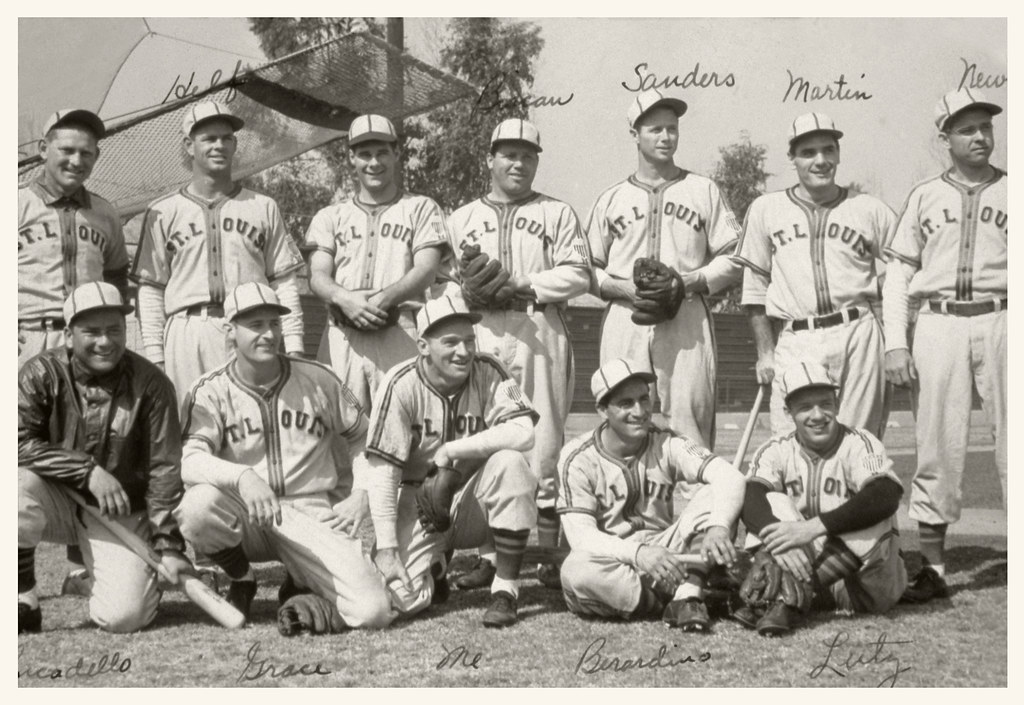
Back row (left to right): Howard “Lefty” Mills, Hank Helf, unknown, Frank Biscan, Dee Sanders, Babe Martin, Maurice Newlin.
Front row: Johnny Lucadello, Joe Grace, Red McQuillen, Johnny Berardino, Barney Lutz
Note the players are wearing the Browns 1945 uniforms (courtesy of Harrington E. Crissey, Jr.).
The Browns opened spring training at La Palma Field in Anaheim, California on February 20 and manager Luke Sewell took notice of several war veterans who appeared in good shape, calling attention specifically to Walt Judnich, Red McQuillen, Joe Grace and Johnny Berardino.[60]
Walt Judnich was indeed home from the war.
[1] “Bellows Nine Drubs HAD By 10-6 Score,” Honolulu Advertiser, February 2, 1945: p.7.
[2] “Judnich Hits First Stadium Home Run,” Honolulu Star-Bulletin, February 2, 1945: p.10.
[3] “AAF Teams Clash Tonight,” Honolulu Advertiser, March 8, 1945: p.8.
[4] Carl Machado, “Dickson’s Hit Nips Bellows,” Honolulu Star-Bulletin, February 17, 1945: p.10.
[5] “First Round Averages For Honolulu Baseball League,” Honolulu Advertiser, March 4, 1945: p.21.
[6] “The Williams Sportlight: Standings Of The Leagues,” Honolulu Advertiser, March 4, 1945: p.18.
[7] Carl Machado, “Kaimuki Star Has Piled Up .485 Figure,” Honolulu Star-Bulletin, March 26, 1945: p.10.
[8] “Bellows Favored Over Engineers This Evening,” Honolulu Star-Bulletin, March 27, 1945: p.11
[9] “Bellows Rout Engineers At Stadium, 20-4,” Honolulu Advertiser, March 28, 1945: p.8.
[10] “Flyers Rout Waikikis By 11-0 Count,” Honolulu Advertiser, April 2, 1945: p.9.
[11] “Dillinger Honolulu Loop Batting Champion,” Honolulu Advertiser, April 22, 1945: p.19.
[12] “Judnich Tops Hitters In Cronin Series,” Honolulu Star-Bulletin, April 25, 1945: p.10.
[13] “Hitler Takes Command,” Honolulu Star-Bulletin, April 9, 1945: p.1.
[14] “B-29’s Hit Japan,” Honolulu Star-Bulletin, April 9, 1945: p.1.
[15] “Death Comes To The Giant Yamato,” Honolulu Star-Bulletin, April 9, 1945: p.1.
[16] “The Williams Sportlight: Standings Of The Leagues,” Honolulu Advertiser, April 8, 1945: p.18.
[17] “Next Honolulu Game On Monday,” Honolulu Star-Bulletin, April 14, 1945: p.10.
[18] “Dillinger Homers As Flyers Triumph, 5-2,” Honolulu Advertiser, April 19, 1945: p.8.
[19] “Judnich Clouts 3 Home Runs,” Honolulu Advertiser, April 21, 1945: p.8.
[20] Eli Lazarus, “Bellows Gets Eight Stars For ’45 Race,” Honolulu Advertiser, April 20, 1945: p.10.
[21] “Bellows Rout All-Stars, 22-0,” Honolulu Advertiser, April 24, 1945: p.6.
[22] “Walt Judnich Is Selected Star Of Week,” Honolulu Advertiser, April 29, 1945: p.16.
[23] “Judnich Tops Hitters In Cronin Series,” Honolulu Star-Bulletin, April 25, 1945: p.10.
[24] “Honolulu Baseball League All-Star Team Announced,” Honolulu Star-Bulletin, April 28, 1945: p.10.
[25] “Walt Judnich Is Selected Star Of Week,” Honolulu Advertiser, April 29, 1945: p.16.
[26] “Hickam Team Winner Of Cronin Title – Fort Shafter Concedes Series Crown to Bombers,” Honolulu Advertiser, May 4, 1945: p.6.
[27] “How They Stand – Honolulu Leage (Cronin Series),” Honolulu Star-Bulletin, April 30, 1945: p.10.
[28] “Judnich, Hitting Star Of Cronin Series,” Honolulu Advertiser, May 13, 1945: p.17.
[29] Red McQueen, “Hoomalimali: Teams Studded With Stars,” Honolulu Advertiser, June 8, 1945: p.8.
[30] Carl Hayes, “American-National Loop All Star Tilt Slated June 24,” Honolulu Star-Bulletin, June 4, 1945: p.8.
[31] “Stage Rapidly Being Set For Major All-Star Baseball Game Here,” Honolulu Star-Bulletin, September 20, 1945:
[32] “American League All-Stars Have Power-Plus In Outfield,” Honolulu Star-Bulletin, June 15, 1945: p.9.
[33] “All-Star Game Here Is Canceled,” Honolulu Advertiser, June 17, 1945: p.16.
[34] “AAF Nines In Final Clash,” Honolulu Advertiser, June 17, 1945: p.16.
[35] “Reason Given For Canceling All-Star Game,” Honolulu Advertiser, June 20, 1945: p.6.
[36] “Reason Given For Canceling All-Star Game.”
[37] M. Shawn Hennessy, “Pee Wee Reese: From the Pacific to Cooperstown,” Chevrons and Diamonds (https://chevronsanddiamonds.org/2021/08/07/from-the-pacific-to-cooperstown), accessed November 14, 2024.
[38] “Big Baseball Sars Gather At Guam; Billy Hitchcock Leads,” Honolulu Star-Bulletin, July 9, 1945: p.9.
[39] “Unofficial Advices – AAF Teams Now Competing in the Saipan-Tinian-Guam Circuit,” The Record (Stockton, CA), August 4, 1945: p.11.
[40] “Great Morale Builder,” Oakland Tribune (Oakland, CA), September 9, 1945: p.22.
[41] “Bombers Lead Marianas Loop,” Honolulu Advertiser, August 27, 1945: p.7.
[42] Bedingfield, Gary. 2021. Baseball in Hawaii during World War II. [place of publication not identified]: Baseball in Wartime Publishing: p.168.
[43] Bedingfield, Gary. 2021. Baseball in Hawaii during World War II. [place of publication not identified]: Baseball in Wartime Publishing: p.146.
[44] “DeWitt Will Pay To Get Judnich, Dillinger Pronto,” The St. Louis Star and Times, August 15, 1944: p.17.
[45] “Hughson Hurls Bombers To Win Over Wingmen In Guam,” Honolulu Star-Bulletin, September 20, 1945: p.17.
[46] ““Hughson Hurls Bombers To Win Over Wingmen In Guam.”
[47] It is not known if Judnich was filling in on the Wingmen’s roster or if the article misidentified the 313th Wing “Flyers” as the “Wingmen.”
[48] “All-Star Game on Marianas,” The Sporting News, September 6, 1945: p.13.
[49] “Nationals Win Guam Classic, 7-2,” Honolulu Advertiser, October 4, 1945: p.11.
[49] Russ Newland, “Big Leaguers on Guam Expect Tough Fight to Regain Jobs,” The Buffalo News (Buffalo, NY), October 17, 1945: p.42.
[50] Carl Lee, “Major, Minor Leaguers Discuss Baseball’s ’46 Problems at Guam Hot Stove Session,” San Francisco Chronicle, October 18, 1945: p.13.
[52] Russ Newland, “Big Leaguers on Guam Expect Tough Fight to Regain Jobs,” The Buffalo News (Buffalo, NY), October 17, 1945: p.42.
[53] Russ Newland.
[54] “Allied Ships Present in Tokyo Bay During the Surrender Ceremony, 2 September 1945 (https://www.history.navy.mil/research/library/online-reading-room/title-list-alphabetically/a/allied-ships-present-in-tokyo-bay.html), Naval History and Heritage Command (accessed March 12, 2026).
[55] “Ex-Big Loop Stars Who Showed Here In States,” Honolulu Star-Bulletin, November 20, 1945: p.1.
[56] Russ Newland, “Big Leaguers on Guam Expect Tough Fight to Regain Jobs,” The Buffalo News (Buffalo, NY), October 17, 1945: p.42.
[57] “For Short Time, Beale Really Had Ball Team,” The Sacramento Bee, November 8, 1945: p.28.
[58] Glen L Wallar, “Browns Have Signed Five Ex-Servicemen Outfielders,” St. Louis Globe-Democrat, January 6, 1946: p.19.
[59] “Blues Defeated In First Game in Title Series,” The Times (San Mateo, CA), January 7, 1946: p.7,
[60] L. A. McMaster, “Browns’ Fleet-Footed ‘Mr. Speed’ Dillinger Goes on Display,” St. Louis Post-Dispatch, February 21, 1946: p.22.
 Chevrons and Diamonds
Leave a comment