A note to our readers: This is the first of a four-part story. We will include links to each segment for easy navigation.
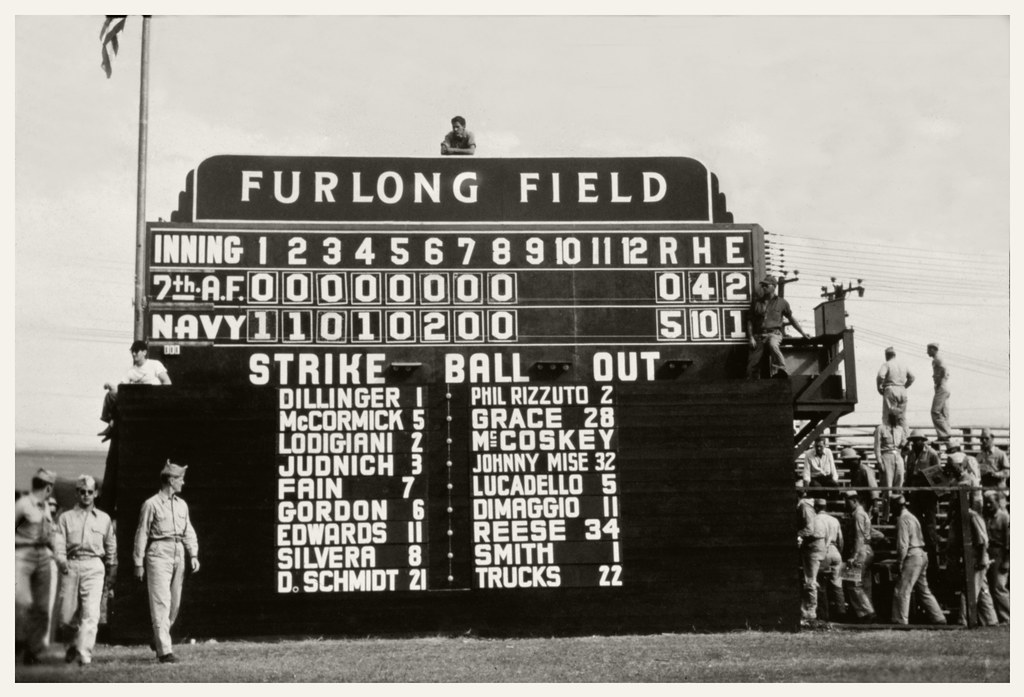
In a league that featured some of the game’s brightest stars including Harold “Pee Wee” Reese, Johnny Mize, Bob Dillinger, Mike McCormick, Joe Gordon and Joe DiMaggio, finishing the season in the top five in the batting race was truly an accomplishment for any player. In Hawaii’s 1944 Central Pacific Area League, for Walt Judnich it was just déjà vu. Having closed out the 1942 season, his most recent in the big leagues with the St. Louis Browns, with a .313 average, good enough for sixth place in the American League batting standings at that time, Judnich was once again in familiar statistical territory despite his tropical surroundings.
Walter Franklin Judnich was born January 24, 1917, in San Francisco, California to Mathias “Matthew” Domenic Judnich and Johanna Francis Judnich (nee Jacklich), who were second generation Americans born of Slovenian immigrants.[1] Walter grew up on Vermont Street in the Potrero Hill neighborhood, blocks away from his childhood friend, Eddie Joost.[2]
As a youth, he embraced athletics. His father encouraged him in baseball and started him at Daniel Webster Junior High School, where Walt blossomed.[3] “My coach was Pop Elder and he showed me a lot about baseball,” Judnich told syndicated sports editor Jimmie Page.
In 1933 at the age of 16, Judnich was playing in San Francisco city leagues, appearing on the rosters of “Club Slovenia” and the “Mission Reds” (not to be confused with the Pacific Coast League club of the same name). “Mission usually managed to have some good ball teams and we won the city championship in 1933 and 1934,” he told Page. “The scouts were looking some of the boys over,” Judnich continued, “and I happened to be one of them.”[4]
Fellow San Francisco ballplayer Dario Lodigiani, the Galileo High School teammate of Joe DiMaggio, recalled Walter’s time at Mission. “[He] played in the outfield. It was his team that beat us out for the city championship in 1933 and 1934.” Dario continued, “We were playing in three leagues at the same time. There were our old high school league, the American Legion and semi-pro games each week.”[5]
By 1934, Walter was an established star in San Francsico’s winter recreation league. “Judnich, left fielder,” the San Francisco News reported, “is rated as one of the hardest hitters in the prep league this season.”[6] The Reds, a powerful club whose roster included future major leaguer Dario Lodigiani, faced Lomita Park in the championship.[7] Six months after graduating from high school Walt Judnich was scouted by Joe Devine and signed to a contract with the New York Yankees.[8]
New York assigned the 19-year-old Judnich to their class “C” Middle Atlantic League Akron Yankees, where he adapted to the Ohio environment and life in the low minors. He acquitted himself as a true prospect, batting .274 in almost 400 at-bats over 109 games. His success in the 1935 season earned him a promotion to the Norfolk Tars of the class “B” Piedmont league for the following season. Judnich feasted on Piedmont League pitching, elevating his batting average to .303 and his slugging percentage to .515 with 24 home runs for the 1936 season. Walt was promoted once again to the highest minor league level when he was assigned to the Oakland Oaks of the class “AA” Pacific Coast League. Being across San Francisco Bay from his hometown served the 21-year-old well as he raised his batting average to .316, playing in a whopping 175 games for the club in 1937. If Judnich were an outfielder in any other major league club’s organization, he would have been a lock for a major league promotion. The talent-rich Yankees were anything but any other ball club.
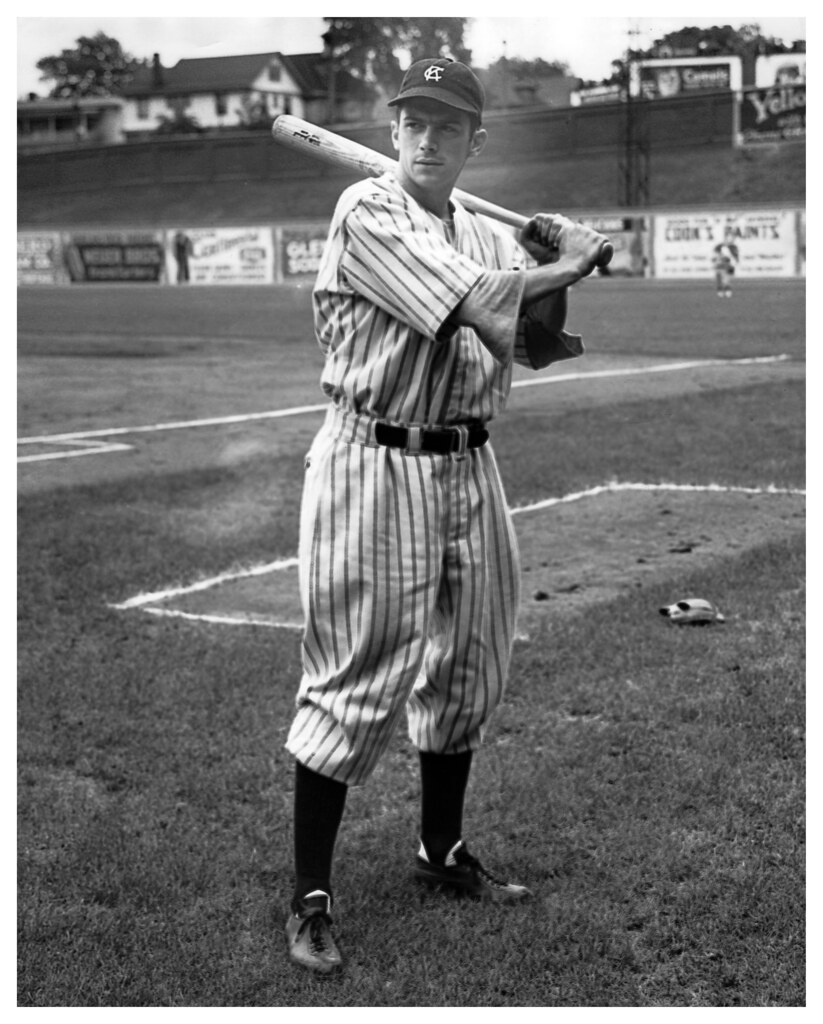
During the 1930s, New York captured the American League pennant in half of the decade’s seasons including four consecutive years starting in 1936, not to mention four straight World Series championships. During that span, the Yankees’ outfield corps was virtually unchanged, with Joe DiMaggio, George Selkirk, Tommy Henrich, Myril Hoag, and Jake Powell creating a logjam which prevented any newcomers from breaking through.
Playing in the Yankees’ organization all but guaranteed Judnich would toil away in the minor leagues. He spent 1938 in the American Association with Kansas City and 1939 at Newark in the International League, batting .279 over 300 games with 22 and 21 home runs in each respective season. During Judnich’s 1939 season at Newark, Yankees’ manager Joe McCarthy took a look at the outfielder. During an at-bat, Judnich drove a ball 508 feet out of the park. McCarthy commented that he could not see Judnich supplanting DiMaggio, Selkirk, or Charlie Keller. A Yankee front office member responded to the Yankees’ general, “Maybe you can’t see him, Joe, but the Red Sox are willing to see him to the tune of $65,000.” McCarthy’s short response sealed Judnich’s fate. “Better ship him to St. Louis.”[9]
Ahead of spring training, New York Yankees general manager Ed Barrow announced on February 1, 1940, that Walter Judnich had been sold to the St. Louis Browns for an undisclosed sum. It was reported that the Yankees once refused $35,000 for Judnich and ended up selling him to the Browns for half that amount.[10] Ten days later, the former Yank prospect signed his major league contract with the Browns. Team owner Bill DeWitt held out hope that Judnich would develop into a fence buster and declared that the Sportsman’s Park screen and pavilion would be good targets for Walt’s drives.[11] Judnich’s rookie stats would have placed him in the top three of the Yankees‘ outfielders along with DiMaggio and Keller.
Out of the gate, Judnich made his presence known, quickly adapting to major league pitching. After going oh-for-two, in his third at-bat in the big leagues against Detroit’s Bobo Newsom, Judnich deposited a 2-1 pitch into the Briggs Stadium stands for a lead-off home run in the top of the sixth inning of the April 16, 1940, opening day game, as the Browns downed the Tigers, 5-1. In the first 10 games, he batted .275, hit three home runs and drove in eight scores. By mid-season, his average had slipped to .243, but he was meeting DeWitt’s expectations with the long ball, slamming 14. He also drove in 44 runs. By the season’s end, his .303 average was ranked 18th in the American League. His 24 home runs were 9th in the league’s standings.
Walt’s 1941 campaign could be explained as a sophomore slump because he batted .284 and clouted 10 fewer home runs, but his 83 RBIs were only four fewer than he drove in during the 1940 season. Judnich’s patience at the plate was reflected in his 80 free passes, up from 54. In his third season, Walter’s .313 batting average marked a return to his rookie season form and left him ranked sixth behind George Case (.320), Joe Gordon (.322), Stan Spence (.323), Johnny Pesky (.331), and American League batting champion Ted Williams (.356).
Judnich the Army Air Forces’ Bomber
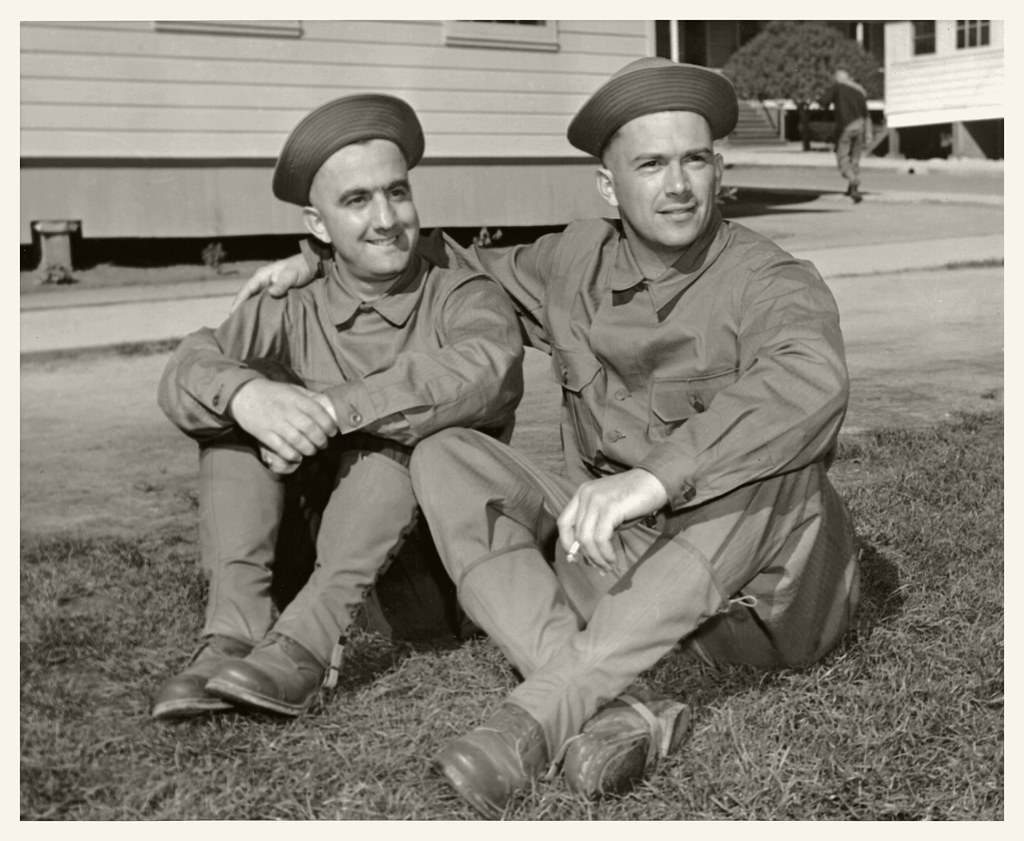
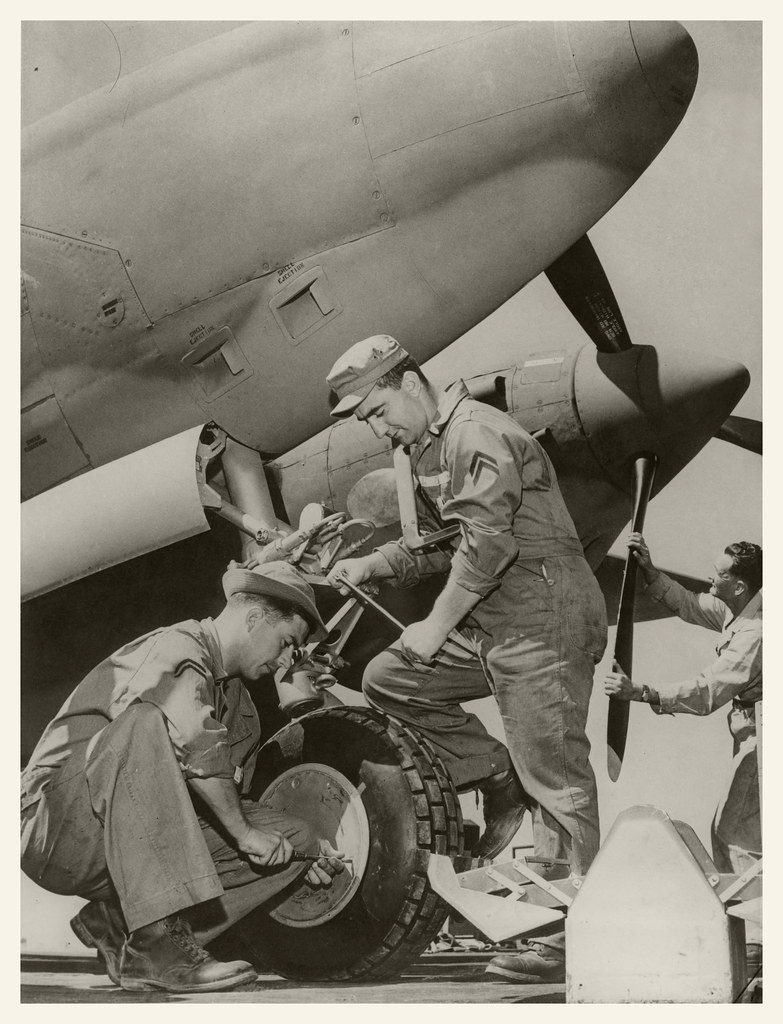
As his Browns teammates were preparing for spring training, Walt Judnich was getting ready to go to war. On February 26, 1943,[12] Judnich was inducted into the Army in San Francsico, California and was assigned to the Monterey Presidio for training and duty.[13] Dario Lodigiani, Judnich’s Mission Reds teammate in San Francisco’s winter recreation league, was inducted into the Army on the same day and the two were reunited at Monterey. After receiving initial training and their uniforms at Monterey, Judnich and Lodigiani were shipped out to McClellan Army Airfield in Sacramento, where they were added to the main post’s ball team.[14] Judnich was assigned to the 495th Squadron along with fellow former major leaguers Mike McCormick and “Rugger” Ardizoia.[15] By day, Judnich worked as part of McClellan Field’s alert crew. Baseball duties happened after hours.[16]
Central California Service Men’s League:
- Camp Kholer
- Hammer Field
- McClellan Field
- Merced Air Base
The McClellan Field “Commanders” roster was comprised of a combination of amateur athletes and former professional ballplayers. Anchored by former major league outfielder Mike McCormick (Cincinnati), Lodigiani and Judnich were surrounded by former minor leaguers Rugger Ardizoia, Carl DeRose, Bob Dillinger, Ferris Fain, Ken Penner, Bill Schmidt, Ben Salas, Malcolm Silva, Charlie Silvera, and Wally Turpin. Reg Renfree managed the club. With McClellan situated in Sacramento, the Commanders played in the six-team Central California Service Men’s League, which also included Hammer Field, Merced Army Flying School, Stockton Ordnance Depot, Mather Field and Camp Kohler.
1943 McClellan Field “Commanders” Full Season Roster:
| Rank | Player | Pos. | Former |
|---|---|---|---|
| Pvt. | Al Androvich | 2B | |
| Rinaldo “Rugger” Ardizoia | P | Kansas City (AA) | |
| Don Brown | Scorer | ||
| Pvt. | Bill Butler | UT | |
| Sgt. | Kenny Butler | OF | St. Mary’s College |
| Carl DeRose | P | Amsterdam (CAML) | |
| Bob Dillinger | 2B | Toledo (AA) | |
| Corp. | Ferris Fain | 1B | San Francisco (PCL) |
| Pvt. | Bud Farnsworth | C | |
| Lt. | George Ferris | 1B | |
| Pvt. | Al Hanley | 3B/SS | Indiana University |
| Corp | Ed Johnson | P | |
| Pvt. | Walter “Wally” Judnich | OF | Browns |
| Pvt. | Vince Latino | 3B/2B | |
| Pvt. | Dario Lodigiani | SS/3B | White Sox |
| Sgt. | Joe Maravelli | P/OF | |
| Myron “Mike” McCormick | RF | Reds | |
| Ken Penner | Mgr. | Sacramento (PCL) | |
| Pvt. | Reg Renfree | C/Mgr. | |
| Lt. | Roy Riegels | Spec. Svs. Off. | |
| Pvt. | Ben Salas | P | Fresno (CALL) |
| Pvt. | William “Bill” Schmidt | P | Sacramento (PCL) |
| Malcolm Silva | P | Springfield (WA) | |
| Charlie Silvera | C | Wellsville (PONY) | |
| Pvt. | Izzy Smith | CF | |
| Mike Sypnicki | C | ||
| John Tuinan | P | Pocatello (PION) | |
| Pvt. | Wally Turpen | P | Pocatello (PION) |
McClellan’s 1943 season schedule also included exhibition contests against the Pacific Coast League’s San Francisco Seals, Oakland Oaks and their neighboring Sacramento Solons. Whenever possible, the Commanders scheduled contests against regional collegiate teams including Fresno College and University of California at Berkeley.
By the end of April, McClellan had a 15-8 won-lost record, which included splitting four games with the Solons.[17] “I believe that the McClellan Field nine is the strongest among the Pacific Coast service teams,” Robert Ahearn wrote San Francisco News sports columnist, Bud Spender. “And we’d like to prove it in a post-season test with St. Mary’s Pre-Flight or the Sixth Ferrying Group from Long Beach [both helmed by future Hall of Famer enshrinees Charlie Gehringer and Red Ruffing, respectively],” Mr. Ahearn concluded.[18]
On July 13, a few of the McClellan Field squad were added to a team of Army and Navy All-Stars which faced a combined Oakland Oaks-San Francisco Seals squad at Seals Stadium. The Army-Navy club included the 6th Ferrying Group’s Chuck Stevens (Browns) and Froilan Fernandez and Max West, both formerly of the Braves. Navy Pre-Flight St. Mary’s manager Chalie Gehringer led the Navy contingent that included Livermore Naval Air Station’s Ray Lamanno (Reds); Calvin Dorsett (Indians) of the San Diego Marines; and Cookie Lavagetto (Dodgers) and Joe Hatten (Montreal) of Naval Air Station Livermore. Walter Judnich was joined by Commanders’ teammates Ardizoia and Lodigiani.
During batting practice ahead of a July 13, 1943, Army versus Navy All Stars game held at Seals Stadium, Dario Lodigiani directed San Francisco News sports reporter Al Vermeer’s attention to one of the Army players taking practice cuts at the plate. “There is one of the real champions of baseball today,” the former White Sox player asserted. “Lodi” referred to his current and former teammate, Walter Judnich. “If it wasn’t for the war, he would be the talk of the American League. He can hit with the force of Ted Williams and, to top it off, he’s a marvelous man in the field,” Dario continued.[19] Judnich was two-for-six and scored a pair of runs as the Army stars dominated the Navy, 14-3, in the contest.[20]
Lodigiani’s accolades for Judnich did not end there. “They call Dom DiMaggio a great outfielder. Well, I say Judnich is greater than Dom.” During his 1940 rookie season, suggestions among some sportswriters were that Judnich was personally responsible for slugging the Browns to seven victories over the Yankees. Lieutenant Charlie Gehringer, manager of the service all-stars, concurred with the assessment, “Yes, Judnich certainly did us a tremendous favor that summer.” Perhaps there is some truth in the notion as the Yankees finished two games behind Gehringer’s Detroit Tigers, who captured the 1940 American League pennant.[21]
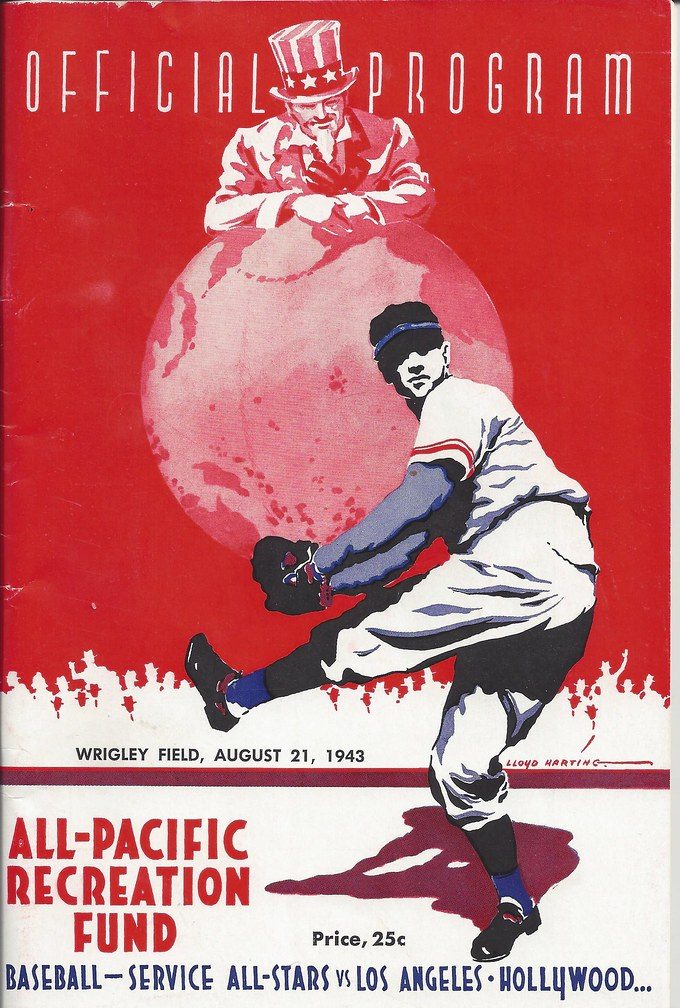
Just after the season’s midway point, Judnich was added to another service all-star roster, joining the military stars of the West Coast including Joe DiMaggio, Red Ruffing and Harry Danning and teammates Mike McCormick and Dario Lodigiani to face a combined roster of the Pacific Coast League’s Hollywood Stars and Los Angeles Angels for a recreation equipment fundraiser sponsored by Hollywood actor and comedian Joe E. Brown. The August 21 All-Pacific Recreation Fund charity game was hosted to raise money to purchase and provide sports equipment to the troops serving in the Pacific Theater. A near-capacity crowd descended upon the Angels’ home ballpark, Gilmore Field, to see the service members take down the Coast Leaguers, 8-2.[22]
As the summer neared its end in early September, Judnich’s .461 batting average stood atop the Central California Service Men’s Baseball League. Walt’s plate prowess set him apart in three additional offensive categories: hits (48), doubles (14) and runs batted in (45).[23] Finishing the season in front of the league, the McClellan Commanders were truly a team of stars as the top ten in the league’s batting leaders were populated by Lodigiani (.421), Dillinger (.406), Fain (.398), Silvera (.333) and Ardizoia (.303). They won 43 games, dropping only 11.[24] For the 1944 year overall, including pre- and post-season exhibitions, the Commanders posted a 63-17 won-loss record.[25]
The end of league play was not the end of baseball for the McClellan Field nine as the club spent September playing exhibition games in Reno, Nevada, as well as other California service clubs in Long Beach and Stockton. One of Judnich’s final diamond tilts of the season came in the form of a Service All-Star contest against San Francisco Seals standouts to raise funds in support of combat-wounded servicemen recovering at Hammond Hospital (see: A Patient Find: Joe and Charlie Headline 1943 Hammond General Hospital Game). The overflow crowd of more than 5,000 saw Judnich’s one-for-three offensive performance against Seals pitching as he doubled, drove in a run and scored a run in the 6-2 Service All-Star victory.[26]
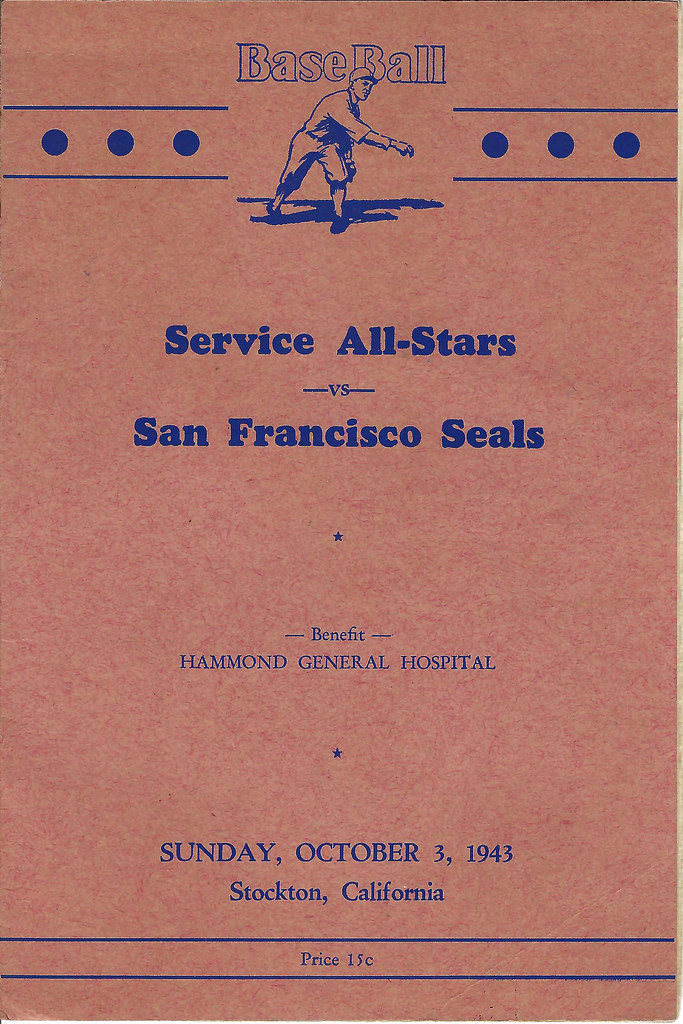
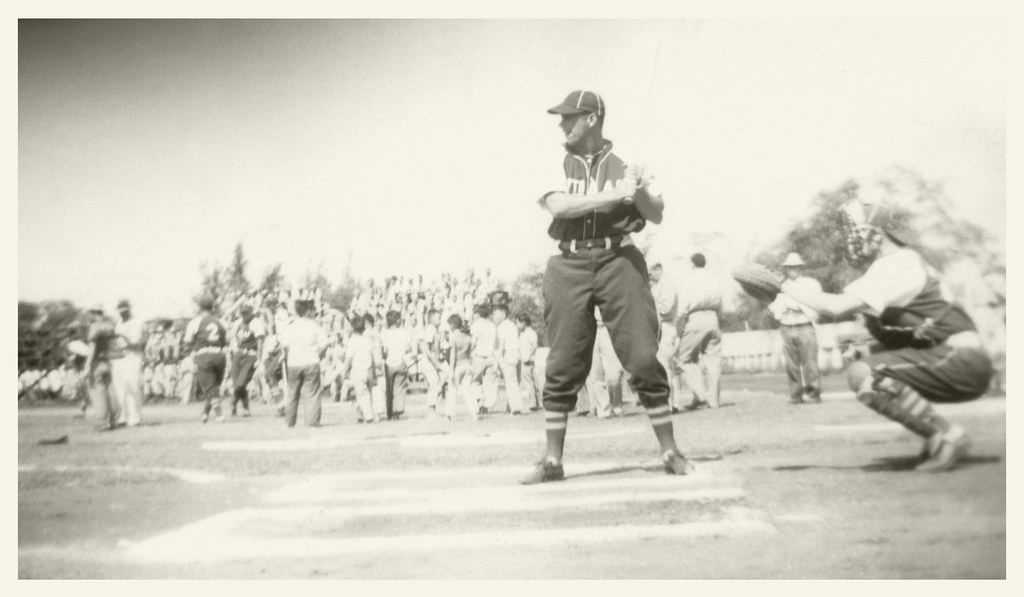
All-Star game that featured two future Hall of Fame players (Chevrons and Diamonds Collection).
As autumn transitioned to winter, for Judnich, baseball was right around the corner without the benefit of the late winter commencement of spring training. The Commanders were active once more in early January in the Alameda (California) 2A Winter League, joining U.S. Navy Receiving Ship (in Yerba Buena), Moore Navy Yard and Ben’s Golden Glows.[27] The two-month-long league culminated in McClellan Field sweeping Receiving Ship in a doubleheader on February 28.[28] Between Commander games, Judnich and Ferris Fain moonlighted for a local semi-pro team, Sherry Liquors, joining Billy Rigney and Ray Perry (both were serving at Navy Pre-Flight Training School at St. Mary’s in Moraga),[29] in competing against other regional clubs. When the Coast League commenced its spring training exhibition schedule, both the Sherry and McClellan clubs met the teams from Sacramento, Oakland, Seattle, Portland, and San Francisco.[30]
Following a two-week break, McClellan Field’s 1944 pre-season exhibition schedule commenced with a roster altered from the previous year. The most notable addition to the roster was former Yankee and Senator Gerald Priddy. From March 14 through April 7, the Commanders prepared for another dominant year with a brief jaunt down the coast to Southern California, where they downed the Los Angeles Angels at Gilmore Field. Meanwhile, the winds of change for Army baseball, McClellan Field in particular, were beginning to blow.
Lieutenant Colonel Leland Stanford MacPhail, who before the war was Team President of the Brooklyn Dodgers, was serving in the Army in public relations. In 1944, he recommended to the Army Chief of Staff, General George C. Marshall, that former professional ballplayers who spent 12 months or more at domestic army posts be sent to combat divisions. MacPhail considered permanent reception and replacement center teams embarrassingly defeating clubs that represented combat division units to be unfair. At the time, some 150 former major leaguers crowded fort, camp, and post teams, which MacPhail suggested was bad, without substantiation, for organized baseball.[31]
MacPhail also suggested that the presence of “real live ball players” attached to combat units would be beneficial for unit morale. Seemingly in the former Dodger chief’s crosshairs, the MacClellan nine was one of the first clubs to be slated for dismantling.[32]
1944 McClellan Field Commanders:
| Player | Pos. | Former |
|---|---|---|
| Rinaldo “Rugger” Ardizoia | P | Kansas City (AA) |
| Carl DeRose | P | Sacramento (PCL) |
| Bob Dillinger | Toledo (AA) | |
| Ferris Fain | 1B/MGR | San Francisco (PCL) |
| Al Hanley | SS | Indiana University |
| Walter “Wally” Judnich | OF | Browns |
| Wilfred “Bill” Leonard | C | Oakland (PCL) |
| Al Lien | P | San Francisco (PCL) |
| Dario Lodigiani | SS | White Sox |
| Myron “Mike” McCormick | RF | Reds |
| Gerald “Jerry” Priddy | Senators | |
| William “Bill” Schmidt | Sacramento (PCL) | |
| Charlie Silvera | C | Wellsville (PONY) |
| Isadore “Izzy” Smith | CF | Semi-Pro (Sacramento, CA) |
| Mike Sypnicki | C | Semi-Pro (Sacramento, CA) |
| Phil Kuykendall | CF | Amateur |
Whether motivated by MacPhail’s recommendation or something else, it was becoming clear that the McClellan Commanders’ days were numbered…and that number was quite small. On May 1, 1944, it was confirmed that the team was being dismantled and some players had received overseas assignments with the air service command, though officials could not divulge which players would be impacted nor their destinations.[33]
MacPhail’s efforts did have the desired effect, though there might have been another factor at play in the McClellan Field Commanders’ demise. The Island of Oahu had become a baseball hotbed and a destination for former professional players who dotted unit teams on bases throughout the island. One club dominated both service and civilian league play throughout the 1943 season. The Pearl Harbor Submarine Base “Dolphins,” helmed by Chief Torpedoman Henry “Dutch” Raffeis, fielded a roster that was a mix of outstanding regular Navy players, former semi-pros, a handful of former minor leaguers and a small dose of former major leaguers. Raffeis, recently recalled to active duty from his retirement, was the Navy’s best all-around ballplayer in the first half of the century. He led the Subs as they captured the island’s three principal diamond crowns: Hawaii League, Cronin Series and Hawaiian Defense League.
With the abundance of incredible talent playing ball at McClellan Field as well as at Santa Ana Army Air Base, Army brass on the island sought more than simple retribution for the Dolphins’ 1943 performance. By transplanting the bulk of the McClellan squad and augmenting them with Joe DiMaggio, who was arguably the best ballplayer in the major leagues before he enlisted, senior Army officers and personnel alike had reason to hold lofty expectations with the news of the players’ impending arrival. Prior to departing from their stateside units and ball teams, the 17-player contingent was already earmarked to be added to the 7th Army Air Force club based at Hickam Field.[34] The 7th AAF Fliers, formed ahead of the commencement of the Honolulu League’s January start, were a collection of former semi-pro and minor leaguers who finished regular season play in third place behind the Pearl Harbor Marines and the second place Aiea Naval Barracks, who captured the championship in the Cronin Series, the league’s postseason tournament.
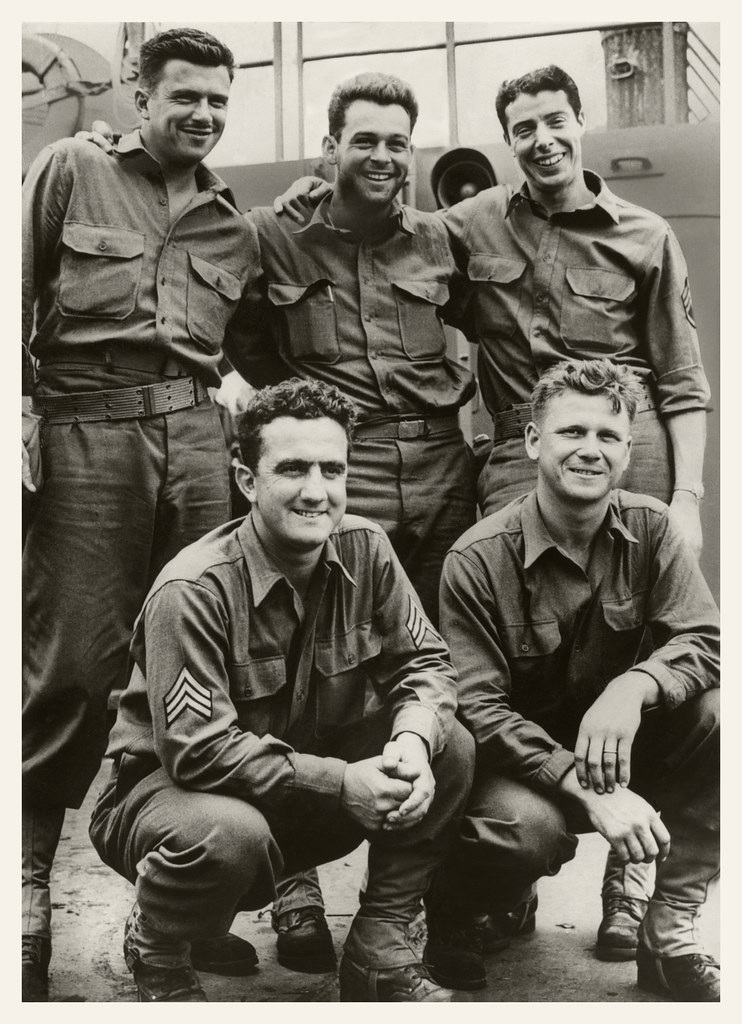
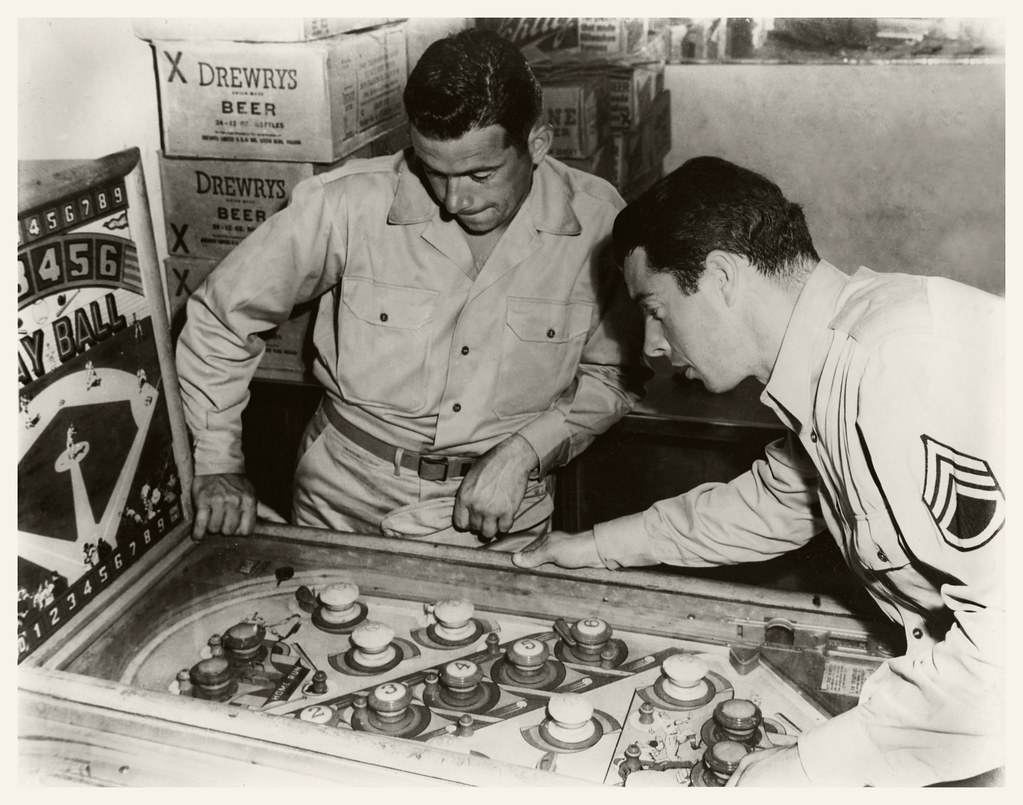
With the book closed on the 1944 Honolulu League, play commenced in the civilian Hawaii League, which featured two service clubs, the Pearl Harbor Submarine Base “Dolphins” representing the Navy and the Army’s 7th AAF Fliers. The civilian ball clubs in the league included the Tigers, Braves, Wanderers, Athletics and Hawaiis. Simultaneously, the principal service teams including the Aiea Naval Hospital, the Naval Air Station Kaneohe Bay “Klippers,” the Aiea Naval Receiving Barracks, Wheeler Field, the Submarine Base “Dolphins;” and the 7th AAF Fliers comprised the Central Pacific Area (CPA) League. By the end of May, the Fliers were trailing in both leagues[35][36] with the Honolulu Star-Bulletin suggesting that the ship carrying Judnich and the West Coast cohort could not arrive on the island soon enough.[37]
Stay tuned for part two: 7th Army Air Force Bombing Command
[1] 1920 U.S. Census, Ancestry.com
[2] 1930 U.S. Census, Ancestry.com
[3] Jimmie Page, “7th AAF Stars Look Back On Old ‘Frisco School Days,” Tribune-Herald (Hilo, HI), July 15, 1944: p.4.
[4] Jimmie Page.
[5] Jimmie Page.
[6] “Red Juniors Play Lomita in Title Game,” The San Francisco News, April 28, 1834: p.15.
[7] “Red Juniors Play Lomita in Title Game.”
[8] “Joe Devine Signs Judnich for Yanks,” The San Francisco News, January 3, 1935: p.24.
[9] Son Glendon, “Press Box,” The San Francisco Call Bulletin, March 8, 1943: p.13
[10] “Sports Roundup,” Sedalia Democrat (Sedalia, MO), February 1, 1940: p.4.
[11] “Judnich, Newark Slugger, Signs Browns’ Contract,” St. Louis Post-Dispatch, February 11, 1940: p.18
[12] Walter Judnich, Official Military Personnel File (OMPF), Accessed June 9, 2024: p.3.
[13] “Judnich Is Private At Monterey Presidio,” The Modesto Bee, March 1, 1943: p.10.
[14] “Army Assigns Judnich, Lodigiani Here,” The Sacramento Union, March 4, 1943: p.4.
[15] Dick Edmonds, “Sports Echoes: He Knows His Place,” The Sacramento Union, August 30, 1943: p.4.
[16] Dick Edmonds, “Sports Echoes,” The Sacramento Union, January 23, 1944: p.23.
[17] “M’Clellan on Fresno Trip For Opener,” San Francisco Chronicle, April 29, 1943: p. 18.
[18] Bud Spencer, “McClellan Field Boasts ‘Hot Nine,’ Says New P.A.,” The San Francisco News, August 3,
[19] Al Vermeer, “Dom is a Great Fielder — But Judnich is Greater!,” The San Francisco News, July 15, 1943: p.13.
[20] Al Vermeer, “West Cracks Long Homer,” The San Francisco News, July 14, 1943: p.16.
[21] Al Vermeer.
[22] “PCL Batsmen Dumped by Star Unit,” The Sacramento Union, August 22, 1943: p.17.
[23] “Walt Judnich Closes With .461 Mark,” The Sacramento Union, September 3, 1943: p.4.
[24] “They’ll Play In Reno Tomorrow, “ Nevada State Journal, September 5, 1943: p.9.
[25] Harry Grayson, “The Payoff,” The News Journal (Wilmington, DE) May 3, 1944: p.19.
[26] John J. Peri, “Overflow Crowd of 5,000 Sees DiMaggio Go Without a Hit, The Record (Stockton, CA), October 4, 1943: p.12.
[27] “Joe Hatten and Pat Ambrose Signed by Ben’s,” Alameda Times Star, January 7, 1944: p.5.
[28] “Fliers Are Champs,” Alameda Times Star, February 28, 1944: p.5.
[29] “Dean To Face Coast League Club,” The Arizona Republic, February 13, 1944: p.23.
[30] “Baseball Briefs: Seals Defeat Sherrys,” Alameda Times Star, March 13, 1944: p.6.
[31] Harry Grayson, “The Payoff,” The News Journal, May 3, 1944: p.19.
[32] Harry Grayson.
[33] “Noted Army Baseball Team Will Be Broken Up; Men Reassigned,” The McCook Daily Gazette (McCook, NE), May 1, 1944: p.5.
[34] “Joe DiMaggio and Other Stars Joining 7th AAF Baseball Team,” Honolulu Star-Bulletin, May 13, 1944: p.18.
[35] “DiMaggio, Baseball Stars Here – Stellar Performers Join 7th AAF Nine, “ Honolulu Advertiser, June 3, 1944: p. 8.
[36] “Braves Upset By Hawaiis In 7-1 Game,” Honolulu Advertiser, June 3, 1944: p. 8.
[37] “7th Needs More Punch,” Honolulu Star-Bulletin, May 26, 1944: p.10
 Chevrons and Diamonds
Leave a comment