A few decades ago, yours truly was a baseball autograph seeker. Being a Dodgers and Red Sox fan, my pursuits centered upon players from both of these teams. However, as a dyed-in-the wool fan of the game, the golden age of the game in particular, I also sought autographs from players who played the game before 1970 and most of those obtained were collected in person from the players, though a few came from direct correspondence with retired players. During the few years that I dabbled in this, I accumulated a modest collection of autographed baseballs.
When houseguests view my autograph collection, they will see nothing but pristine baseballs – all of which were new-in-the-box prior to having the player place their signature as clean, white balls display signatures quite nicely. I never tried to get signatures on game-used baseballs since I’ve never caught a foul ball at any game, making it irrelevant. Signed game-used baseballs, especially those that came from a noteworthy game or a notable team, are sought by many collectors. Within my own collection, I have a few team-signed balls (I obtained every signature) yet they are not game-used. Verifiable game use adds value to a ball, but provenance is key in terms of determining value.
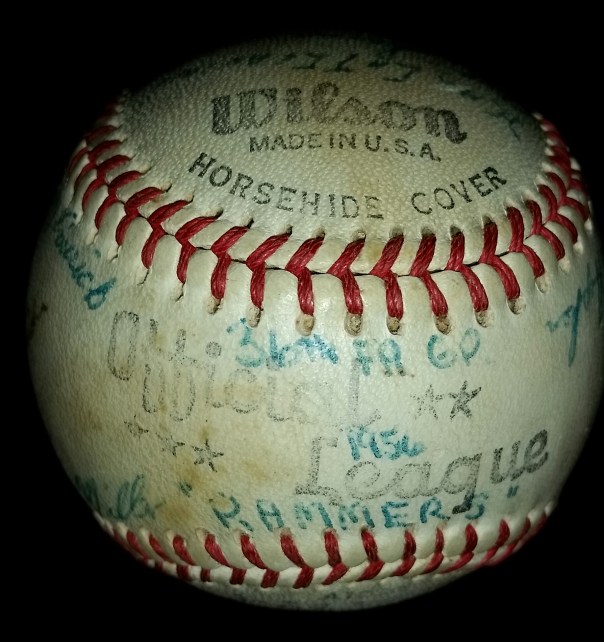
With nearly a decade of collecting military baseball artifacts, I was never successful in locating any baseballs that were connected to the game. I have written a few times (see here and here) regarding the fakery and outright fraud that is being foisted upon potential military baseball collectors and one seller in particular has been quite successful and absolutely unchecked as he has racked up several thousands of dollars as he cheats people who have no understanding of the balls that were actually used by military service teams. There has been a smattering of authentic military baseballs, but I have always missed out when presented with the opportunities.
The search for military sports equipment can be rather fruitful in terms of gloves and bats as these are commonly listed for sale online. Perhaps a testament to the durability of the horsehide, leather and wood, these items have held up quite well to the ravages of time which means that collectors will have little difficulty in locating many items for their collections. Uniform items are a bit more of a challenge to acquire, especially ball caps and stockings. The item that has eluded me since my entry into the military version of the game has been the ball itself.
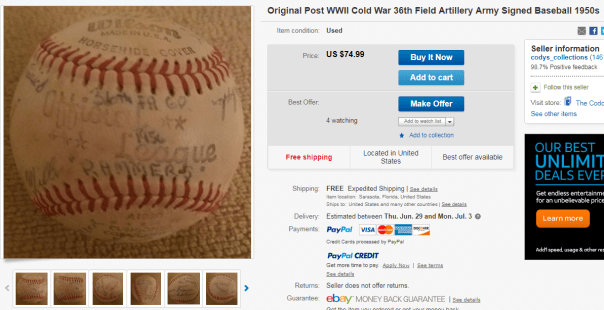
For the past several months, I have been watching an auction listing that, while outside of what I am normally interested in (World War II-era and older), this ball from the 36th Field Artillery Group dating from 1956 is still very much a candidate to be the first ball for my collection. Due to the timing of the listing and the starting bid for the ball, I simply set a watch to see what would happen. After the six days of the listing lapsed without a bid, the seller re-listed at the same price. Six days later, the cycle repeated and did so for the next several weeks with only slight reductions in price. Finally, the seller decided to re-list the ball with a minimum bid requirement for little more than a few dollars.
Cursory research of the ball and the 21 visible signatures shows that it originates from a team of service members who were part of a large field artillery command that was based in Germany. The 36th Field Artillery Group was the headquarters for all of the subordinate commands which, in 1956 were:
| UNIT DESIGNATION | LOCATION |
|---|---|
| 18th Field Artillery Battalion | Babenhausen |
| 517th Armored Field Artillery Battalion | Büdingen |
| 519th Field Artillery Battalion | Babenhausen |
| 593rd Field Artillery Battalion | Babenhausen |
| 594th Field Artillery Battalion | Giessen |
| 597th Armored Field Artillery Battalion | Hanau |
| 465th Field Artillery Battalion | Darmstadt |
| 816th Field Artillery Battalion | Darmstadt |
The “Rammers” squad could have been assembled from players who were assigned either to the headquarters group or drawn from these battalions or battery commands.
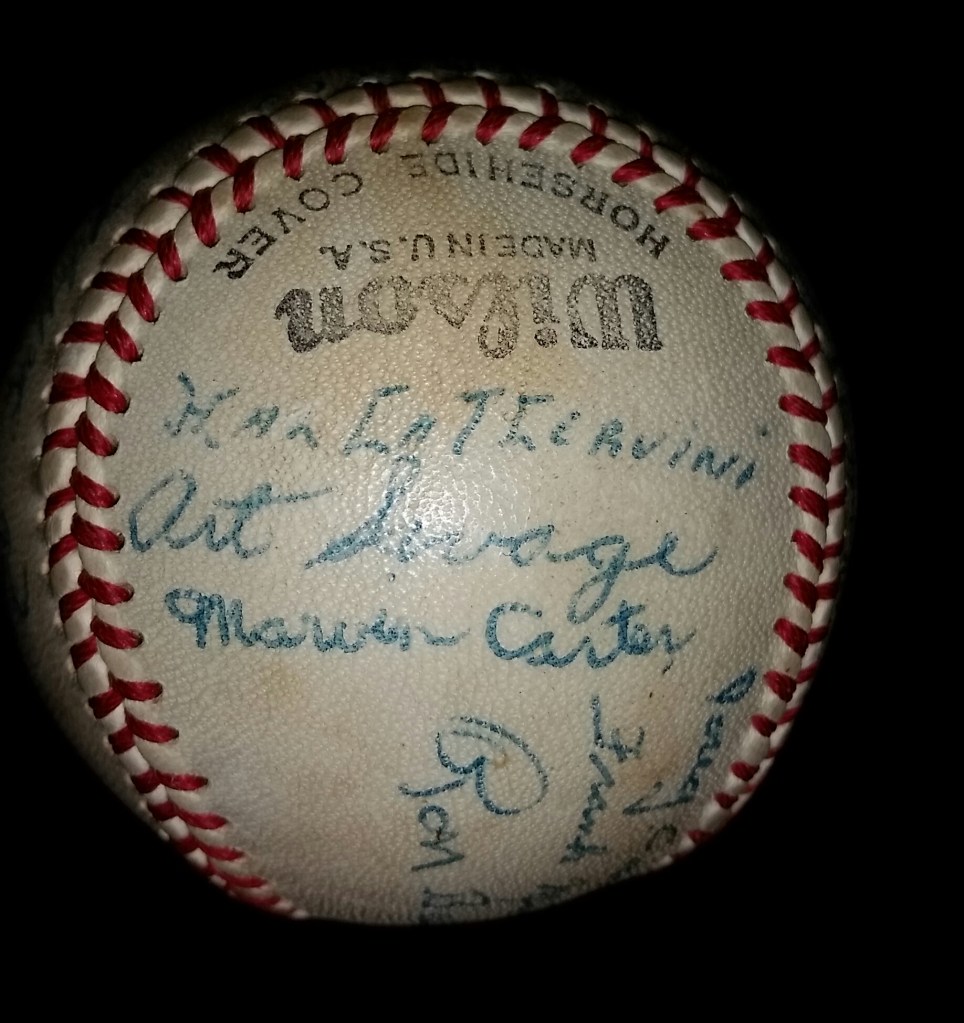
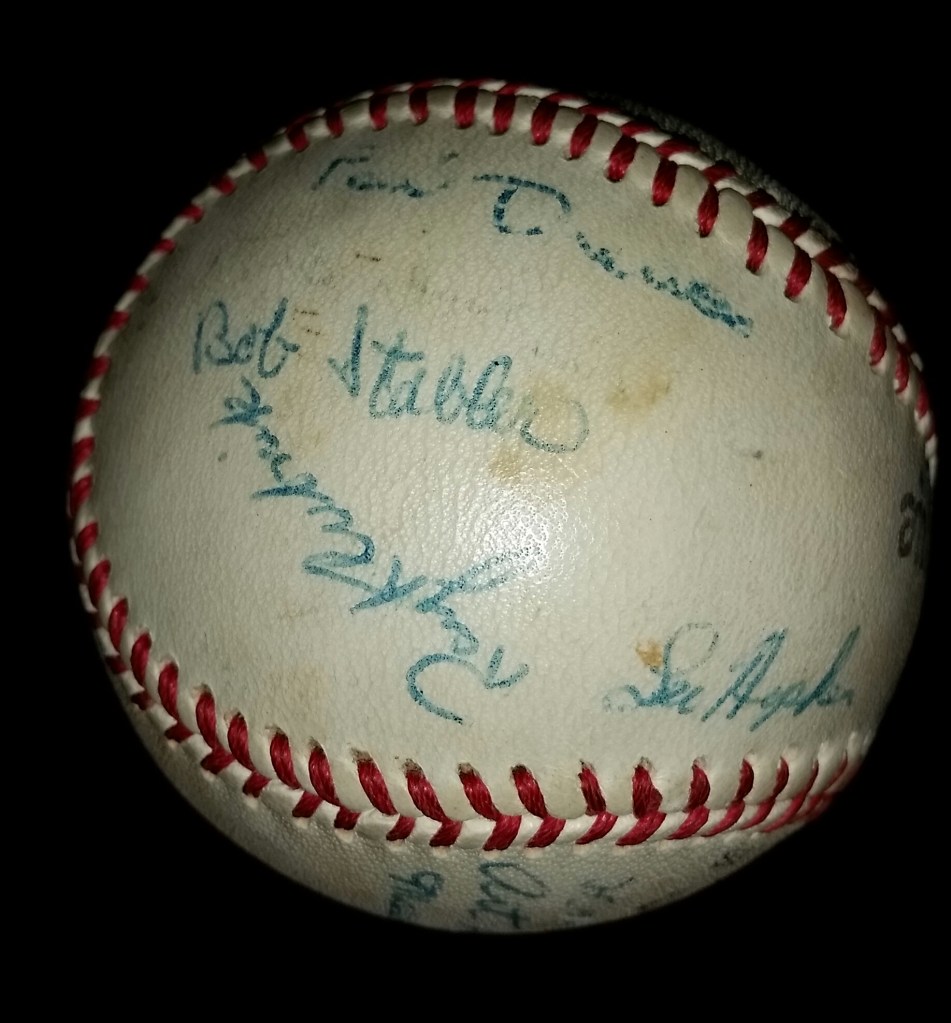
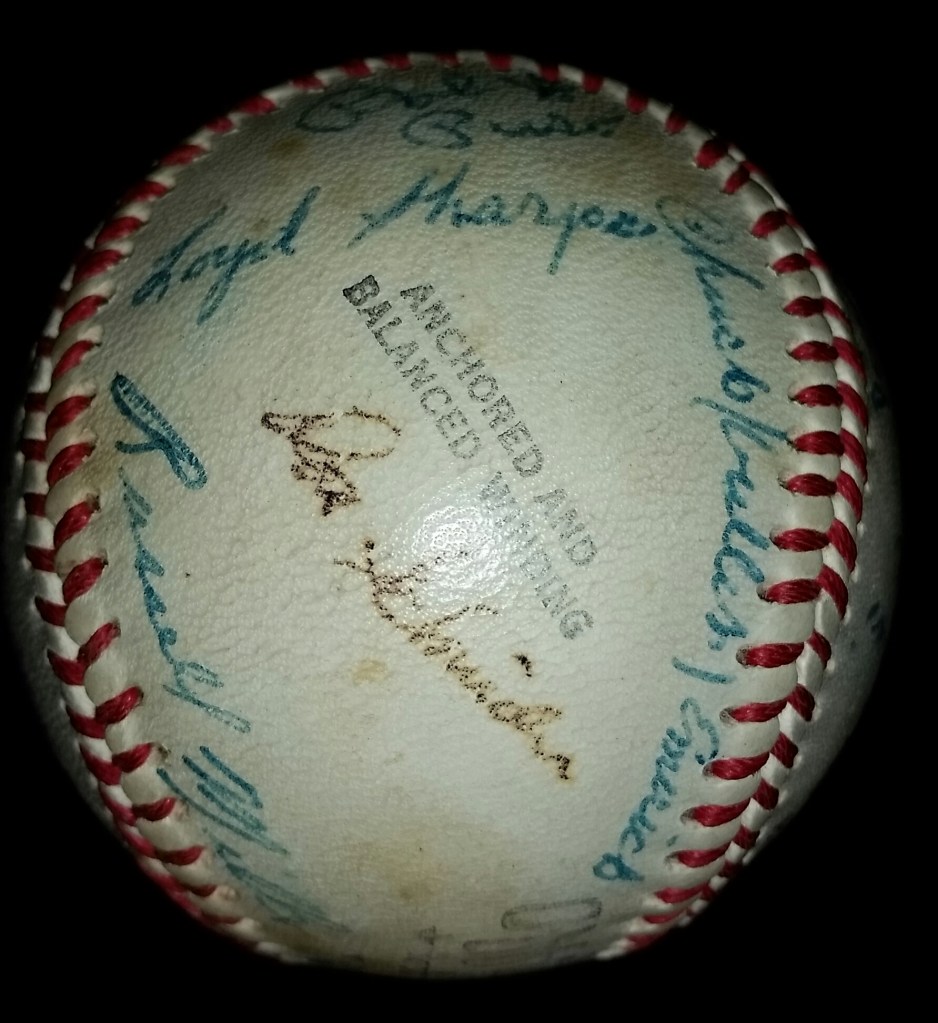
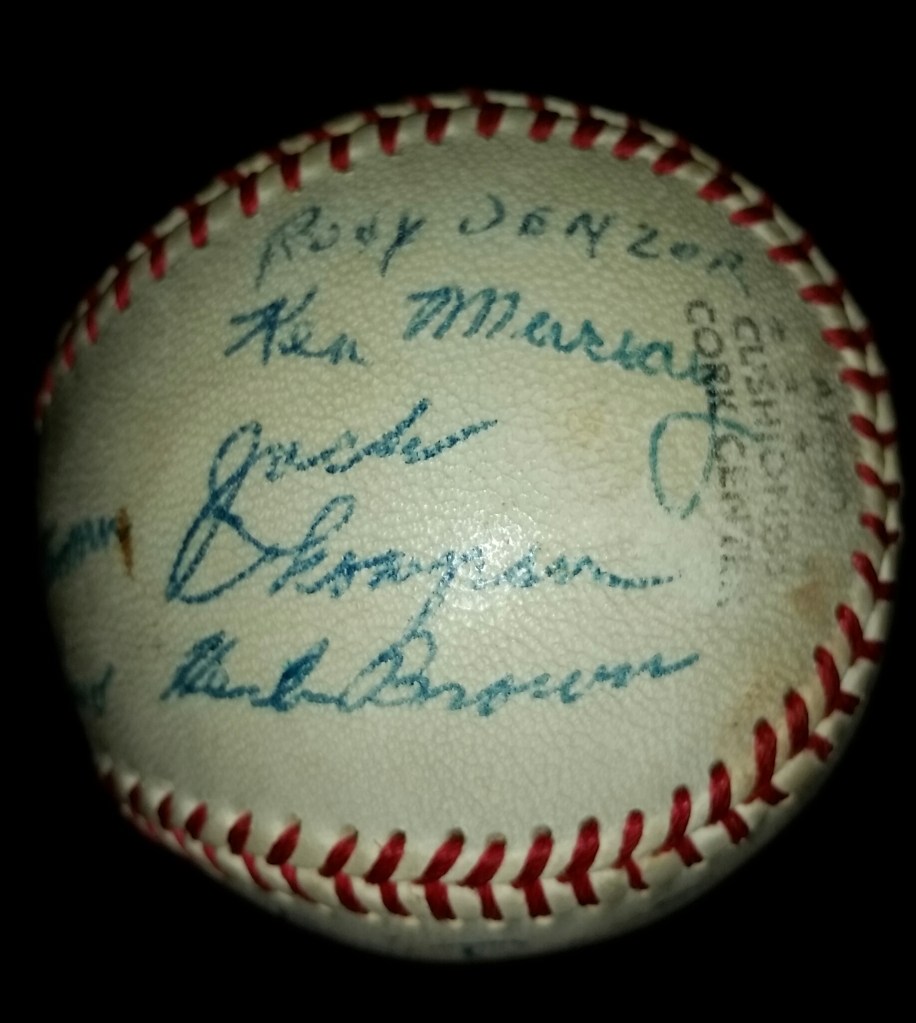
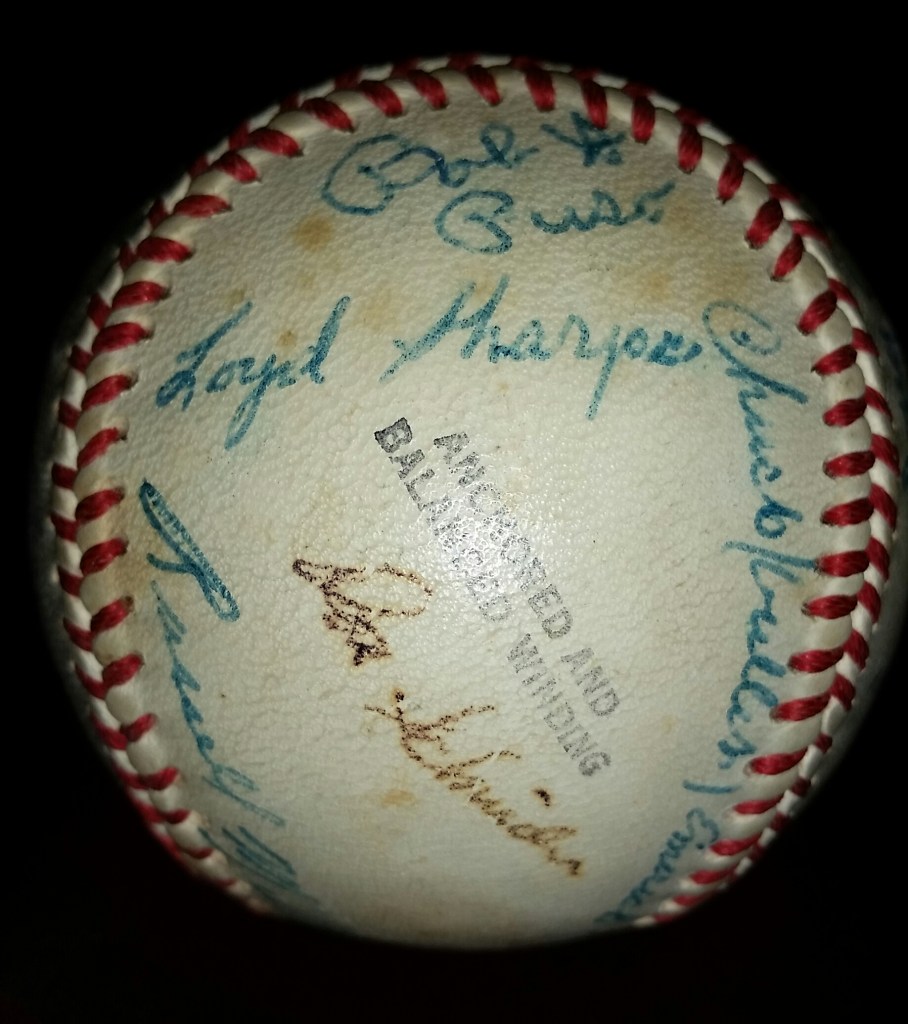
With my bid set based upon what I could honestly afford, I set a rather low maximum bid and prepared to be outbid by one of the five others who were watching or that had already placed nominal bids. When the auction closed, I was shocked that the sale price was less than $13 (including shipping) and swiftly paid for my winning bid. Just days later, the 36th Artillery ball arrived.
| Confirmed | Questionable | Indistinguishable |
|---|---|---|
| Bob A. Puso | Han [A] Leavini ? | Jack Ho***** |
| Loyd Harper | Leo Hipler | |
| Russell Miller | ||
| Art Savage | ||
| Marion Carter | ||
| Doug Campbell | ||
| Frank Mione | ||
| Ron Bales | ||
| Chuck Halterman | ||
| Bill Schifario | ||
| Rudy Denzer | ||
| Ken Murray | ||
| Herb Brown | ||
| Ray Klubrik | ||
| Bob Stabler | ||
| Chuck (Chuckles) Emerick |
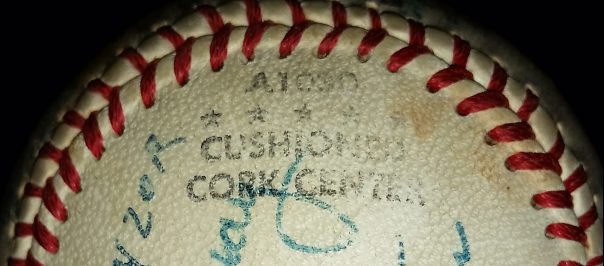
While I have been able to clearly read 15 of the signatures, there are four others that are difficult to discern and still one more that is severely faded and entirely illegible. With the ball in hand, I have another research project (similar to the effort that I experienced with a WWII presentation cigarette box) to determine if any of the signatures on the baseball are from men who might have played professionally or, perhaps to find if one or more are still alive. I can imagine how fulfilling it would be to interview these men about their time in the Army and their ball-playing experiences.


 Chevrons and Diamonds
Leave a comment