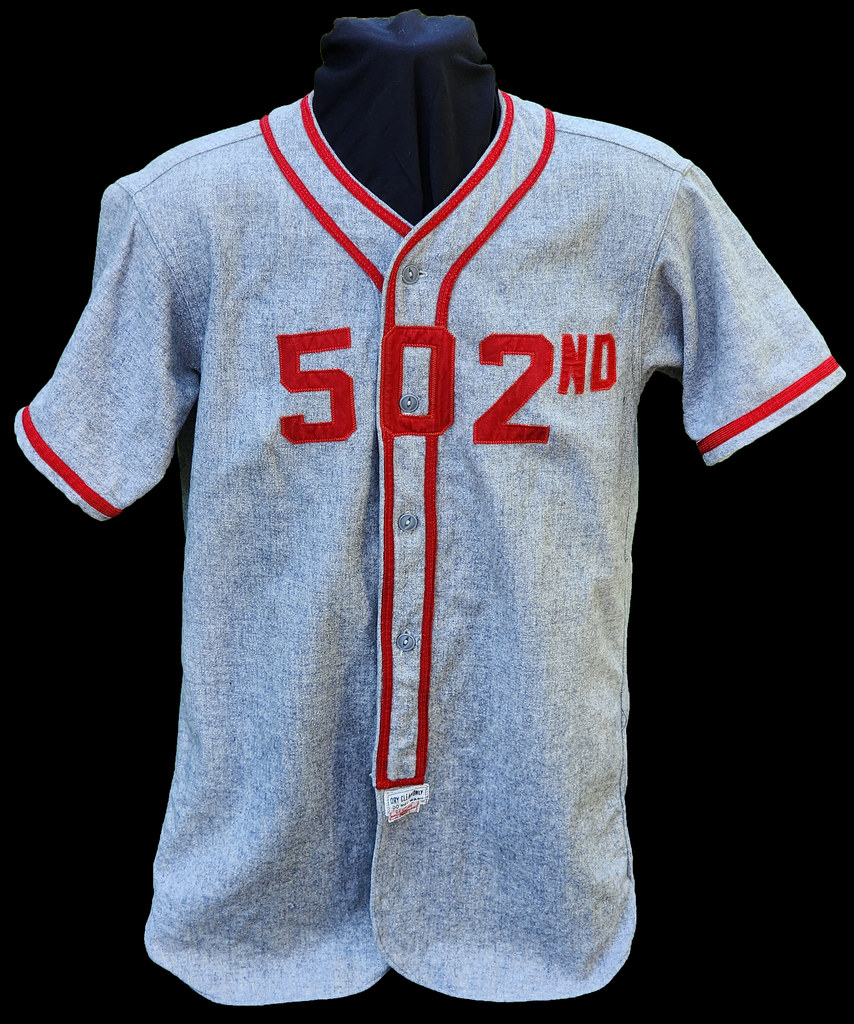
Some flannels can be more challenging to pinpoint age or year of manufacture than others. In the case of this 502nd Parachute Infantry Regiment jersey, at first glance, it appeared to be from the late 1940s to the early 1950s. However, upon further examination of each point of research, our investigation revealed that the jersey dates to 1945.
502nd Parachute Infantry Regiment History
Activated on March 2, 1942, at Fort Benning and was built out with men recruited from Forts Bragg and Jackson. In August of the same year, the 101st Airborne Division was activated at Camp Claiborne. After training, the 502nd sailed for England September 4, 1943. The regiment trained for the next seven months in preparation for the D-Day invasion. Participating in the Normandy campaign, Operation Market Garden, the Battle of the Bulge and into Germany until the Third Reich’s surrender, the 502nd was in the thick of the heaviest fighting of the European campaigns. The regiment spent the remainder of their time in Mittersill-area of Austria. The regiment was inactivated on November 30, 1945, in Auxerre, France and the last of the personnel were sent home.
Following WWII, the 502nd was reactivated once again from July 6, 1948, as a training unit and deactivated on April 1, 1949. During the Korean War, the regiment was once again reactivated on August 25, 1950, for the duration of the war and shut down on December 1, 1953. The regiment was brought back as an active combat regiment on April 25, 1957.
Dodge Davis Tags
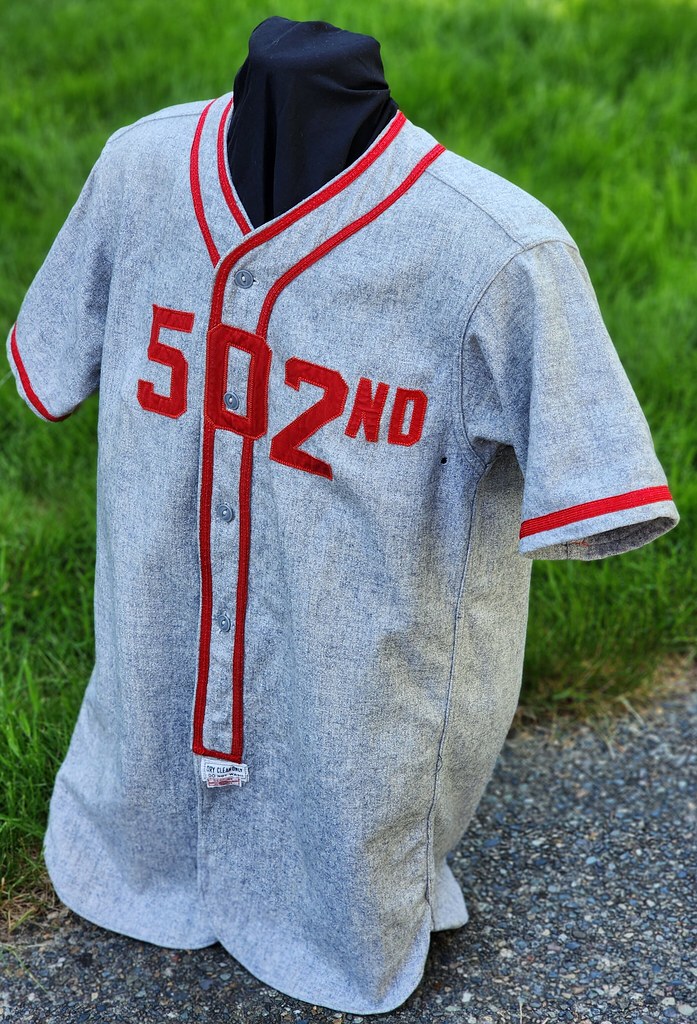
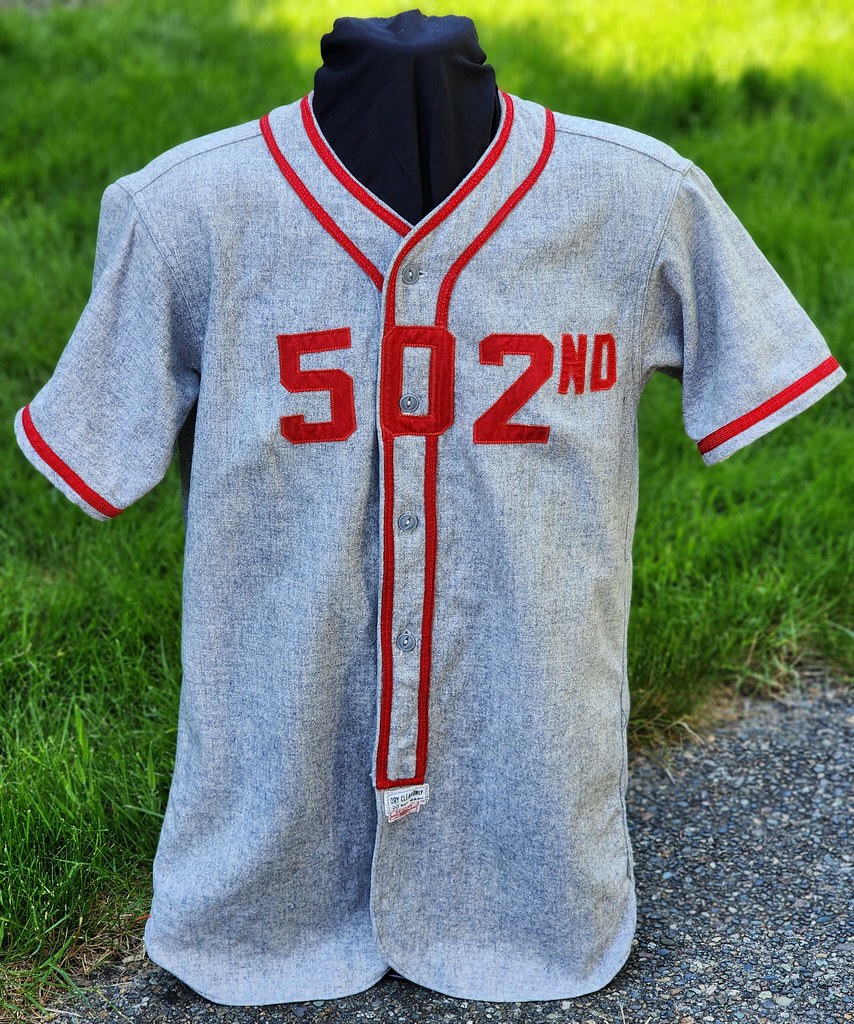
Manufacturer’s tags in baseball uniforms made by prolific athletic wear makers such as GoldSmith (and its permutations to MacGregor), Rawlings, Spalding and Wilson are relatively easy to pinpoint age. However, second-tier manufacturers’ tags pose a greater challenge due to their diversity of variants seen over a broad range of time. Dodge Davis used the tag seen in our 502nd PIR jersey from as far back as the early 1930s and well into the late 1940s. In order to date a Dodge Davis flannel, we have to look at other aspects present on the garment.
Jersey Pattern and Design
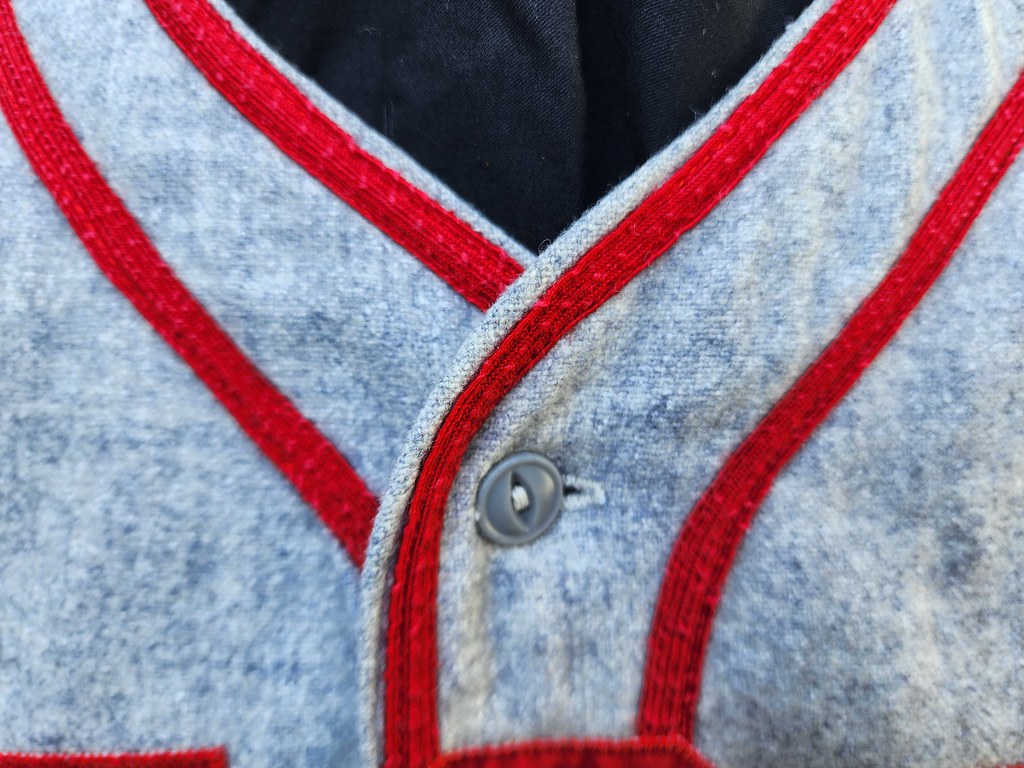
Sleeves progressed from near full-length to short sleeves from the early 20th century to the 1960s. Typically, by the 1940s, sleeves ranged in length from ten to eight inches throughout the war depending upon the manufacturer and their catalog specifications. During the war years, the sun-collar made its final exit as manufacturers phased it out of their catalogs. By the 1950s, necklines dropped to a more comfortable depth offering players reduced restrictive movement. Shirt tails became more blunted, and even squared in the post-war years as the era of 100-percent wool flannel was nearing its end.
Our 502nd jersey features heavy wool material, eight-1/2-inch set-in sleeves, short neckline, and rounded tails placing the date of manufacture during the war years.


Lettering and stitching
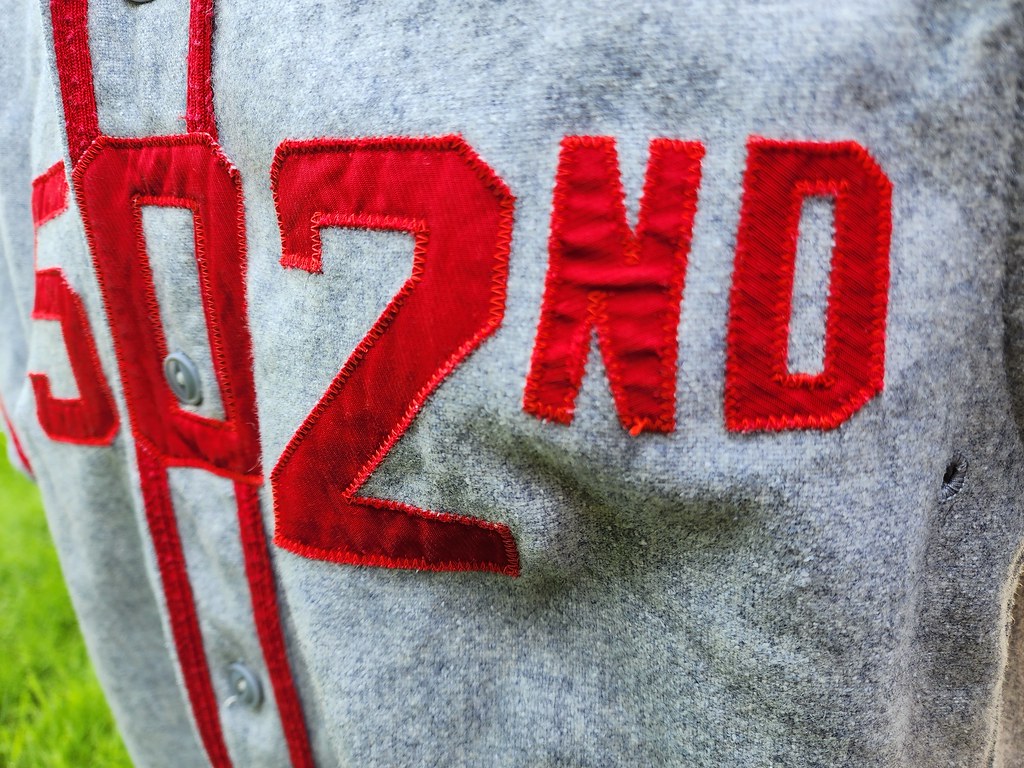
A wrench was thrown into the dating process when we examined the lettering on the chest and the back numerals. Rather than the typical athletic felt material, the 502nd features an unusual rayon-line fabric that is applied using a broad zigzag stitch. At a glance, one would assume that the jersey dated to the 1950s however, the lettering material is inconsistent with any era of baseball jerseys and the open zigzag stitching is unlike what became more common in the late 1950s and into the following decades. Turning to the 1945 German-made 36th Division “Arrowheads” flannel, we see the same material and stitching leading us to the conclusion that the 502nd employed local tailors to letter and number their baseball uniforms. The 36th Division uniform was made in Munich which is in proximity of Mittersill region making it likely that the 502nd flannel was lettered at the same German business.

Jersey Features:
- Buttons: Four gray plastic cateye buttons
- Collar: Shallow-V
- Material: The base material is heavy gray/away wool-flannel.
- Soutache: Double band of red, 1/2-inch rayon surrounding the button placket and collar. A single band encircles the edge of the sleeve cuffs.
- Lettering: Rayon-like material applied with early zigzag stitching.
- Numeral: Single numeral “2” on the back.
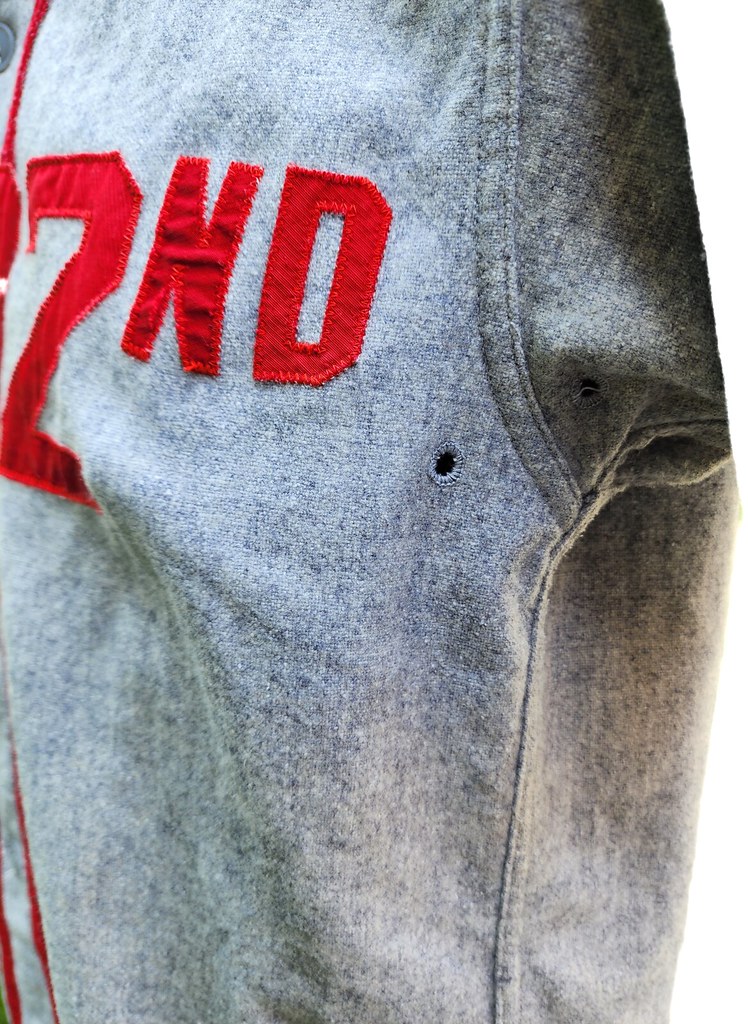
- Sleeves: In-set non-gusseted, vented.
- Tag: Dodge Davis
 Chevrons and Diamonds