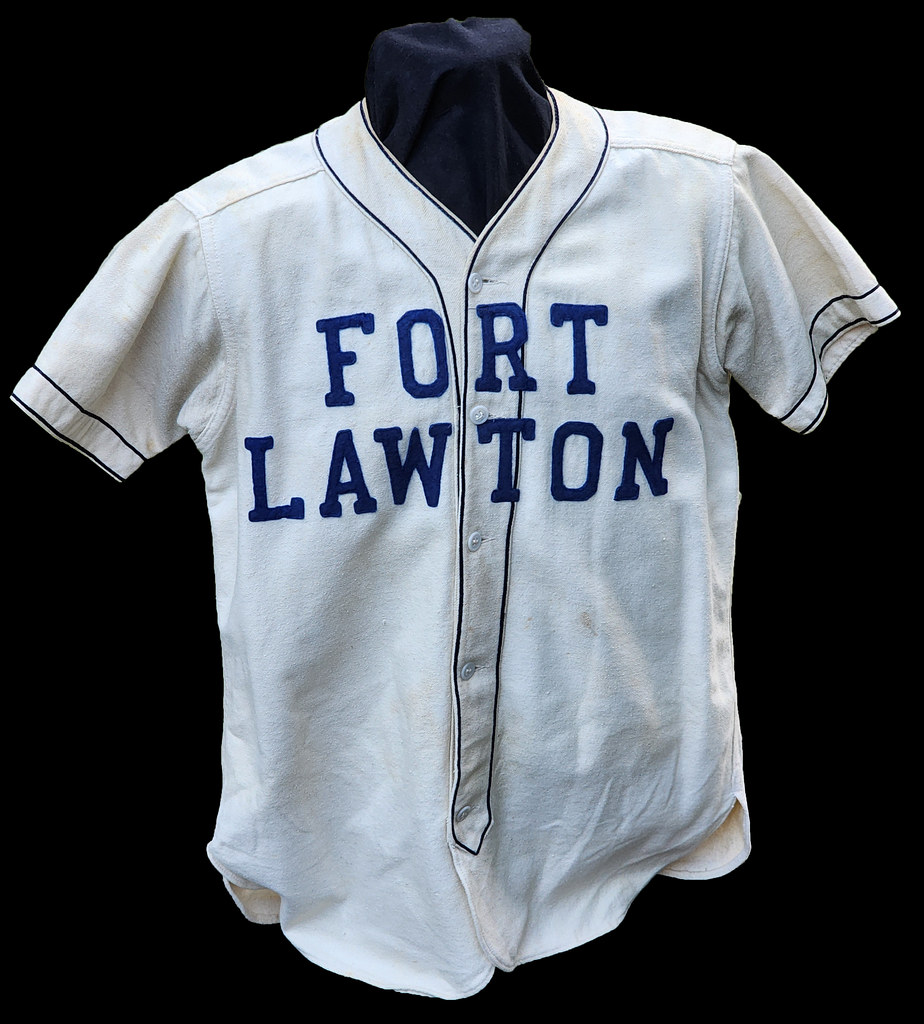
Opened in 1900, Fort Lawton, a 1,100-acre Army post in the Magnolia area of Seattle, was home to some 20,000 troops during World War II. As with most military installations, the Army provided opportunities for recreation activities to the soldiers stationed at Lawton, including competitive sports. In the spring of 1942, the post began receiving former professional ballplayers who had joined the Army following the attack on Pearl Harbor, affording the post commander with the ability to field a team to compete against regional military clubs including those from Fort Lewis, Naval Air Station Seattle (Sand Point), Seattle Coast Guard Station, and the Bremerton Navy Yard.


By late spring, the rosters at Fort Lewis and Sand Point began to look more like major league clubs as men from the high minors and major leagues began to pour into their ranks. Fort Lawton’s ball team was predominated with highly skilled amateur athletes and anchored with a few former minor leaguers. To keep things equally competitive, the Sand Point and Fort Lewis clubs were added to a higher-level league while Fort Lawton joined with the Seattle Coast Guard, McChord Field, and Fort Lewis Anti-Aircraft “Ack-Acks,” and the Barrage Balloon “Boiling Pointers” Pacific Northwest Service Baseball League.
From May through August, Fort Lawton vying for the league’s top spot against the Coast Guard and Ack-Acks. By the end of July, the league’s three top teams qualified for the Washington State Semi-Pro Championship tournament joining Fort Lewis and Naval Air Station Seattle as the military team entrants in the wide field of competition.
The Fort Lewis Warriors, led by player-manager Morrie Arnovich, former National League left fielder, was the frontrunner ball team in the state semi-pro tourney and ended up taking the crown. Fort Lawton was edged out for third place with the civilian Everett Pilchucks in second.

True to the late 1910s time-period, the jersey sports a tall sun-collar that angles downward toward the button opening but is visible around the entire neckline. The sleeves are lengthy, extending 13 inches from the seam to the hem. The shirt tails are also correct for the period; six inches for the front and the rear, eight inches.


Running neck-and-neck (and neck) throughout the duration of the season, the Fort Lawton boys found themselves looking up from third place as the Ack-Acks wrested the Pacific Northwest Service Baseball League title away from the Coast Guard who fell to the second spot.

For the 1943 and brief 1944 seasons, photographic research shows that the Fort Lawton ball team wore a pinstriped uniform that is very similar to our jersey. Lacking pinstripes, our jersey dates to 1942 with distinguishable differences from the proceeding seasons including horizontally arranged lettering.
Uniform Features:
Jersey:
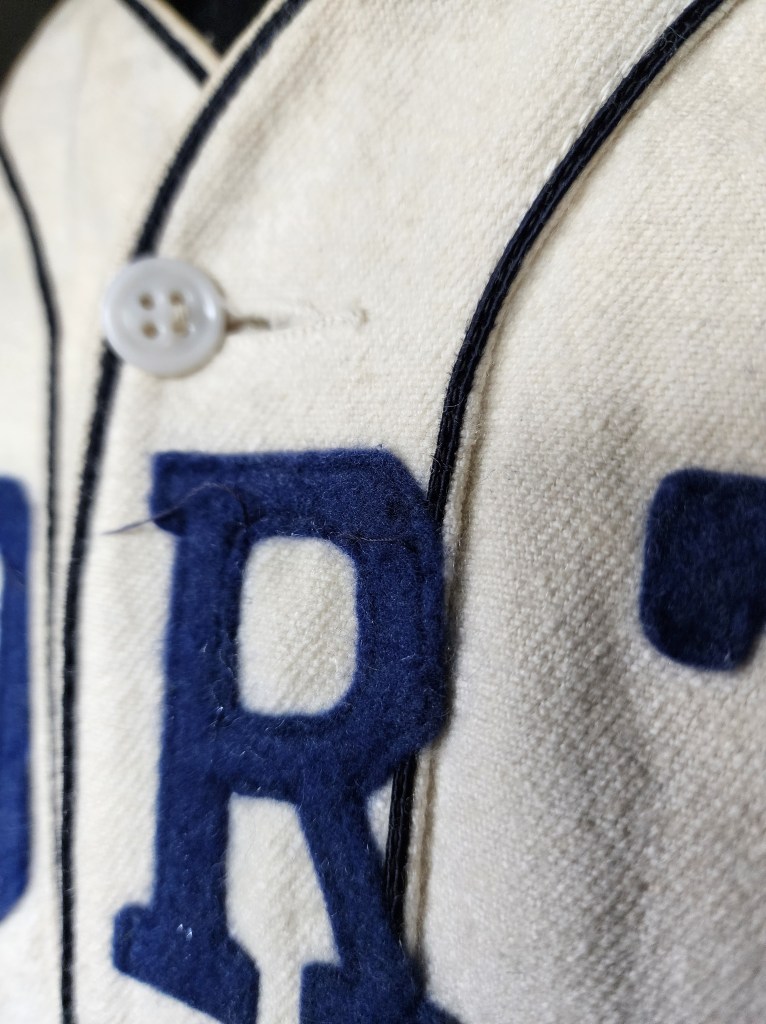
- Buttons: Five white plastic buttons , concave, four-hole.
- Material: The base material is heavy white wool-flannel.
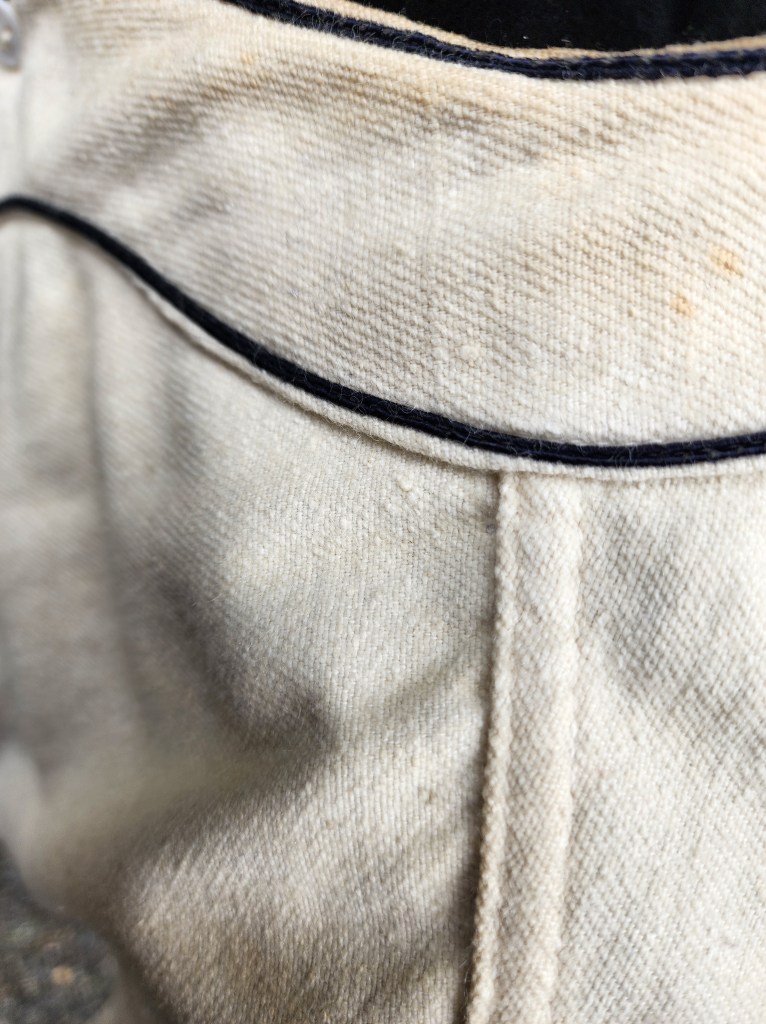
- Soutache: 1/4″ single black rayon line on each side of the placket, extending down to a point below the last button and following the stitching as it extends upwards, encircling the collar with two strands. Two strands of black soutache, 1-inch separated, encircling the cuffs of the sleeves.
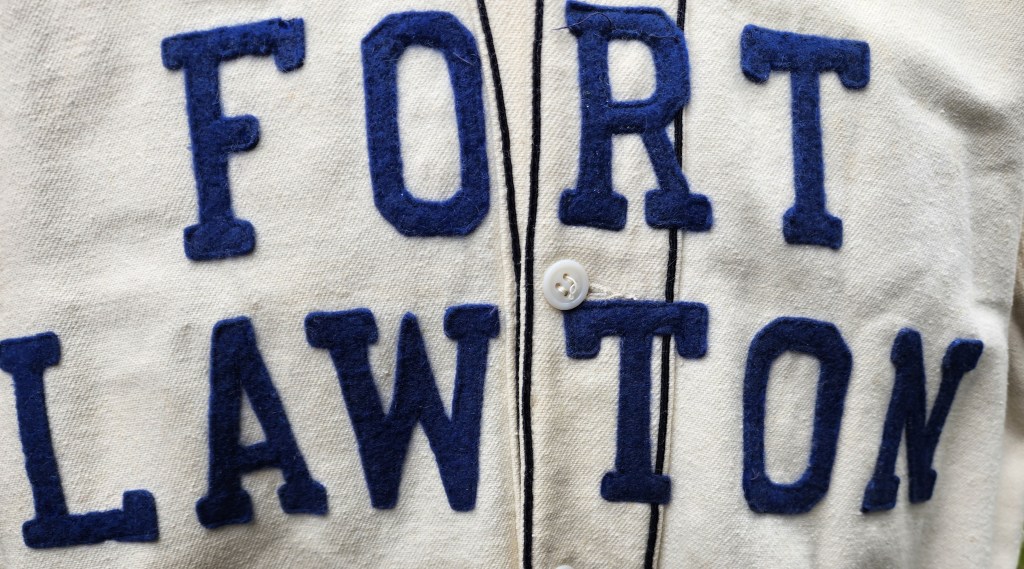
- Lettering: Heavy blue athletic felt 2-3/4-inch block lettering spelling out the team name in two horizontal lines across the chest; on both sides of the placket.
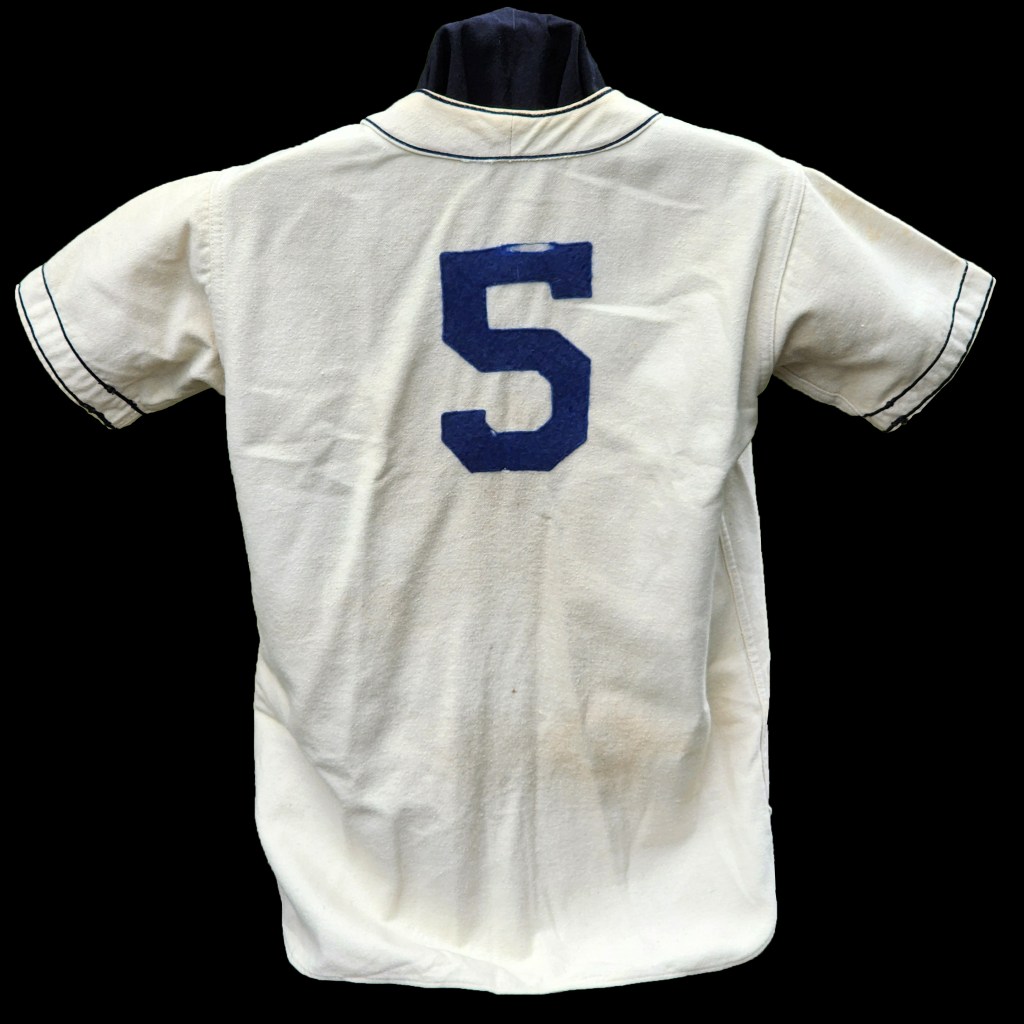
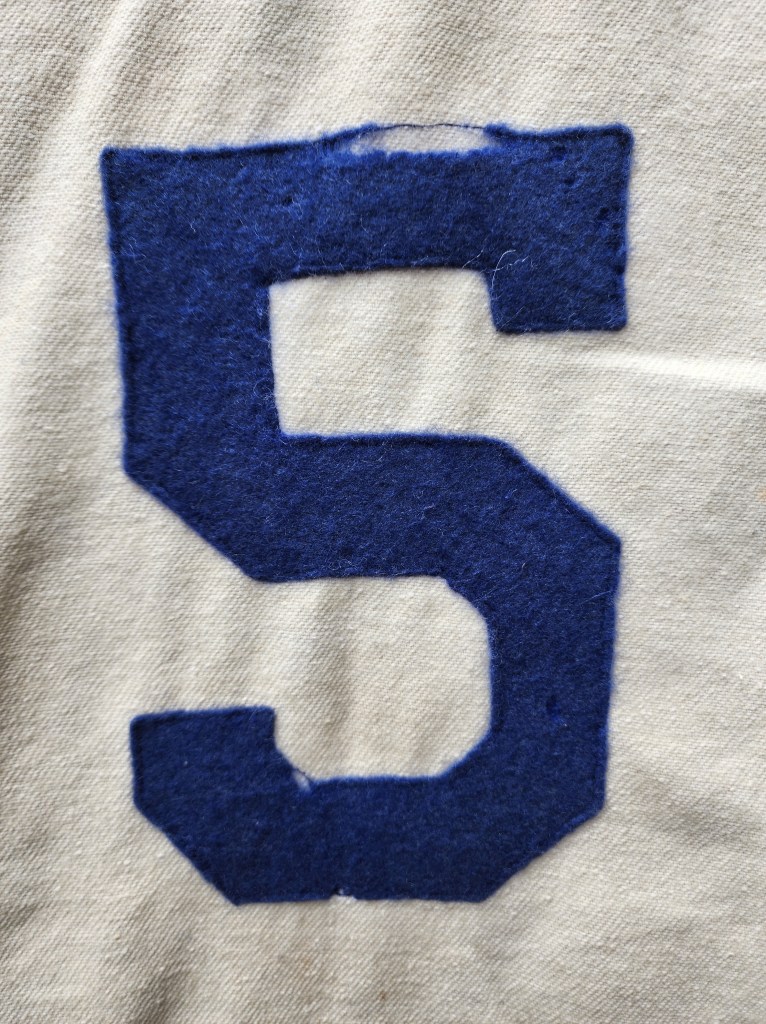
- Numerals: Heavy blue athletic felt 7-inch block number.
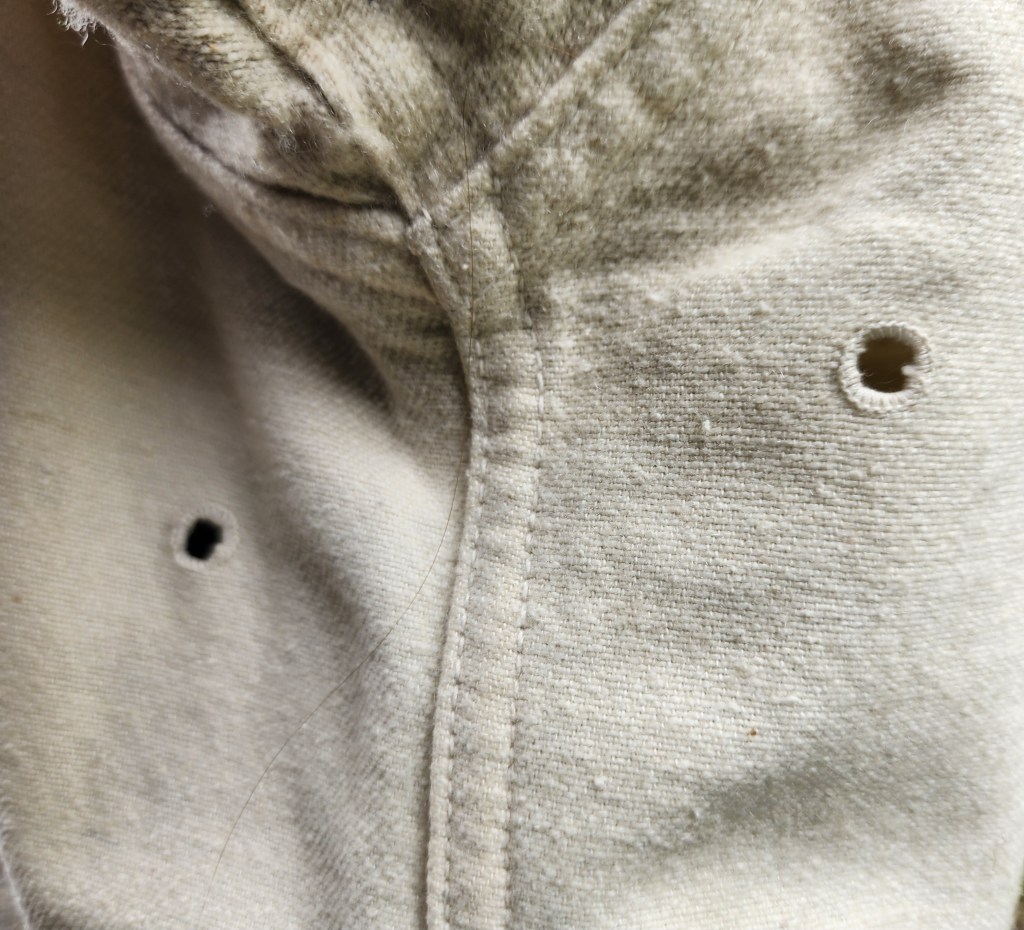
- Sleeves: 8-inch, in-set, non-gusseted, vented with two holes beneath each sleeve.
- Other features: Full sun-collar
- Tag: “Spalding” with faded nameplate tag.
Acquired in an online sale, May 2025.

 Chevrons and Diamonds