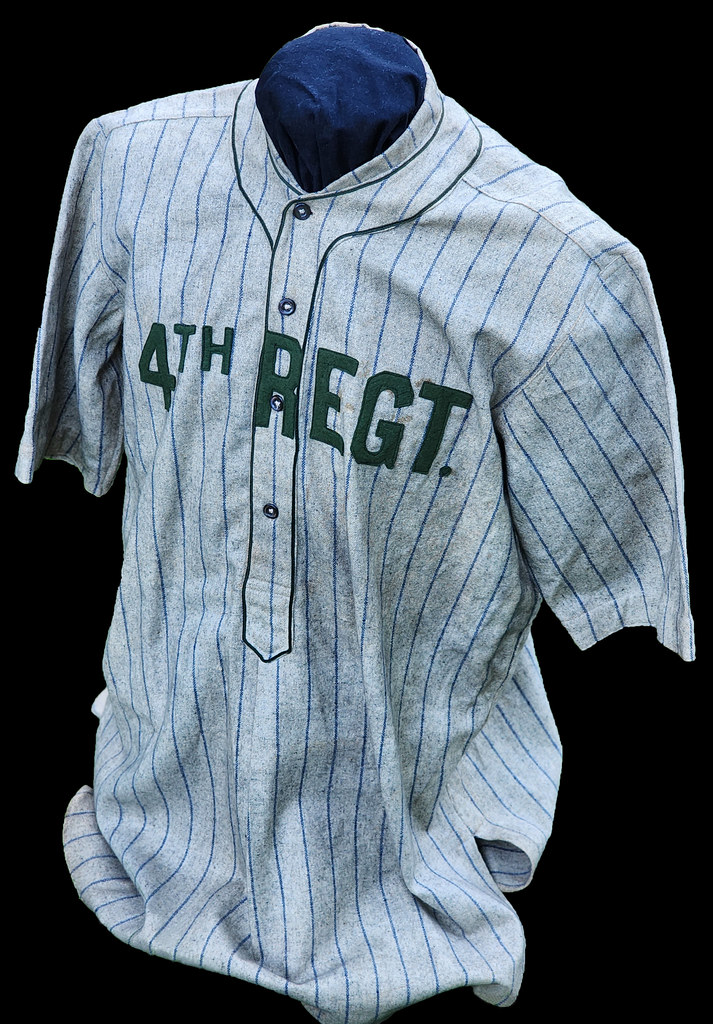
For more than 100 years, this uniform has stood the test of time and has avoided the damaging effects of the environment, pests, and other destructive forces. Used around the Great War, this century-old flannel uniform is by far oldest service flannel in the Chevrons and Diamonds Collection. With our research effort underway, we have low expectations in pinpointing the specific season in which it was used.
The 4th Infantry is one of the longest standing Army units in U.S. history dating back to 1792, the regiment saw service from the early frontier, the War of 1812, Creek and Seminole Campaigns, Mexican–American War, conflicts in Oregon and Washington Territories, the Pig War, American Civil War, Plains Campaigns, Spanish-American War, Philippines Campaigns, and World War I. While the Regiment’s service is highly documented, baseball play is a wholly unique research effort that may not yield results for some time.
For now, it is unknown if this uniform was used before the 4th was deployed to France in 1918 or if it saw action after the Armistice went until effect and before the Regiment returned to the U.S. in 1919. Hopefully, something will surface; a photo in a veteran’s scrapbook or a post-war epilogue detailing regimental baseball games will be uncovered?
For now, we will focus on the uniform itself and the aspects that reveal its era.
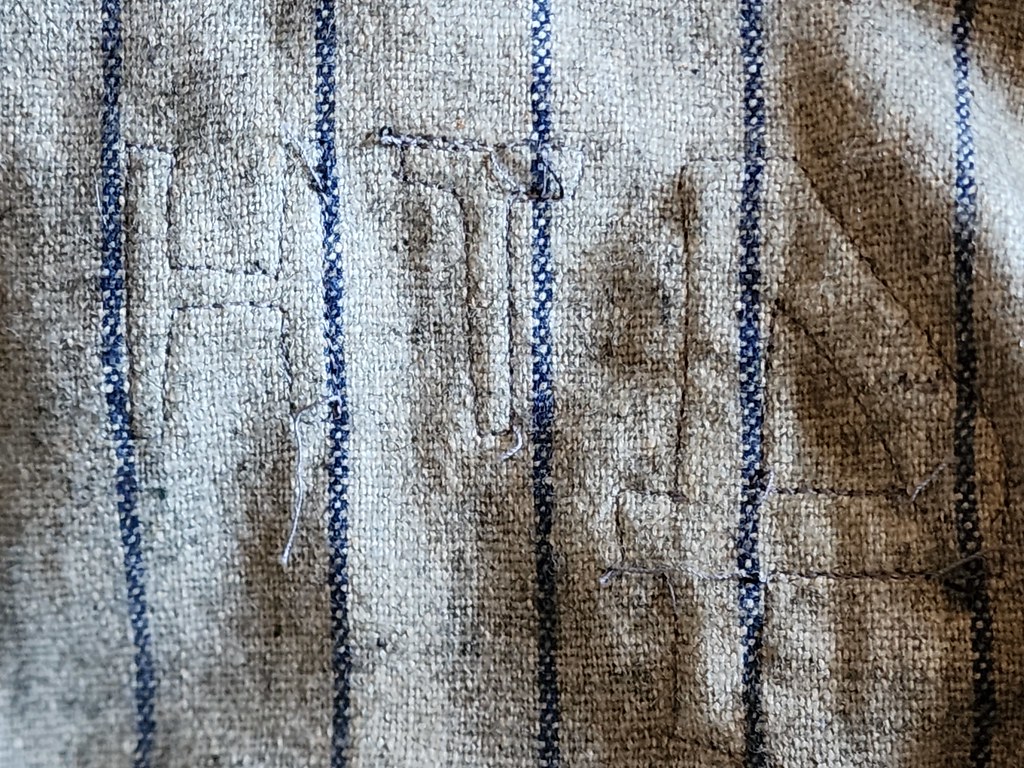
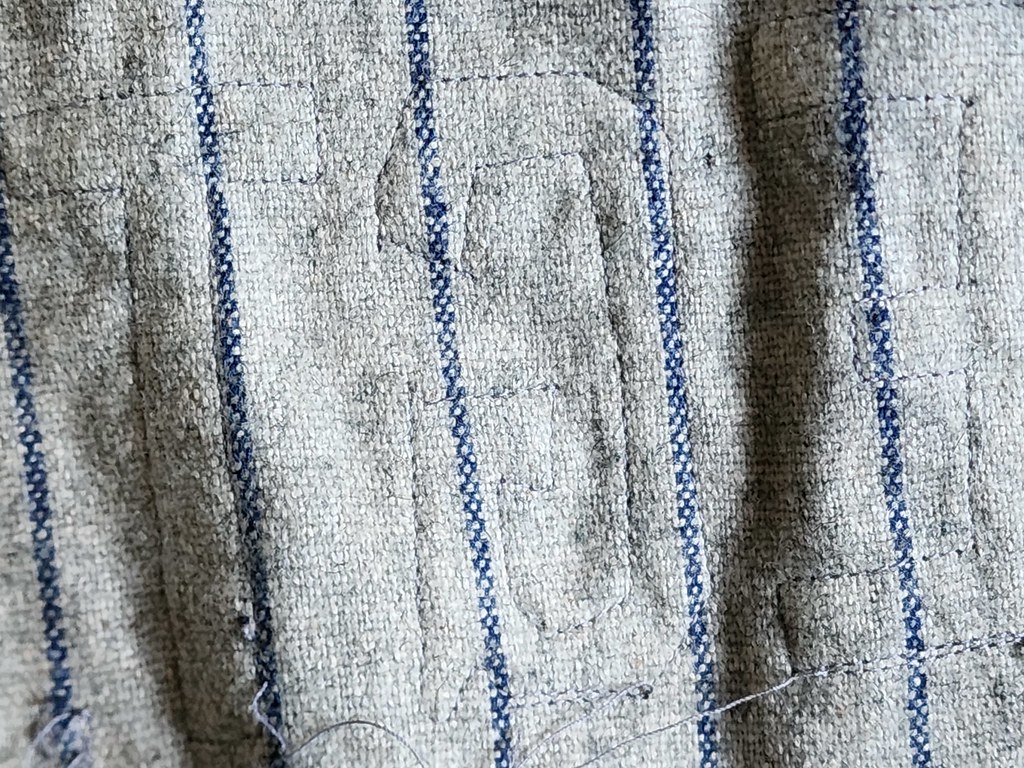
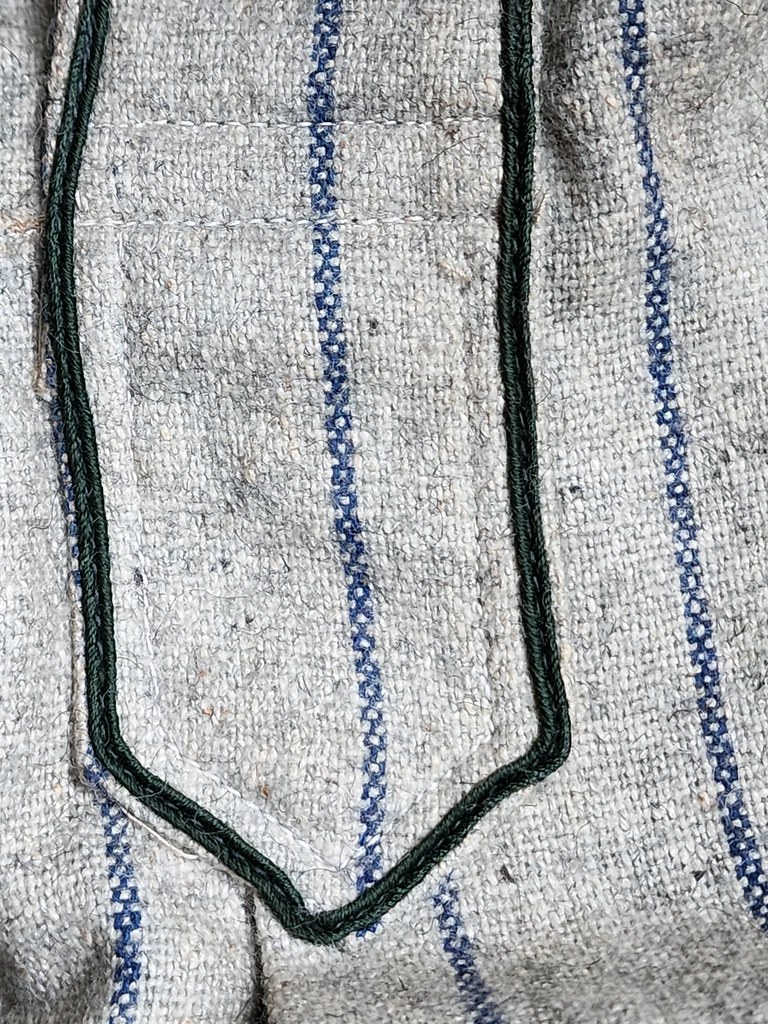
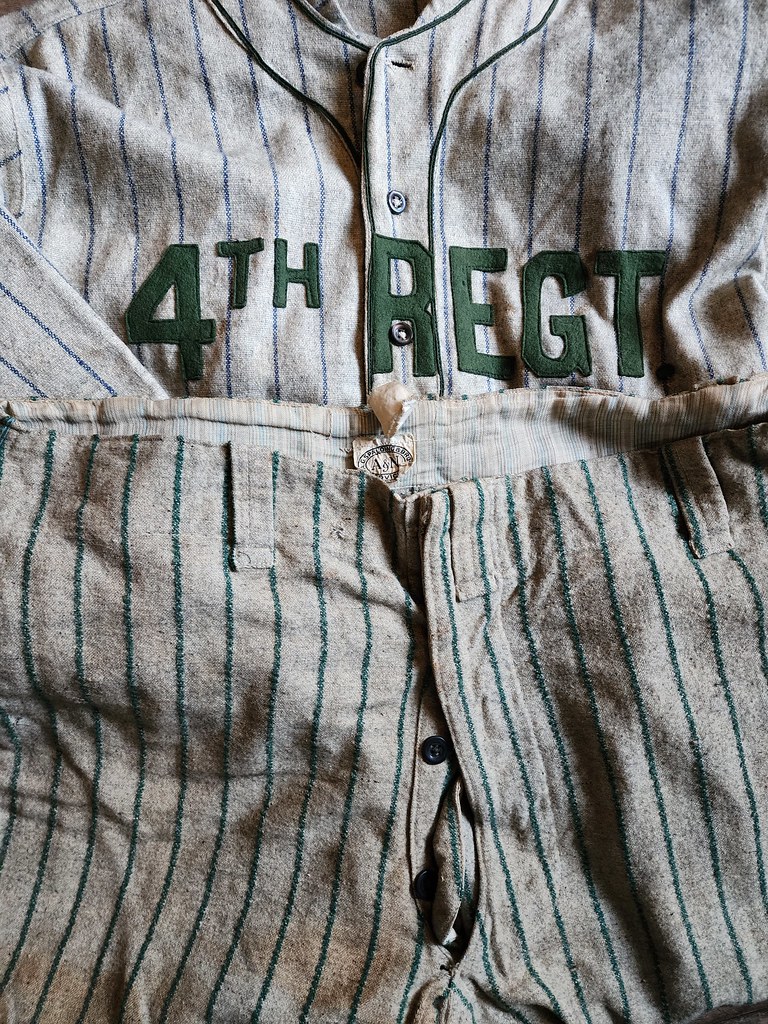
The half-opening front is secured by four black, four-hole buttons with the soutache adorning the full-length placket length, outlining the fabric, and stitching. The dark green wool athletic felt lettering is sewn across the front, horizontally aligned.
True to the late 1910s time-period, the jersey sports a tall sun-collar that angles downward toward the button opening but is visible around the entire neckline. The sleeves are lengthy, extending 13 inches from the seam to the hem. The shirt tails are also correct for the period; six inches for the front and the rear, eight inches.
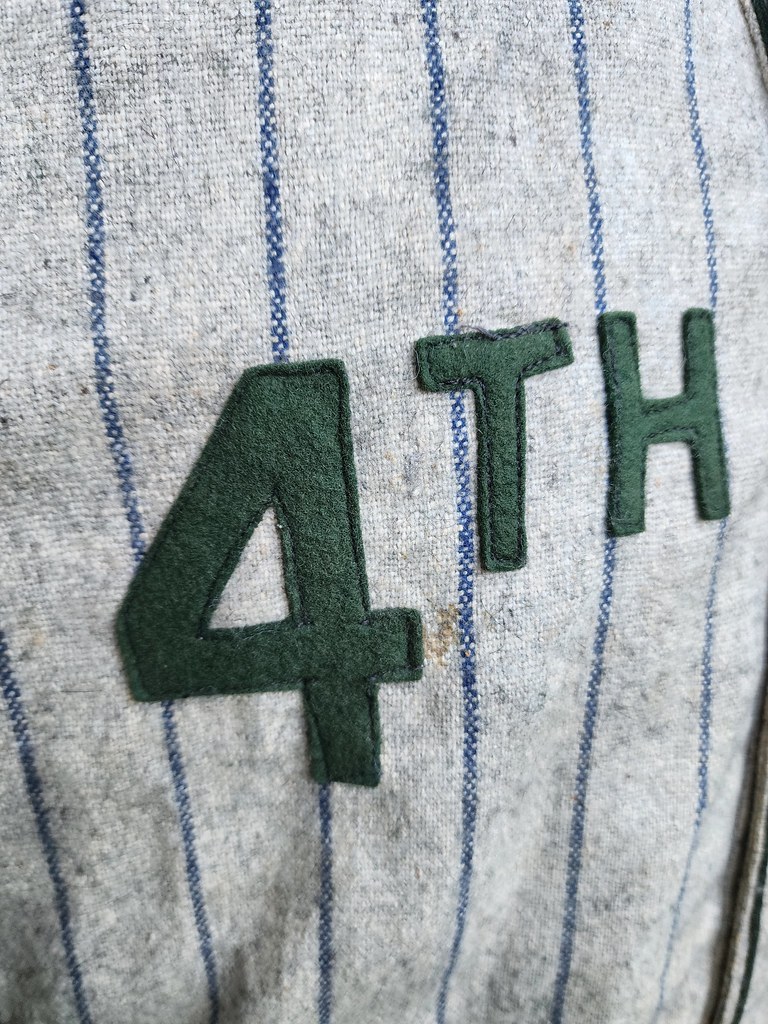
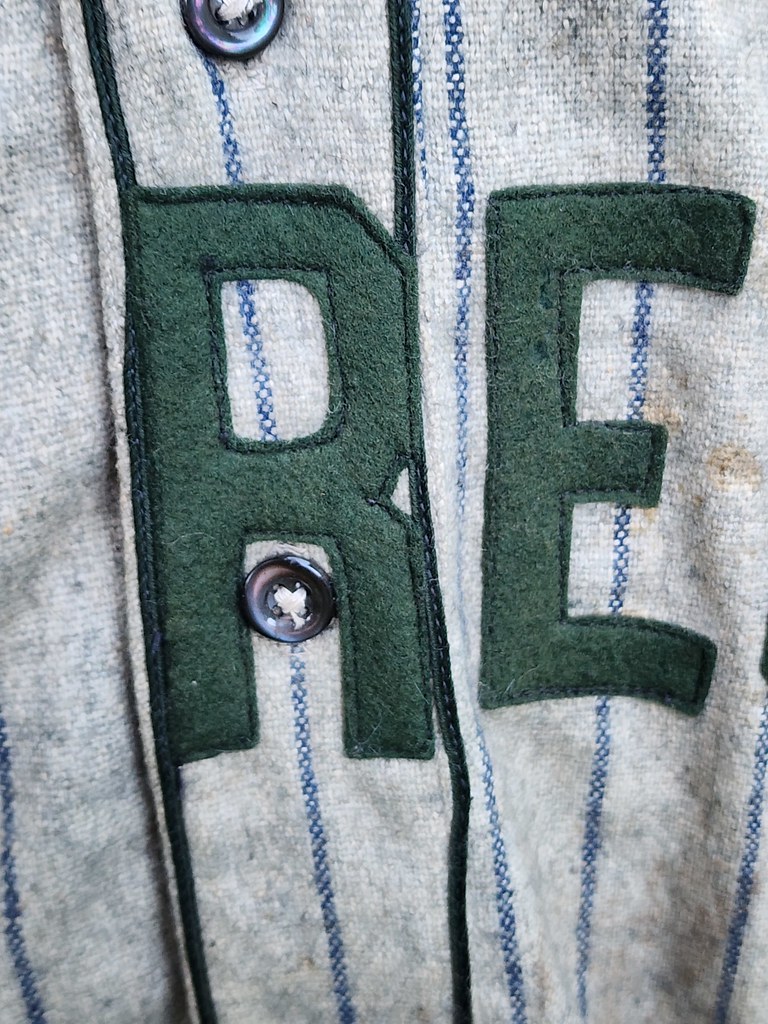
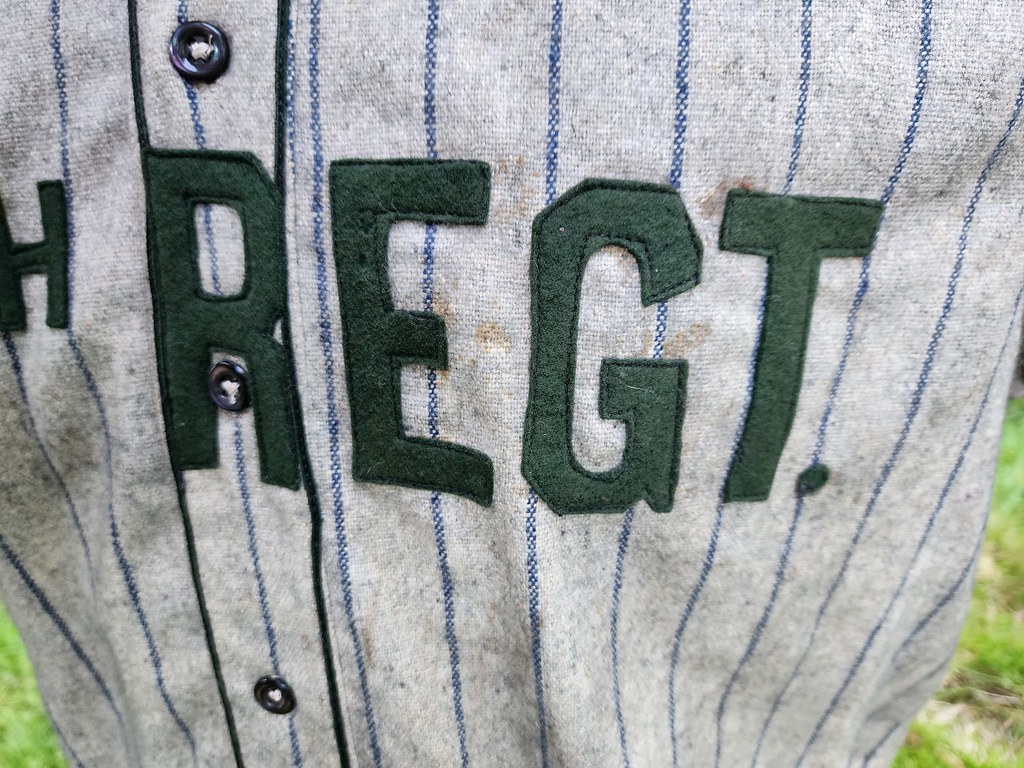
The half-opening front is secured by four black, four-hole buttons with the soutache adorning the full-length placket length, outlining the fabric, and stitching. The dark green wool athletic felt lettering is sewn across the front, horizontally aligned.
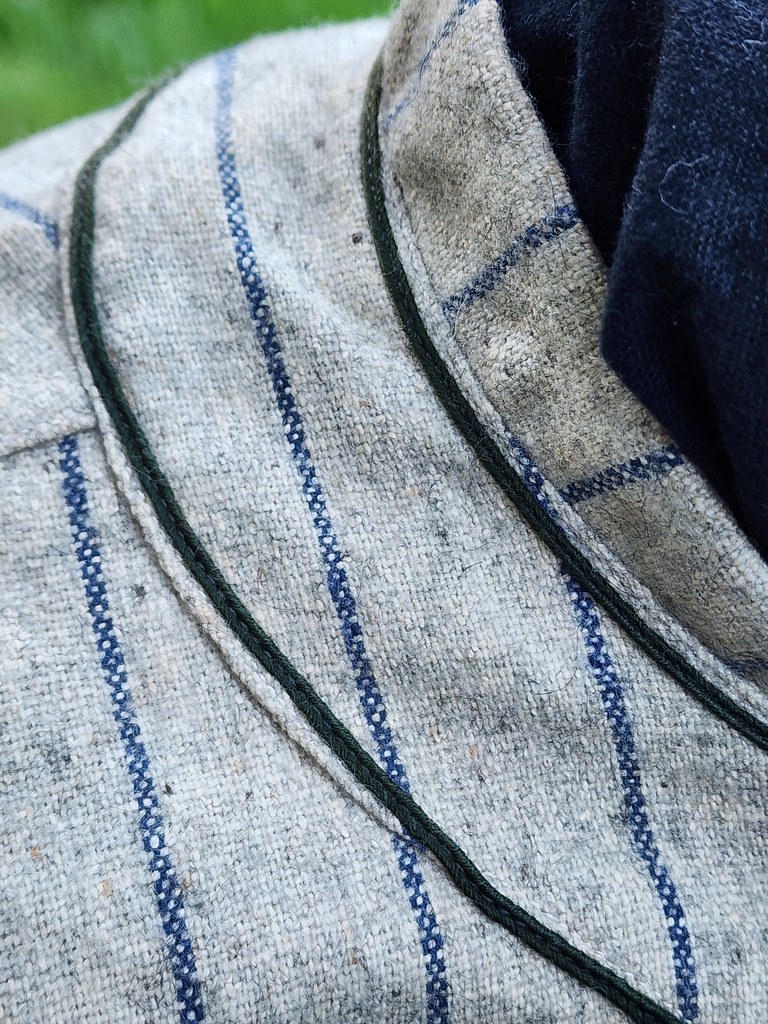
True to the late 1910s time-period, the jersey sports a tall sun-collar that angles downward toward the button opening but is visible around the entire neckline. The sleeves are lengthy, extending 13 inches from the seam to the hem. The shirt tails are also correct for the period; six inches for the front and the rear, eight inches.
Uniform Features:
Jersey:
- Buttons: Four black-colored plastic buttons , concave, four-hole.
- Material: The base material is heavy gray wool-flannel with light blue pinstripes
- Soutache: 1/4″ single line on each side of the placket, extending down to a point following the stitching and extending upwards, encircling the collar with two strands.
- Lettering: Heavy green athletic felt block lettering spelling out the team name in a horizontal line across the chest; on both sides of the placket.
- Numerals: none.
- Sleeves: 13-inch, in-set, non-gusseted, non-vented.
- Other features: Full sun-collar
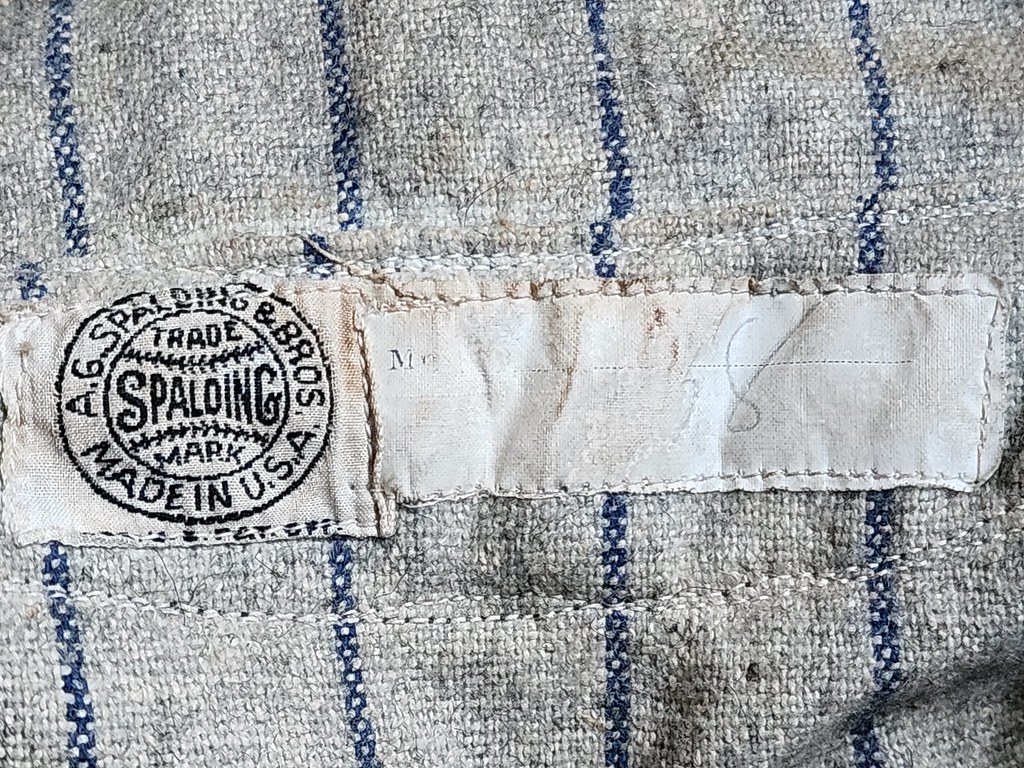
- Tag: “Spalding” with faded nameplate tag.
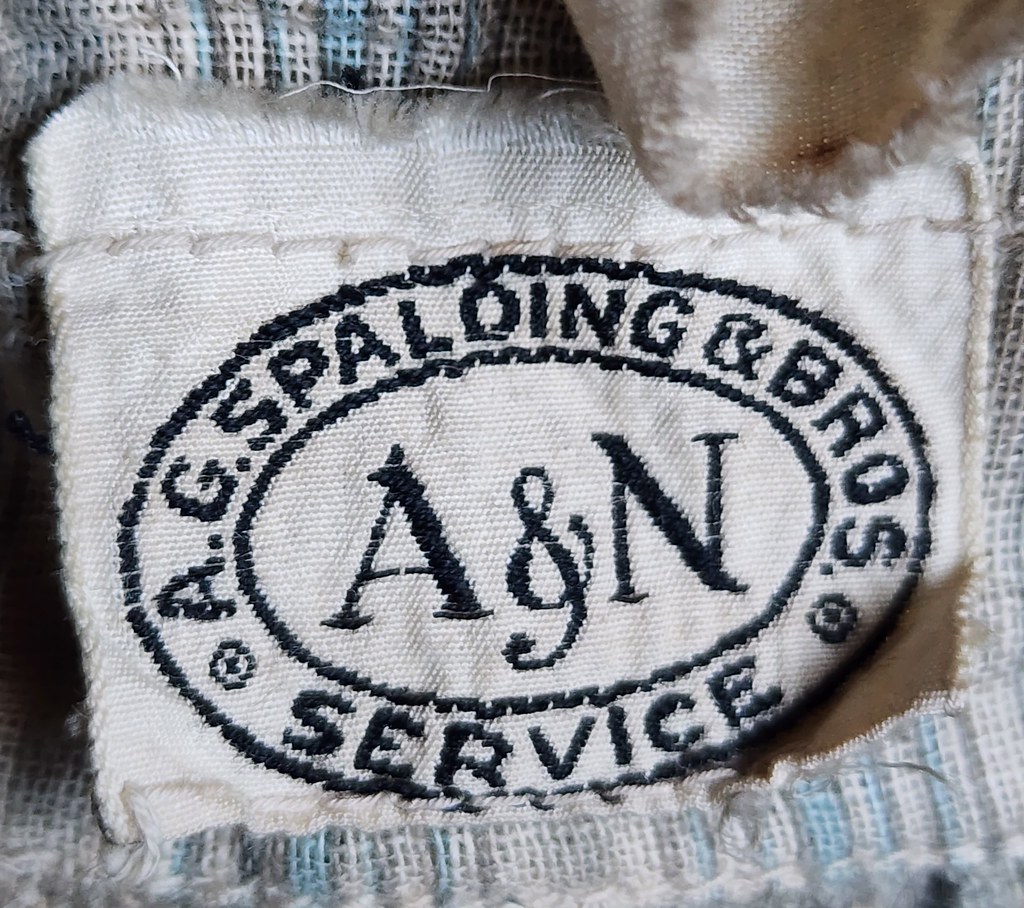
We have certainly seen baseball uniforms tagged by their manufacturers for the armed forces during World War II, but this set is the first that we have encountered with special manufacturer’s tags for the first World War. Made by A.G. Spalding, the jersey bears a tag that was used as early as 1914 and well through the war years and into the next decade. The matching trousers are tagged by Spalding with an oval embroidered emblem with the typical A.G. Spalding & Bros. mark, however, instead of the baseball logo in the center, the oval features an “A & N” (for Army and Navy). The bottom of the tag features the word, “Service” instead of the normal “Made in U.S.A.”
Trousers:
- Buttons: Four black-colored plastic buttons , concave, four-hole.
- Material: Heavy gray wool-flannel with light green pinstripes
- Soutache: 1/4″ single line extending down the outer seams of the trousers to the bottom hem of the legs.
- Tags: “Spalding A&N Service” branded tag.

 Chevrons and Diamonds