With the Great War weeks from the Armistice, the 57th Pioneer Infantry Regiment, consisting of the 700 men from the 1st Infantry Vermont National Guard and augmented with troops from Philadelphia, Chicago, and Tennessee, commenced a march from Camp Merritt, New Jersey. The evening of September 27, 1918, the regiment started their hour-long trek to the ferry dock where they would be transported down the Hudson Riber to Hoboken where the USS Leviathan awaited.
The war in Europe was raging in its fourth year with unprecedented numbers of casualties and death toll. The United States, had been in the fight for over a year and there seemed to be no end in sight with more troops and supplies headed over from the U.S. The 57th Pioneer Infantry was trained and fitted out and ready to join the American Expeditionary Forces in France.
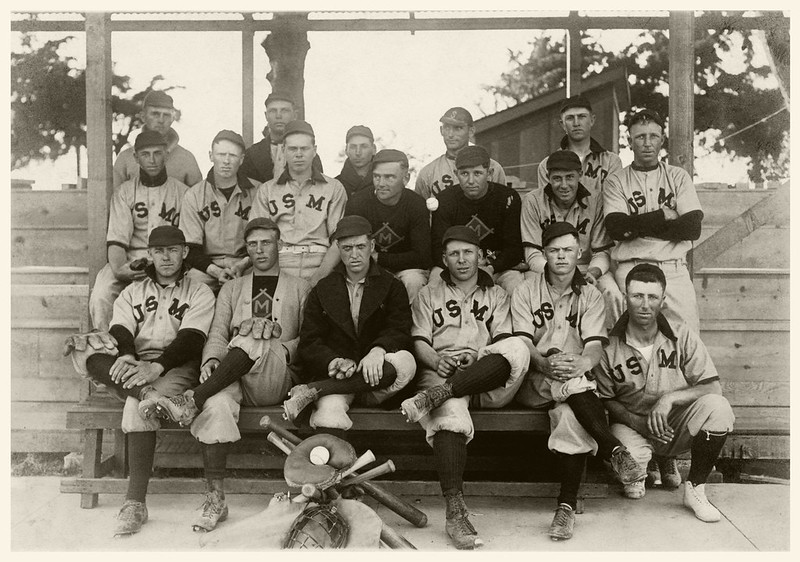
The Marine Corps has a long and storied history with the game and fielding competitive ball teams from Quantico, Virgina to San Diego and to Shanghai in the Far East. The game has been central in the Corps’ morale-boosting and building esprit-de-corps among the ranks. The Marine corps has been an integral component at the Mare Island Shipyard since 1862, eight years after the facility opened in 1854.
As baseball emerged as the preeminent sport of Americans, the game was also embraced by the armed forces including the Army, Navy and Marine Corps. Starting in the early 1900s, the Mare Island Marine Barracks embraced the game, and it soon became a predominant sport for the men as a world war broke out in Europe in 1914. Baseball was highly competitive throughout the First World War with the heavy influx of professional players entering the service.
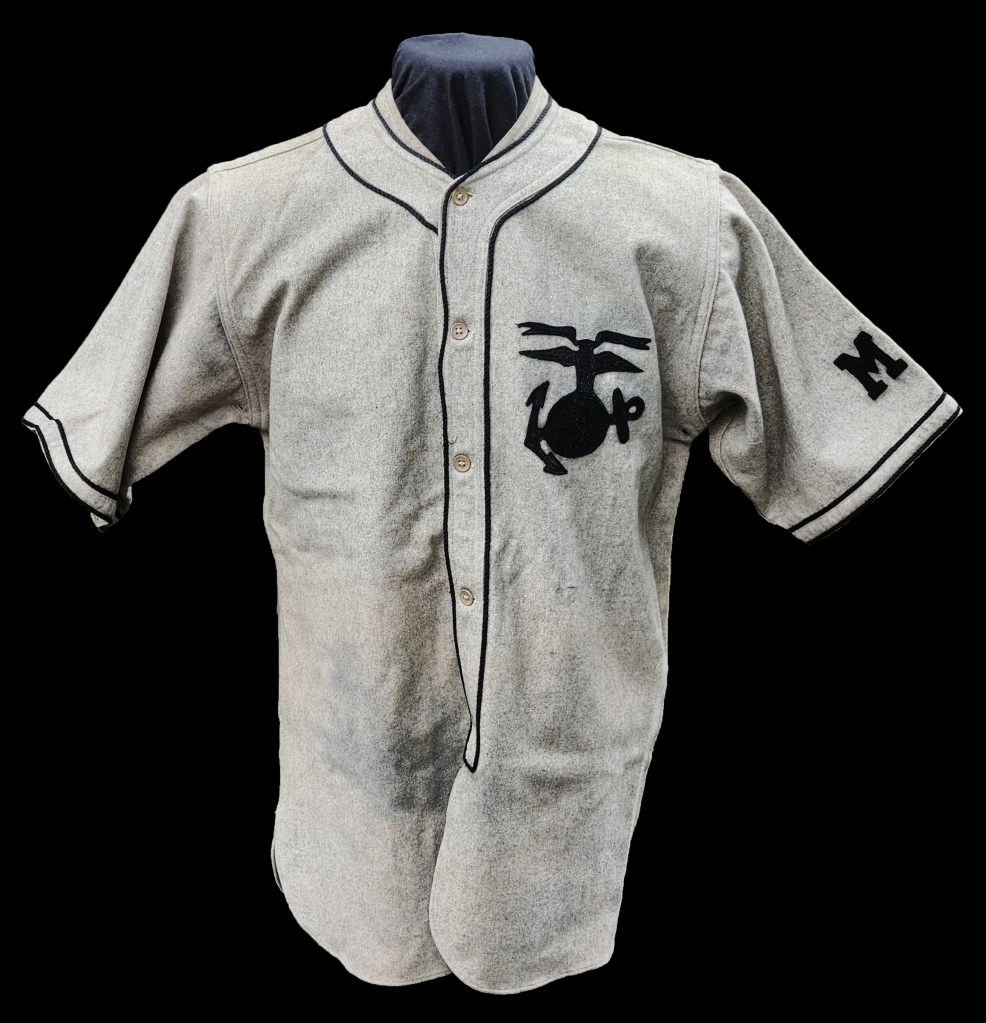
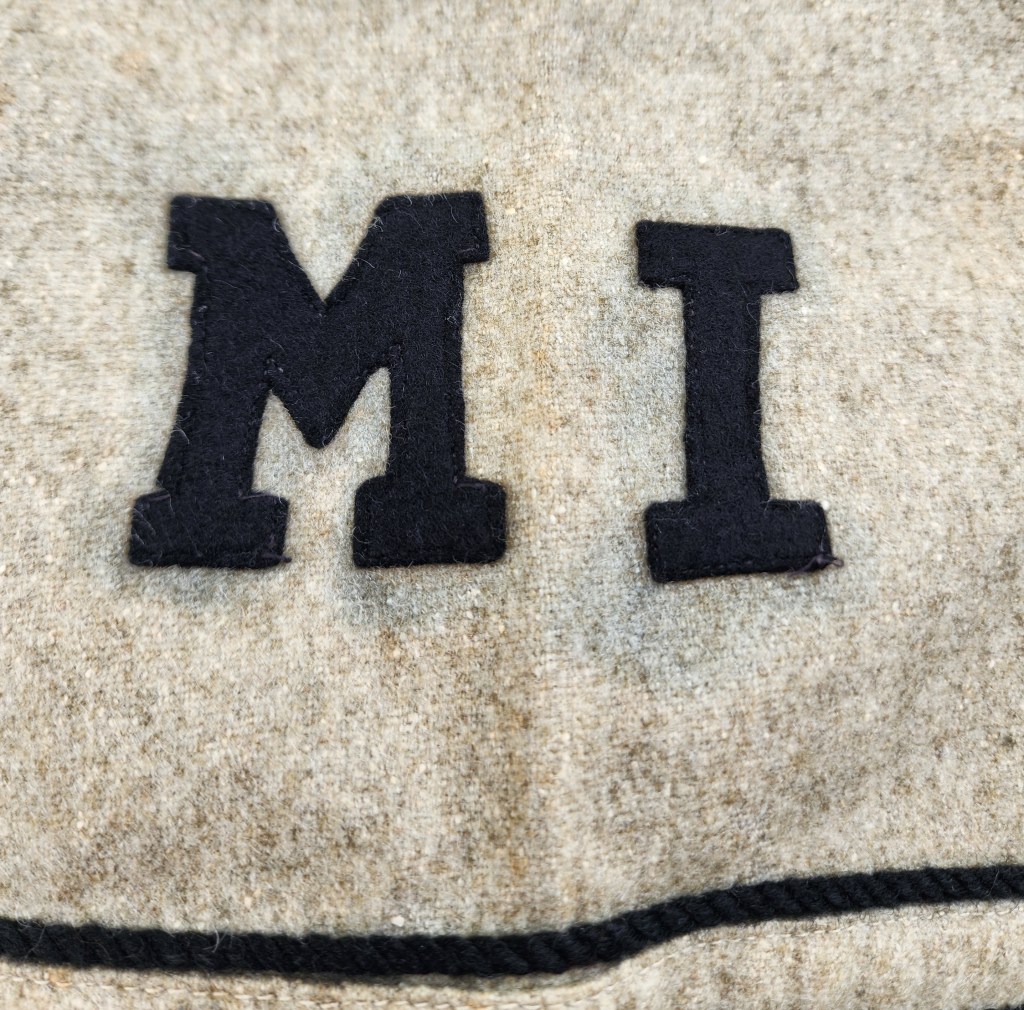
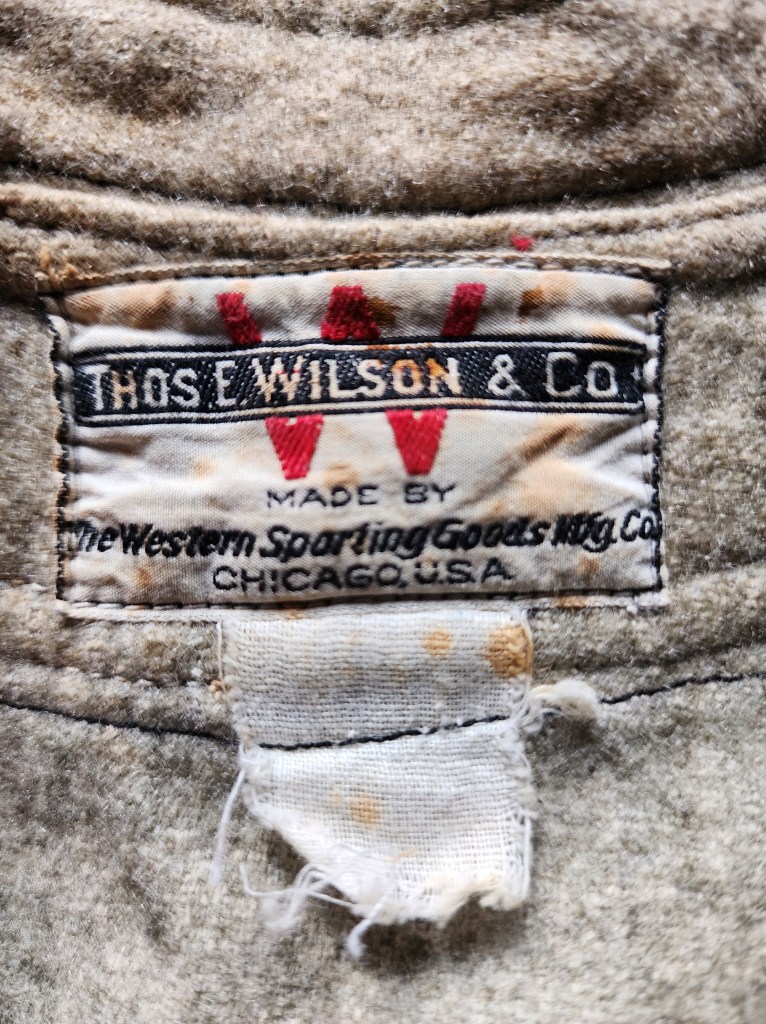
This baseball jersey bearing the Eagle, Globe and Anchor (EGA) on the left breast dates to the post-WWI period. Emblazoned on the left sleeve, the dark blue athletic felt “M I “ letters indicate that this was worn by men stationed at the Marine Corps Barracks at Mare Island, California. Dating this vintage flannel is made easy by the manufacturer’s tag.
Birthed from the Ashland Manufacturing Company, a business tasked with prospecting for ventures in selling by-products of the slaughterhouse and meat packing, the company was re-named for its president, Thomas E. Wilson and commenced manufacturing athletic goods. By 1919, the Thomas E. Wilson Company entered into a distribution agreement with Western Sporting Goods which was indicated on the manufacturer’s label. In 1925, the labels were changed to Wilson-Western Sporting Goods Company to reflect the change in the business. This information helps date our jersey to a five-year period from 1919 to 1924.
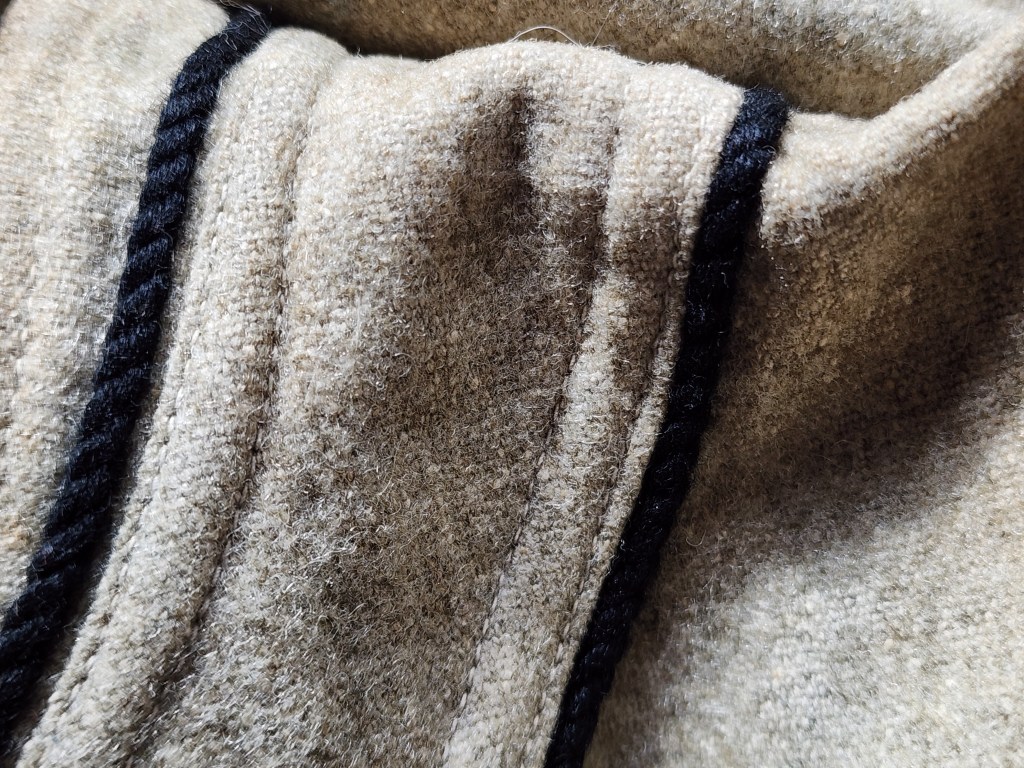
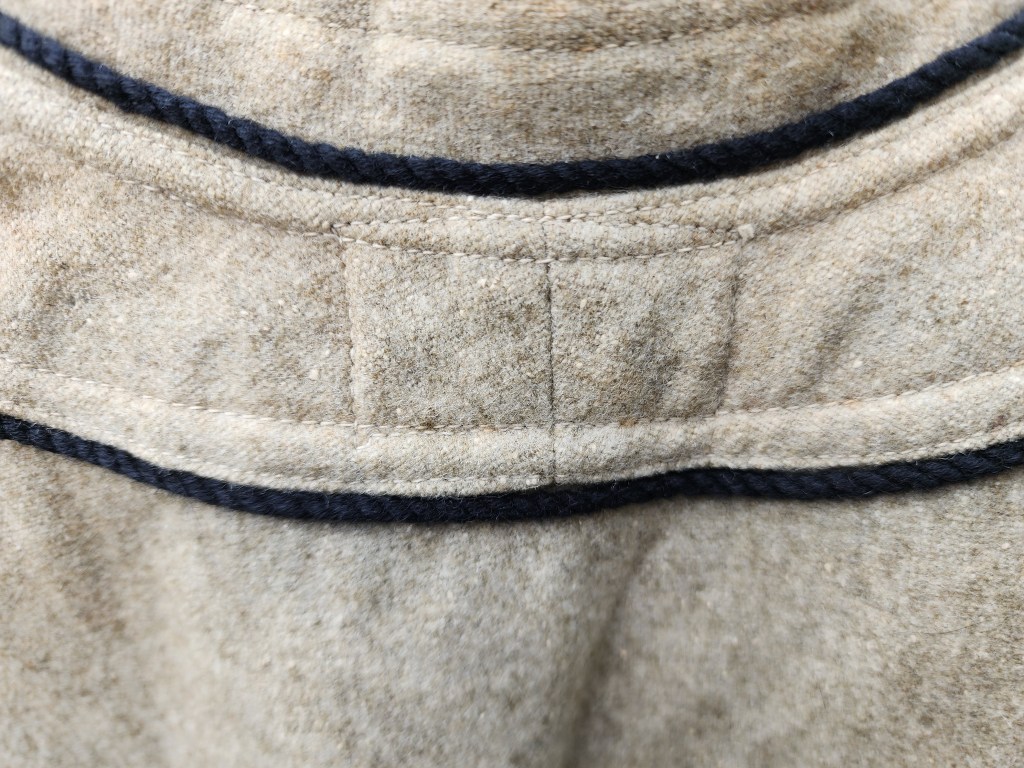
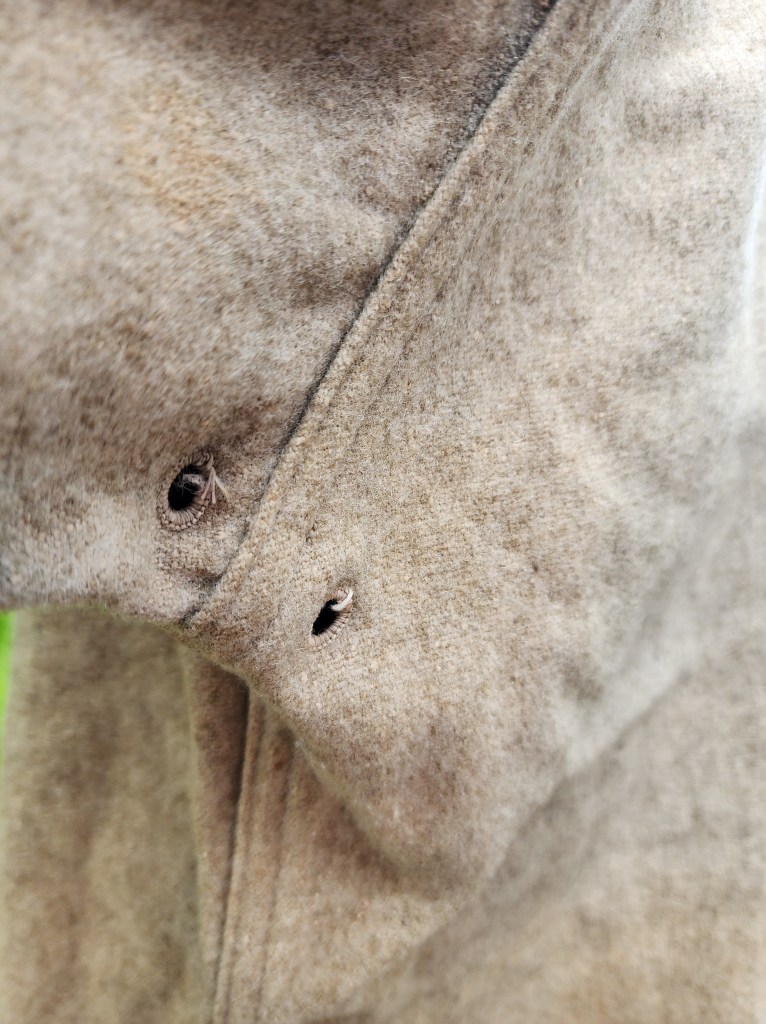
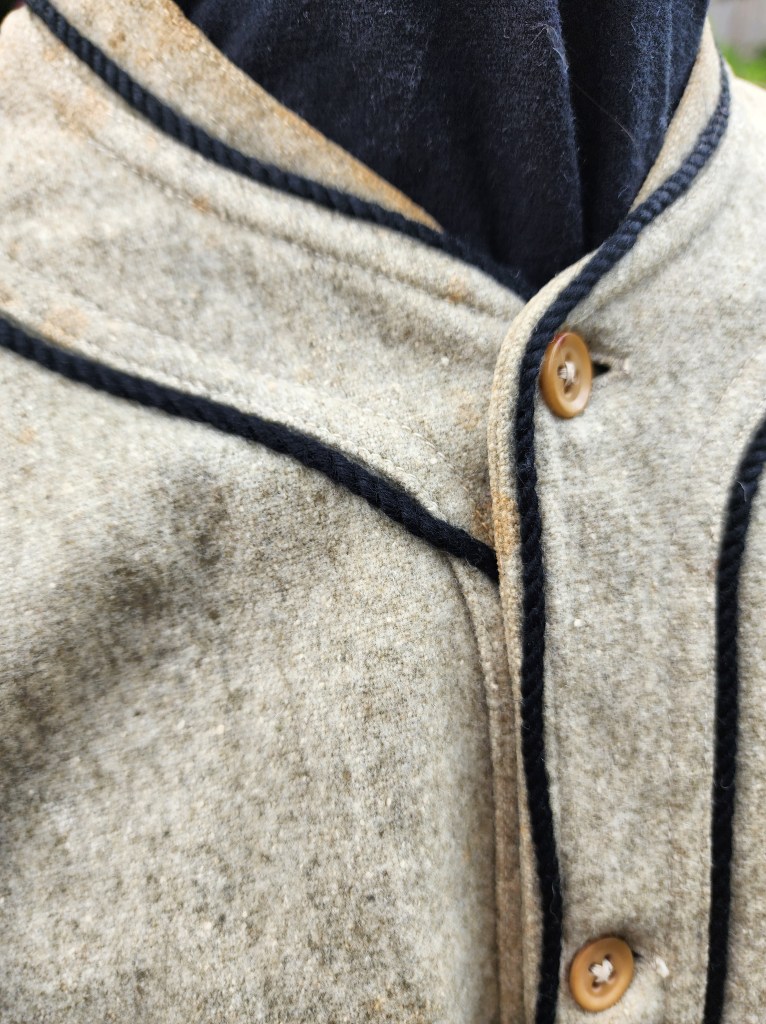
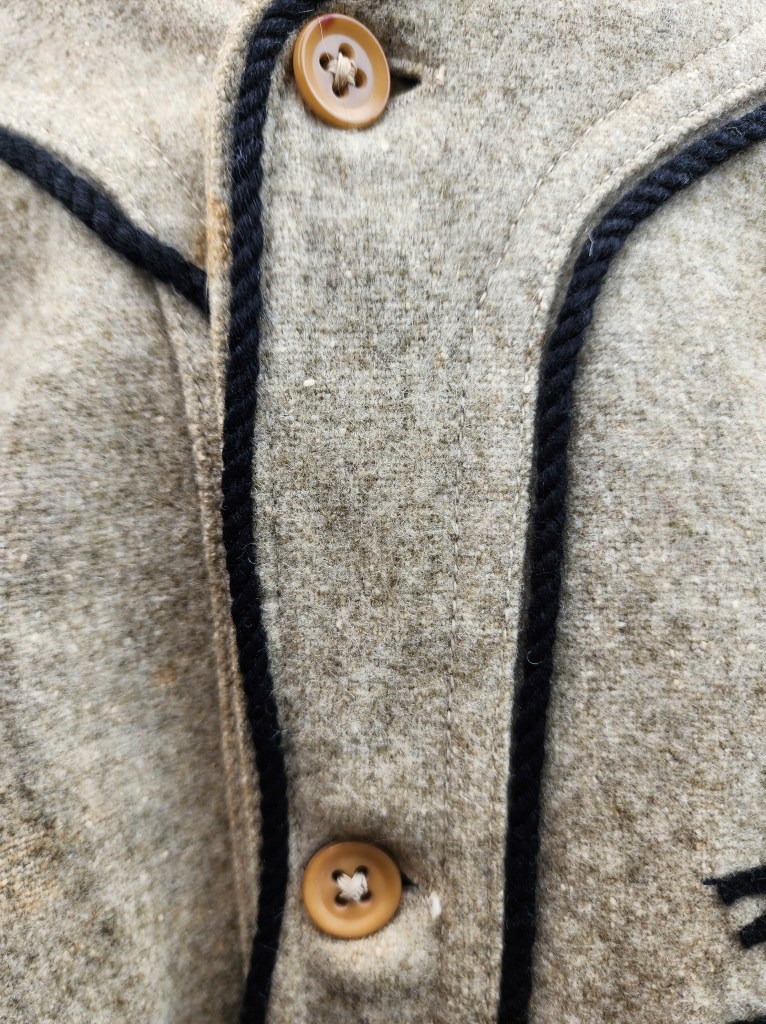
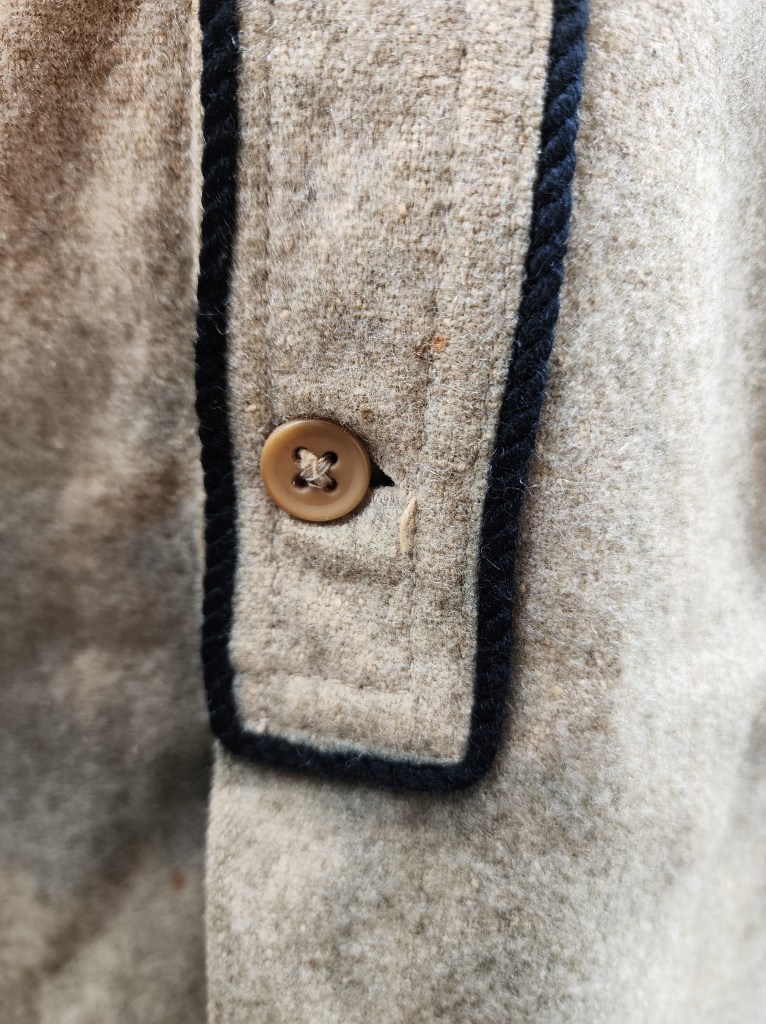
The brown buttons, while most-likely to be made of plastic, could also be vegetable-derived pieces. The soutache, a blue braided material, encircles the collar in a pair of blue lines that connect on the bottom of the button placket that they outline. The cuff of each 12-inch sleeve is lined with two rows of the same soutache, spaced an inch apart with the bottom-most affected to the bottom edge. Beneath each sleeve, in the armpit area, are four circular holes, embroidered vent holes.
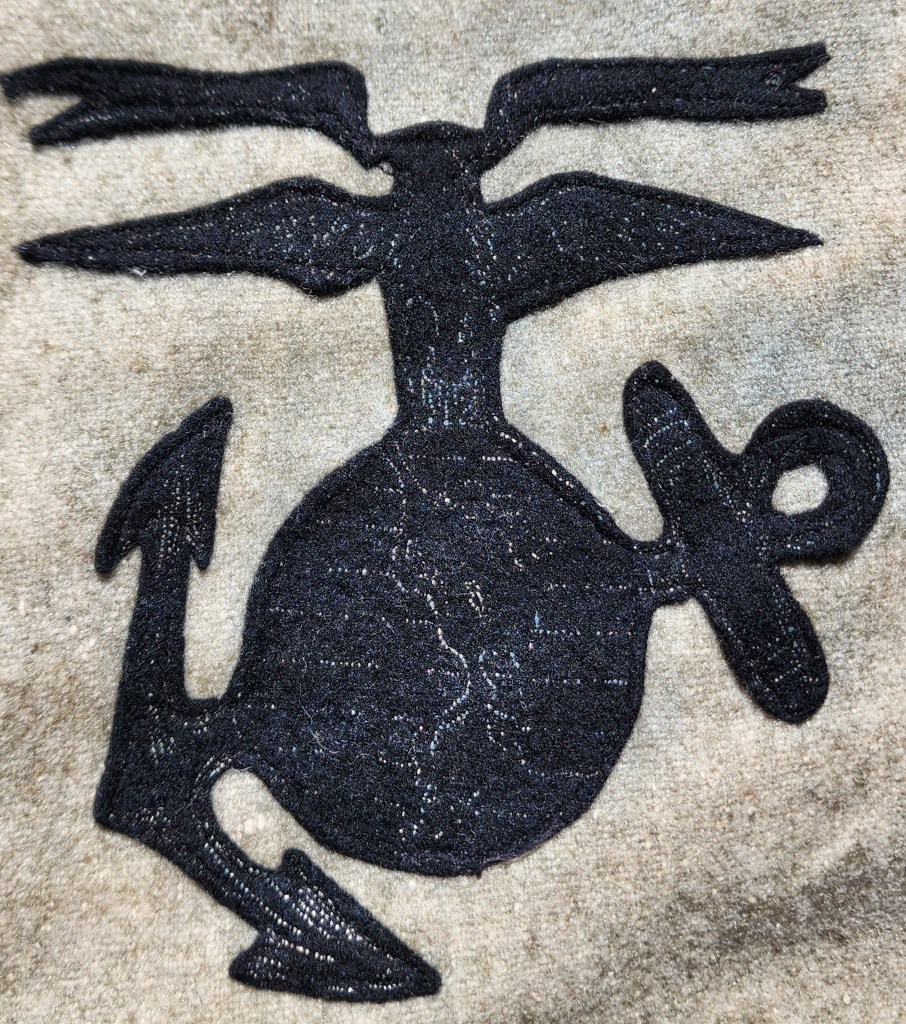
The jersey’s most prominent feature is the five-by-four-inch navy blue EGA. The silver thread adornments, however faint, provide feature details of the eagle’s feathers, anchor and the globe.
Unfortunately, heavy staining from color-transfer is potentially due to oxidation of the emblems, lettering and soutache. The jersey is also discolored by accumulation of soiling from use and long-term, improper storage.
Jersey Features:
- Buttons: Five brown-colored plastic buttons , concave, four-hole.
- Material: The base material is heavy gray wool-flannel.
- Soutache: Braided navy blue affixed to the button placket, and surrounding the collar. The same material is trimmed on the edge of the sleeve and another placed one inch above the edge.
- Insignia: A navy blue athletic felt eagle, globe and anchor patch, highlighted with silver accents, five-inches long by four inches wide, sewn to the left breast.
- Numerals: none.
- Sleeves: 12-inch, in-set, non-gusseted, vented.
- Other features: Matching sun-collar, one-inch at its tallest on the back of the neck opening
- Tag: Thos. E. Wilson & Co.

 Chevrons and Diamonds